Best Times to Post Based on Followers
Last Updated on January 25, 2026 by Ethan
The best time to post on Instagram (for most accounts I’ve tracked) is weekdays during lunch (11 AM to 2 PM) and after work (5 PM to 9 PM). If you want one “safe” slot to start with, Wednesday from 11 AM to 1 PM is the most consistently strong window I’ve seen across totally different niches.
But here’s the twist: the “best time” isn’t really a universal clock. It’s a follower-behavior problem. Your followers wake up, commute, take lunch, doomscroll at night, and disappear when they’re busy, and your posting schedule either matches that rhythm or fights it.
So I’m going to show you the posting windows that usually work, then how to map them to your followers (including regional audiences), plus the failure modes that make people think “timing doesn’t matter” when it actually does.
Why follower behavior decides the best time to post on Instagram
Instagram doesn’t “reward” a time of day because it’s Wednesday or because the algorithm likes lunch breaks. It rewards early performance.
When you hit post, Instagram usually shows it to a small group first, kind of like a quick trial run. If that first batch actually watches it and taps like, saves it, replies, shares, all that, then Instagram tends to push it out to more folks. If they scroll past, it kind of stalls out. That’s why timing matters: you’re trying to post when your followers are most likely to actually engage right away.
And yes, I’ve seen this in the most annoying way possible: I’ve had a Reel do “meh” at 2 PM, then I posted a very similar one at 7:30 PM two days later and it popped off. Same quality. Same editing style. Different audience mood. Ugh.
How it works (in plain English)
- You post.
- Instagram tests it with a slice of your followers and a small pool of non-followers (especially for Reels).
- Early signals (watch time, replays, saves, shares, comments) decide whether it expands distribution.
- Your timing controls the test conditions, because your followers aren’t equally active 24/7.
This is also why two creators in the same niche can have totally different “best time to post instagram” results. Their followers live in different time zones, have different work schedules, and scroll at different times.
The posting windows that usually win (based on follower activity)
If you’re starting from zero and just need something that works “pretty well” while you learn your audience, these windows are the closest thing to a reliable baseline:
- Weekdays: 11 AM to 2 PM (lunch break scrolling)
- Weekdays: 5 PM to 9 PM (after-work couch scroll)
And the single strongest slot I keep coming back to is Wednesday 11 AM to 1 PM. It’s not magic. It’s just the moment where midweek habits are stable, people aren’t burnt out like Friday, and engagement is usually “awake.”
If you want a second opinion from big datasets, I generally find the same patterns reflected in roundups like Mavic’s 2026 Instagram posting-time data and summaries like Influize’s best time to post research. My experience matches the broad strokes, even if the exact minutes vary account to account.
Day-by-day breakdown (what to test first)
Here’s the schedule I’d test first if you’re trying to find your best time to post on Instagram without overcomplicating it. Consider this your “starter map.”
Monday
- Reliable: 2 to 3 PM and 3 to 6 PM
- International audiences: 5 to 7 AM or 8 to 11 PM
Monday is weird. People are back at work, but they also “check in” to social. I’ve noticed smaller local accounts tend to do better later afternoon on Mondays, while global audiences get a bump if you post early morning.
Tuesday
- Strong overall: 5 AM, 9 to 10 AM, 12 to 2 PM, 5 to 7 PM
Tuesday is one of my favorite days to test because it’s stable. When creators tell me “my reach is random,” I’ll often ask if they only post on weekends. Yeah, most of the time, that’s exactly what happens.
Wednesday
- Highest engagement: 11 AM to 1 PM
- Backup window: 6 to 9 PM
If you only post 3 times a week, make Wednesday one of them. On bigger accounts, like 100k plus, I’ve noticed Wednesday lunch posts can take a while to kick in. But once they do, they often keep picking up saves and shares for the next day or so.
Thursday
- Sweet spot: 10 AM to 3 PM
- Evening: 6 to 9 PM
Thursday tends to reward “useful” content: tutorials, checklists, before-and-after, product demos. People are still in weekday mode, so they’ll actually read a carousel instead of just tapping through.
Friday
- Best single hour: 11 AM
- Watch out: engagement often drops after 4 PM
Friday afternoons can be a trap. You’d think people scroll more because they’re mentally checked out, but in practice they’re out living their life or traveling. (Good for them. Bad for your post.)
Saturday
- Good window: 9 AM to 4 PM
- Evenings: can be strong for lifestyle and entertainment
Saturday performs better when the content is light. Memes, behind-the-scenes, day-in-the-life, shopping, food. If you post a dense educational carousel at 10 AM Saturday, it might get polite likes, but it won’t always get those “send to a friend” shares.
Sunday
- Best: 9 to 11 AM
- Also solid: 6 to 9 PM
Sunday morning is underrated because competition is lower. I’ve personally used Sunday 9:30 AM to test “clean” performance on new content formats, since fewer big creators are posting then.
Best times by format (because Reels and carousels behave differently)
This is where most generic advice falls apart. A Reel doesn’t need the same timing as a carousel, because the distribution mechanics are different.
Reels
- Best test windows: 6 to 9 AM, 2 to 4 PM, 6 to 9 PM (Tuesday through Thursday)
Here’s what nobody tells you: a Reel can do great in the early morning because it has more time to collect watch time before the evening crowd hits. You’d think posting at peak time is always best, but sometimes posting a few hours before peak lets the Reel “preheat” and enter the evening with momentum.
Stories
- Best window: 11 AM to 2 PM (Monday through Friday)
Stories are more about being present when people are casually checking their phone. Lunch hours are perfect because viewers tap fast and reply more than you’d expect.
Carousels
- Surprisingly effective test: Tuesday at 5 AM
Yeah, 5 AM sounds insane. But on certain audiences (especially professionals), I’ve seen early carousels rack up saves quietly, then they keep accumulating engagement throughout the day. It’s not flashy. It works.
Lives
- Best windows: 12 PM or 7 to 9 PM on weekdays
Lives need intention. People don’t “accidentally” watch a Live for 20 minutes unless they’re already in downtime mode.
Regional variations (time zones will mess with you)
If your followers are mostly local, great. If they’re spread out, your best time to post on Instagram becomes a balancing act.
UK
- 7 to 9 AM
- 12 to 2 PM
- 6 to 8 PM
India
- 8 to 10 AM
- 12 to 2 PM
- 8 to 10 PM (especially for Reels)
Global audiences
- Safest bet: Wednesday 11 AM to 1 PM (your time) if your audience skews similar to you
- Cross-timezone bet: early morning (3 to 6 AM) to build momentum before multiple regions wake up
I’ve managed accounts where the “best” time was literally 4:45 AM local time because the audience was split between North America and Europe. Did I love waking up to post? No. I scheduled it. Obviously.
How to find your best posting time based on your followers
Generic schedules are fine for starting. But if you want consistent results, you need to diagnose your follower behavior and test like a normal person, not like a spreadsheet robot.
-
Check when your followers are online. Use Instagram Insights if you have it, then pick two weekday windows and one weekend window to test.
-
Pick one format per test. Don’t test Reels one day and carousels the next and call it “timing.” Keep the format consistent for at least 2 weeks.
-
Run an A/B timing test. Example: Post Tuesday at 12:30 PM for two weeks, then Tuesday at 7:30 PM for two weeks. Same content style. Similar length. Similar hook. (No, it won’t be perfect. It’s still enough.)
-
Track early signals, not just likes. Saves, shares, comments, and Reel watch time tell the real story. If you’re unsure what to track, this walkthrough on how to track Instagram engagement rate makes it way less confusing.
-
Lock a schedule for 30 days. Once you find 2 to 3 “green” slots, repeat them. Consistency helps your audience build a habit, and yes, it helps your own workflow too.
One lived-detail thing I’ve noticed: when an account is under 5,000 followers, the “best time” can swing wildly because a handful of highly active followers can skew the results. Once you’re past 20,000, the patterns get steadier, but it can take longer for a post to reach a meaningful sample size.
Tools: Insights vs third-party (and why follower lists matter)
Instagram Insights is great for activity windows, but it doesn’t always tell you who is changing in your audience, and that affects timing more than people admit. When you gain a batch of followers from a different region or niche, your best time to post instagram can shift quietly over a few weeks.
If you’re comparing options, I’d read this breakdown of Instagram Insights vs third party tools so you know what each category can and can’t do.
And if you’re actively monitoring follower changes (new followers, non-followers, unfollowers) alongside posting tests, that’s where UnfollowGram Follower Tracker fits nicely. It’s quick, it doesn’t ask for your password, and for public accounts it’s been a simple way to spot “audience shifts” that explain why a posting time suddenly stopped working.
The two failure modes that make timing feel “broken”
Failure mode #1: You post at the right time with the wrong hook
If your first second doesn’t earn attention, the time won’t save you. I’ve seen people post at the perfect Wednesday lunch window and still flop because the opening line was bland, the Reel started slow, or the cover image didn’t communicate anything.
This is where the “3 second rule” comes in (more on that in the FAQ). If the audience doesn’t get what they’re watching immediately, your early signals die, and the post never leaves the testing group.
Failure mode #2: Your audience isn’t real (or isn’t aligned)
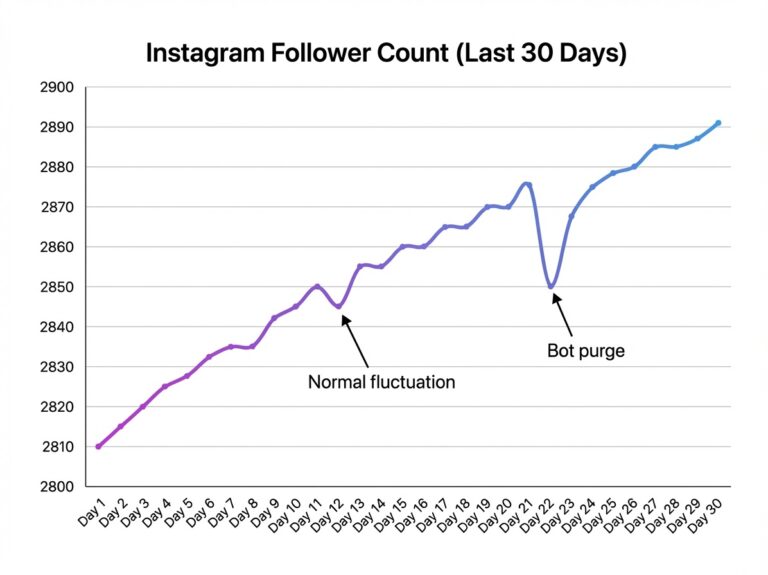
If a chunk of your followers are bots, bought followers, or dead accounts, your “active hours” will look noisy and inconsistent, and your early engagement rate will be lower than it should be. Timing tests get weird fast because you’re measuring an audience that doesn’t behave like humans.
If you suspect that’s happening, clean up first. This resource on how to identify fake followers on accounts is a good starting point.
Limitations (stuff this won’t tell you)
- This won’t predict virality. A great time slot improves your odds, but it can’t force people to care about a weak idea.
- It doesn’t work the same for private accounts. Most timing tests assume normal distribution and reach patterns; private sharing behavior can skew everything.
- Big news days can wreck your schedule. When something major happens (sports finals, elections, regional events), engagement patterns change for reasons that have nothing to do with your content.
Also, your mileage may vary if your niche is seasonal or event-driven. Wedding photographers and tax accountants do not live in the same engagement universe.
A simple posting rhythm that doesn’t dilute reach
I know people love “post every day” advice. I’ve watched it burn creators out for nothing.
- 3 to 5 posts per week is a sweet spot for most accounts.
- 1 to 2 posts daily is usually the ceiling before you start cannibalizing your own reach (especially on smaller accounts).
- Reels drive the majority of engagement for a lot of creators right now, so prioritize Reel timing tests first.
If you want to go deeper into how follower patterns connect to performance, this pillar resource on Instagram follower analytics is honestly worth bookmarking.
FAQ
What is the best time to post Instagram content for engagement?
Weekdays from 11 AM to 2 PM and 5 PM to 9 PM are the most reliable starting windows, with Wednesday 11 AM to 1 PM often performing best. Your exact best time depends on when your followers are online and how fast they engage in the first hour.
What is the 80/20 rule on Instagram?
It usually means 80% of your results come from 20% of your content, formats, or topics, so you double down on what consistently drives saves, shares, and watch time. Practically, find your top-performing posts and make more in that same “lane.”
What is the 3 second rule on Instagram?
Your first 3 seconds need to earn attention or people scroll, which kills early performance signals. For Reels, that means an immediate visual payoff or clear promise; for carousels, it means a first slide that makes someone tap.
Do early morning posts actually work on Instagram?
Sometimes, yes, especially for Reels, because posting before peak hours can build momentum with less competition. It’s most effective when your audience includes early risers or multiple time zones.
How often should I post to maximize reach?
For most accounts, 3 to 5 times per week is enough to stay consistent without diluting engagement. Posting too often can spread your audience’s attention thin and make each post launch weaker.
Conclusion (what I’d do this week)
If you’re trying to nail your best time to post on Instagram, don’t overthink it. Start with Wednesday 11 AM to 1 PM, add two more weekday slots (one lunch, one evening), and test one format at a time for two weeks.
And keep an eye on follower changes while you test, because shifts in who’s following you can quietly change the “right” time window. If you want an easy way to track those shifts and stay on top of who’s in and who’s out, UnfollowGram is worth trying at unfollowgram.com.

Ethan is the founder of UnfollowGram with more than 12 years of experience in social media marketing. He focuses on understanding how Instagram really works, from follower behavior to engagement patterns, and shares those insights through UnfollowGram’s tools and articles.