Setting Up Follower Growth Goals
Last Updated on January 25, 2026 by Ethan
Instagram growth goals work best when they’re tied to reach and actions, not just “+1,000 followers.” If you set goals around comments, saves, shares, profile visits, and non-follower reach, your follower count usually climbs as a side effect.
I’ve run follower tracking on creator accounts, local businesses, and a couple “why is this meme page exploding” situations, and the pattern is boring but real: the accounts that hit consistent engagement goals are the ones that hit consistent follower goals. The ones obsessing over the number? They usually stall.
So this is how to set instagram growth goals that actually hold up in 2026: pick a baseline, choose a realistic growth rate for your size, map it to the metrics Instagram is rewarding right now, and build a weekly system you can repeat without burning out.
First: stop treating follower goals like the only goal
Look, you can absolutely set a follower target. I do it too. But I treat it like the “scoreboard,” not the “game plan.”
Here’s why. Instagram’s distribution has leaned harder into “does this content keep people watching and interacting?” which means shares, saves, comments, and watch time are doing the heavy lifting. Follower count matters, but it’s not the steering wheel anymore. If you want the bigger picture stats, Meltwater keeps a solid running list of platform numbers and usage trends here: latest Instagram statistics.
Counterintuitive thing nobody tells you: you can hit your follower growth goal while your account gets weaker. Yep. I’ve seen accounts gain followers off one viral Reel, then their next 10 posts flop because the new followers don’t care. The fix is setting goals that filter for the right audience, not just any audience.
How instagram growth goals actually work (mechanics, not motivation)
Instagram shows your post or Reel to a small test group. If the early signals are strong, it expands distribution to more people, especially non-followers. If the signals are weak, it quietly dies. That’s basically it.
The signals that usually matter most in real life:
- Retention: how long people watch (especially the first 3 seconds on video).
- Shares and saves: “this is worth sending” or “I need this later.”
- Comments: still one of the strongest “real human interest” signals. I can’t stress this enough.
- Profile actions: profile visits, follows, website clicks, DMs.
So when you set instagram growth goals, you’re really setting “distribution goals” first. Followers come after distribution.
Pick a growth rate that’s actually realistic for your account size
The “What’s a good Instagram growth rate?” question is tricky because a 200-follower account and a 200,000-follower account live on different planets.
A simple benchmark I use (and adjust from there)
- Under 1,000 followers: 5% to 20% monthly is possible if you post consistently and your niche is clear.
- 1,000 to 10,000: 3% to 10% monthly is a good working range.
- 10,000 to 100,000: 1% to 5% monthly, unless you have a high-performing format or collabs driving discovery.
- 100,000+: 0.5% to 3% monthly is common, with spikes around launches or viral hits.
And yes, exceptions happen. But if you set a goal that requires “viral every week,” you’re basically signing up for disappointment.
Lived detail from testing: on smaller accounts, one good Reel can double your follower count in a week. On larger accounts, that same Reel might look “successful” in views but barely move followers because the audience is broader and pickier.
Use a “floor goal” and a “reach goal”
I like setting two numbers:
- Floor goal: what you can hit with consistent posting even if nothing pops.
- Reach goal: what happens if 1 to 2 pieces outperform.
This keeps you from doing the “I missed my goal, so I’m quitting” spiral. Been there. Not proud of it, honestly.
Step-by-step: setting instagram growth goals you can track weekly
This is the setup I use with clients and my own test accounts when we want growth without guessing.
-
Step 1: snapshot your baseline (today, not “soon”).
This includes followers, average views per Reel, average comments per post, and your current non-follower reach. If you don’t know where to look, start by learning how to measure engagement properly. This walkthrough helps: track your Instagram engagement rate. -
Step 2: pick one primary growth outcome and two supporting goals.
Example: Primary = “+300 followers in 30 days.” Supporting goals = “average 35 comments per Reel” and “50% non-follower reach on Reels.” Supporting goals are what you can influence directly. -
Step 3: set a posting cadence you can survive.
For most accounts I manage, 3 to 5 posts per week is the sweet spot. Not seven. Seven sounds cool until week three when you’re posting nonsense. If you’re unsure when to post, don’t guess. Use your follower activity patterns: best times to post based on followers. -
Step 4: define the content “mix” (so you don’t post the same thing forever).
I usually run a simple rotation: 2 educational, 1 personal or behind-the-scenes, 1 trend or culture hook, and 1 conversion post (offer, lead magnet, product). If you’re a service business, swap “trend” for “case study.” -
Step 5: decide the metric that signals “this is working.”
For reach: shares, saves, watch time. For community: comments, DMs. For sales: clicks, replies, conversions. Sprout Social has a good overview of how brands structure strategy and measurement if you want a broader reference point: Instagram marketing strategy insights. -
Step 6: make a weekly review ritual (15 minutes, timer on).
You’re checking: what got above-average non-follower reach, what got above-average comments, and what got saves. Then you make one change for next week. One. If you change everything, you’ll never know what caused what.
Tracking: the difference between “I feel like I’m growing” and knowing
This is where most people mess up. They check follower count daily, panic, then change their content every other day. That’s not tracking. That’s stress.
I’ve used Instagram Insights and a bunch of third-party dashboards, and the real win is getting clean comparisons over time. If you’re deciding between built-in Insights and external tools, this breakdown is worth reading: Instagram Insights vs third party tools.
For follower movement specifically, I’ll use UnfollowGram Follower Tracker when I want a quick, no-password way to keep tabs on who’s in and who’s out (for public accounts). It’s especially handy when a client says “my followers are dropping” and we need to see if it’s real or just a vibe.
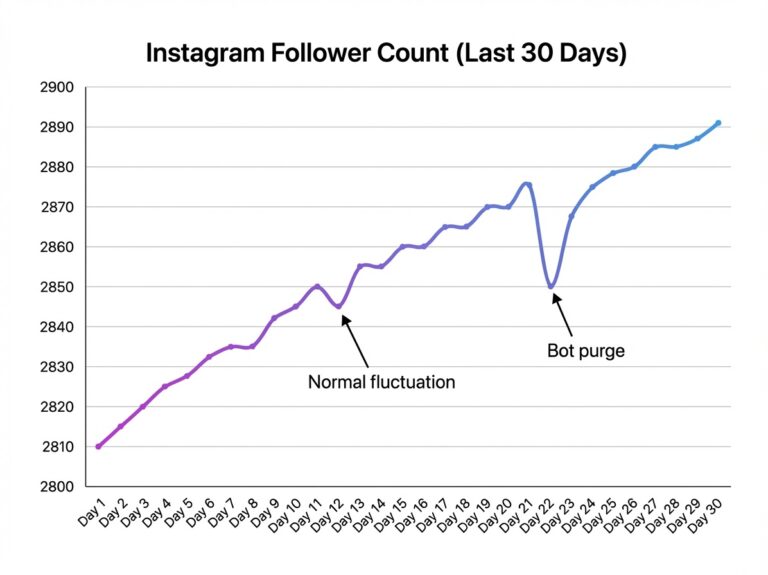
Lived detail: timing matters. If you check follower changes right after a Reel pops, you’ll often see a wave of follows and then a small unfollow wave 24 to 48 hours later. That second wave isn’t always “bad content,” it’s usually low-intent people cleaning up their feed after a binge.
Metrics I actually use for growth goals (and the ones I ignore)
If you only track followers, you miss the reason followers happen. Here’s the stack I like.
Growth goals that predict follower growth
- Non-follower reach % on Reels (if it’s consistently low, you’re not getting discovery).
- Shares per 1,000 views (share rate is a cheat code when it hits).
- Comments per Reel (especially comments that aren’t just emojis).
- Profile visits per post (this is “intent”).
- Follows per profile visit (your bio and pinned posts are doing the closing).
Metrics I treat carefully
- Likes: nice, but they can be misleading. I’ve seen low-like Reels drive huge follower spikes because they were shared in DMs.
- Views: views without actions often mean the hook worked but the content didn’t land.
Failure modes: where goal-setting falls apart
This gets weird in a couple situations.
Failure mode #1: viral spike = broken averages
If you go viral, your averages get distorted for weeks. People start setting goals based on that one spike, and then they feel like they’re “failing” when they’re actually normal again. The fix is using medians or “best 3 out of last 10” benchmarks instead of simple averages.
Failure mode #2: you’re attracting the wrong crowd
If your growth goals push you into super broad content, you might grow faster but convert worse. I’ve watched creators hit follower goals and then get miserable because their comments turned into “post more memes” instead of “how do I buy?” It’s a real thing.
Common mistakes I see with instagram growth goals (and what to do instead)
- Mistake: Setting one big monthly follower number with no supporting metrics.
Do this: Pair follower goals with comment and share targets. - Mistake: Posting daily to “prove you want it.”
Do this: Post 3 to 5 times weekly and put energy into hooks and retention. - Mistake: Ignoring retention drop-offs.
Do this: Rework the first 3 seconds, cut intros, and get to the point faster. - Mistake: Treating ads like cheating.
Do this: If you have something that converts, small boosts can accelerate reach. Improvado’s overview of growth approaches touches on this bigger picture: Instagram growth strategies.
Quick vulnerable moment: I used to chase “pretty content” and wonder why nothing moved. The day I started writing hooks like I was texting a friend, my saves and shares jumped. It felt almost too simple. But it worked.
Limitations (what these goals won’t tell you)
These frameworks won’t magically reveal why someone personally unfollowed you. Sometimes it’s content. Sometimes they’re doing a detox. Sometimes they got hacked and their account disappeared, which looks like an unfollow in your numbers. Annoying, but true.
Also, if your account is private, a lot of public-facing tracking methods won’t work the same way. And even on public accounts, your mileage may vary during platform shifts, holiday weeks, or when Instagram tweaks distribution (which happens more than they admit).
Mini goal templates you can steal
If you just want plug-and-play instagram growth goals, here are a few that don’t require a spreadsheet obsession.
Template A: Creator growth (community first)
- Primary: +8% followers in 30 days
- Supporting: average 25+ comments per Reel
- Supporting: 60% non-follower reach on at least 6 Reels
Template B: Local business growth (leads first)
- Primary: +150 followers in 30 days
- Supporting: 40 profile visits per post average
- Supporting: 15 DMs per week (pricing, availability, booking)
Template C: E-commerce growth (conversion first)
- Primary: +500 followers in 30 days
- Supporting: 1.5% profile visit rate on Reels
- Supporting: 30 saves per product Reel average
Want deeper analytics? Start here
If you’re serious about tracking follower changes, engagement patterns, and what’s causing growth (or stalls), keep a reference doc. I point people to this a lot: Instagram follower analytics complete guide. It’s the difference between “posting more” and “posting smarter.”
FAQ
What’s a good Instagram growth rate?
A good monthly growth rate depends on size, but 3% to 10% is a solid range for many accounts under 10k followers. Bigger accounts usually grow slower unless they have frequent high-reach content or paid boosts.
Should my instagram growth goals focus on followers or engagement?
Engagement goals tend to create follower growth more reliably because engagement drives distribution to non-followers. Followers alone don’t tell you if your content is being pushed.
How often should I review my growth goals?
Weekly is enough for most people. Daily checking makes you reactive and doesn’t give posts time to fully distribute.
Why did I gain followers and then lose them right after?
This happens a lot after high-reach posts when low-intent viewers follow impulsively and then clean up later. Watch your follows per profile visit and comment quality to see if you’re attracting the right people.
Conclusion (and a simple next step)
Setting instagram growth goals isn’t about dreaming bigger. It’s about picking the right inputs: retention, comments, shares, non-follower reach, and a posting rhythm you’ll still be doing next month.
If you want a low-drama way to keep an eye on follower movement while you work on those engagement inputs, UnfollowGram is a solid companion for daily tracking. Start with one month of clear goals, review weekly, and don’t “strategy hop” every time a post underperforms. That’s where real growth usually shows up.

Ethan is the founder of UnfollowGram with more than 12 years of experience in social media marketing. He focuses on understanding how Instagram really works, from follower behavior to engagement patterns, and shares those insights through UnfollowGram’s tools and articles.