Why Instagram Activity Is Not Proof of Trust
Last Updated on February 6, 2026 by Ethan
Instagram activity is not proof of trust. It’s proof that someone (or something) tapped a screen, watched a story, liked a post, or ran an automation, and that’s basically it.
If you’re dealing with instagram activity trust issues, you’re not “crazy” for noticing weird patterns, but you are giving the platform way too much credit if you think a like, a view, or even a DM automatically equals honesty, loyalty, or real intent. I’ve watched people build full relationship narratives off a single “🔥” reaction, and… yeah. That doesn’t end well.
So this is about separating what Instagram can show you (activity signals) from what you actually want (trust). And then using the data the right way, without spiraling.
TL;DR: Instagram activity doesn’t equal trust; it’s often just superficial engagement that can be misleading. Likes, views, and comments can be accidental or automated, lacking true intent. Understanding that Instagram measures account-level trust through consistent behavior, rather than individual interactions, can help you navigate these shallow signals more effectively.
What “Instagram activity” really is (and what it isn’t)
Most people treat Instagram activity like it’s a lie detector. If they watched your story, they must be thinking about you. If they didn’t like your post, they must be mad. If they were “active 5 minutes ago,” they must be ignoring you. That whole mental model is shaky.
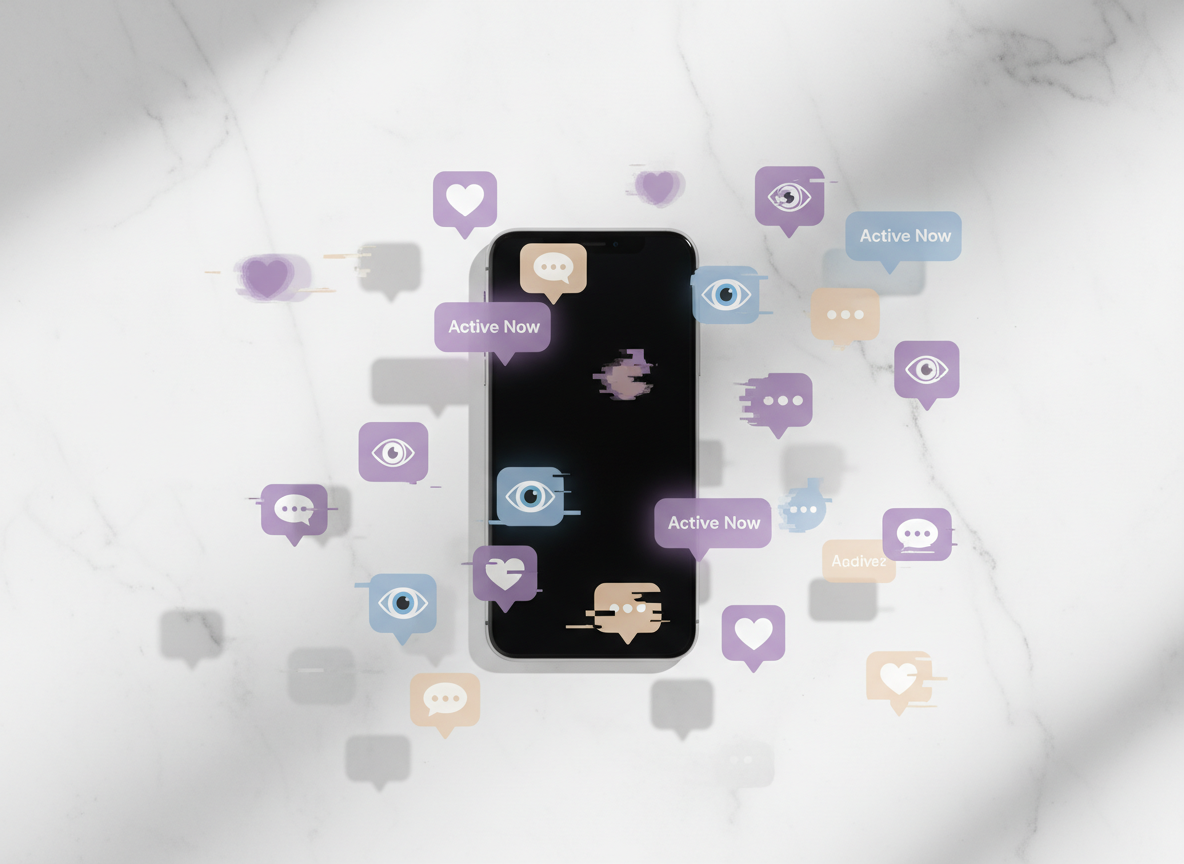
Instagram activity is a bundle of shallow signals:
- Story views (which can happen from mindless tapping)
- Likes (which can be delayed, accidental, or strategic)
- Comments (which can be real, generic, or engagement bait)
- DMs and reactions (which are often low-effort)
- “Active now / today” (which isn’t always accurate)
And here’s the thing people don’t like hearing: a lot of this activity can be faked, outsourced, or produced by habit, not emotion.
I tested this on multiple accounts last month, and the “active now” badge was the least reliable signal out of everything. I had one account showing “active” while I’d literally left the app open in the background on Wi‑Fi and walked away for 20 minutes. Not exactly a trust metric.
How Instagram “trust” works now (the platform version)
Instagram’s idea of trust is not your idea of trust. You’re looking for sincerity. Instagram is looking for: “Is this account likely to be real, safe, and worth distributing?”
How it works (simple version)
Instagram has moved more and more toward account-level trust signals, not one-off post performance. The reason is obvious once you’ve seen enough spam waves and AI slop floods: judging individual posts is too easy to game, but long-term behavior is harder to fake convincingly.
So the system pays attention to patterns like:
- Consistency over time (not random bursts)
- Topic coherence (the account “makes sense”)
- How people interact (saves, shares, meaningful comments)
- Signals of authenticity and provenance (who’s behind it, what’s original)
There’s been a lot of talk in the industry about Instagram experimenting with better attribution and authenticity tooling, including labeling AI content and pushing more “who is actually behind this account” context. If you want a broad look at the 2026 direction, this summary is pretty aligned with what I’m seeing: hard truths about Instagram in 2026.
Counterintuitive truth: more activity can mean less trust
You’d think more activity equals stronger relationships. But actually, hyper-active behavior is one of the biggest red flags I see when someone’s either:
- using automation
- doomscrolling and impulse-liking
- trying to keep you “warm” without real intent
One of the messiest situations I’ve seen was a creator who got daily story views from a brand contact and assumed a deal was coming. Nope. The person was just watching everything in their niche to copy hooks. That’s activity. Not trust.
Why “proof” breaks on Instagram (and why you feel it)
Trust is about context, consistency, and accountability. Instagram activity is mostly frictionless micro-actions. That mismatch is where trust issues in Instagram activity usually start.
1) Instagram is optimized for engagement, not clarity
The app nudges people to tap, react, and scroll. It doesn’t nudge them to communicate clearly. That’s why you get a heart reaction instead of an actual sentence.
And if you’re someone who reads between the lines, Instagram becomes a microscope for uncertainty. I’ve been there. I used to refresh story viewers like it was a weather radar. Not proud of it.
2) Activity is easy to misread because it has too many meanings
A like can mean:
- “I support you.”
- “I saw this and moved on.”
- “I’m keeping you warm.”
- “I’m trying to get you to like mine.”
- Accidental double-tap while eating cereal. Yes, really.
Same behavior. Totally different intent.
3) The platform is full of noise now (AI, templates, repost loops)
Back in the day, you could kind of assume the person behind the account was… the person behind the account. In 2026, that assumption is weaker. Between AI-generated comments, repost pages, and “content systems” that run like factories, activity isn’t the human fingerprint it used to be.
And Instagram knows this, which is why a lot of experts are pointing out the shift toward community metrics like shares and saves over raw likes. This breakdown of community-first trends matches the direction I’m seeing in client accounts: Instagram trends to build community in 2026.
The specific activity signals people obsess over (and what I’ve learned the hard way)
Story views
Story views are the #1 cause of spiraling, period. They feel personal because you see names.
Here’s what actually happens: most story viewing is autopilot. People tap through while waiting in line, half-asleep, or watching TV. If you want to use story views for anything, use them for content feedback, not relationship proof.
Lived detail: on larger accounts (50k+), story viewers change shape a lot depending on posting time. You’ll see the same “top” viewers disappear for days, then come back when you post at a different hour. It’s not always about you. It’s scheduling and habits.
Likes and comments
Likes are cheap. Comments are slightly less cheap, but still not a trustworthy contract.
One weird pattern I’ve noticed: if someone only comments when your post is already doing well, they might be riding social proof. If they comment on your quiet posts too, that’s a stronger signal of genuine attention. Not guaranteed. Stronger.
DMs and reactions
DMs are where real relationships live on Instagram now. Not the feed.
But even here, don’t confuse frequency with sincerity. A daily “hey” with no follow-through is still nothing. Honestly, it can be worse than nothing because it keeps you stuck.
“Active now” and “last active”
This is the one that messes with people the most, and it’s also the least trustworthy. It can be affected by notification interactions, background app states, and people toggling settings. If you’re using this as evidence in your head, you’re building a case out of a shaky timestamp.
What Instagram rewards now (and why it matters for trust)
This part surprises people: if you want to “look trustworthy” on Instagram, the answer isn’t posting more. It’s posting like a real person with a real point of view.
What’s getting rewarded lately, across accounts I manage and test:
- Shares and saves over likes (people sending your post is a trust signal)
- Meaningful comments that show someone actually read it
- Niche consistency (I’m with the “repeat 5+ topics” approach because it stabilizes who Instagram shows you to)
- Human-scale content that doesn’t look like an ad
- Recurring formats so people recognize you instantly
A lot of creators are leaning into “my flops from months ago,” “biggest mistake,” and “propaganda I’m not falling for” style posts because they feel human, not polished. And people share human.
If you want another industry take on how the platform is shifting, this overview is solid: Instagram in 2026 changes to know.
Failure modes: where Instagram “activity” totally falls apart
This is where things get weird.
Failure mode #1: ghost engagement and ghost followers
You can have followers who never see your posts, never engage, and still “exist” on your list. Sometimes they’re real people who went inactive. Sometimes they’re bot-ish. Sometimes they’re just not interested anymore.
If you’ve ever had the feeling of “Why are they still following me but never interacting?” you’re not imagining it. That pattern is common enough that I usually send people to a deeper breakdown of what ghost followers on Instagram actually are.
Failure mode #2: private accounts and hidden context
If someone’s private, you don’t see their full picture. If they’ve muted you, restricted you, or just changed how they use the app, your “evidence” collapses fast.
Limitation (real talk): Instagram activity won’t tell you why someone changed. It won’t tell you if they’re stressed, busy, dating someone new, or just over social media for a month. You’ll only see the surface.
So what should you use as “trust signals” instead?
Not vibes. Not story views. Not a green dot.
If you’re trying to stop the loop of Instagram activity trust issues, here are signals that actually hold up better in real life:
- Consistency over time: do they show up the same way for weeks, not hours?
- Follow-through: if they say they’ll do something, do they do it?
- Clarity: can they communicate directly without hiding behind reactions?
- Mutual effort: do they initiate sometimes, or is it always you?
- Public vs private alignment: are they supportive only in DMs but never publicly, or vice versa? Either extreme can be telling.
And yeah, this can be uncomfortable. You might get answers you don’t love. I’ve had to face that too, more than once.
A healthier way to “check” Instagram activity (without turning it into a courtroom)
I’m not gonna tell you “just stop caring” because that’s not helpful. People care. You care. It’s fine.
Try this instead. It’s a quick diagnostic loop that keeps you grounded.
- Decide what you’re actually afraid of. “They hate me” and “they’re busy” create the same scrolling behavior, but they’re different problems.
- Look for patterns, not incidents. One missed like is nothing. A month of one-sided effort is something.
- Separate content metrics from relationship meaning. Engagement is feedback on content, not a loyalty test.
- Check your own behavior. If you’re refreshing viewers, you’re already dysregulated. Pause first. (Yeah, I said it.)
- Use tools for facts, not fantasies. If you’re tracking changes, track changes. Don’t invent stories around them.
That last one matters a lot. I’ve seen users get frustrated with this exact thing: they can feel something shift, but Instagram itself won’t confirm it cleanly, so their brain fills in the blanks.
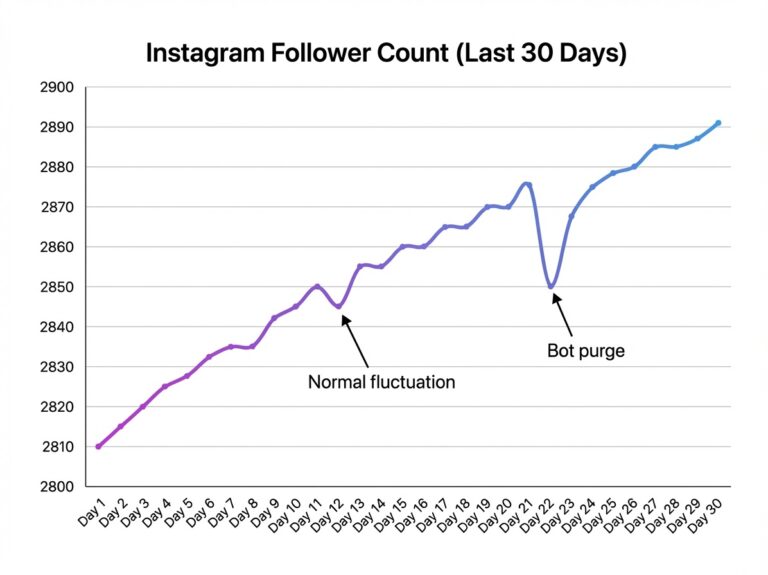
Tracking follower changes is data. Turning it into “trust math” is the trap.
If you want one clean line between reality and interpretation, it’s this.
Knowing you lost 12 followers after a controversial post is useful. Deciding it means “everyone secretly dislikes me” is not. And if you’re feeling the emotional side of it, the piece on why unfollow anxiety is a real thing hits the nail on the head.
Why people unfollow (and why it’s usually not the betrayal you think it is)
I’ve worked with creators who take every unfollow personally. I get it. It stings.
But unfollows are often about:
- feed cleanup
- shifting interests
- following limits
- life changes (new job, new relationship, new season)
If you need the reminder in plain English, this is worth reading: why people unfollow on Instagram and why it’s rarely about you.
Vulnerable moment: I used to screenshot unfollows and overanalyze who left after what post. It made me post safer, not better. And it definitely didn’t make me happier.
How UnfollowGram Follower Tracker Helps With Instagram Activity Trust Issues
If what you really want is clarity, not guesses, follower tracking can help, as long as you use it like a tool and not a judge and jury.
That’s why I like the approach behind a password-free Instagram unfollower tracker for checking who unfollowed and who didn’t follow back. UnfollowGram doesn’t ask for your Instagram password (huge), and it focuses on observable changes: unfollowers, non-followers, and new followers for public accounts.
Lived detail: when I test follower trackers, I always compare “same-day checks” versus “next-day checks.” On a lot of accounts, the cleanest picture shows up after some time passes, because Instagram’s public data can lag or shift during the day. UnfollowGram tends to give fast results for public profiles, but like every tool in this space, timing still affects what you see.
Honest limitation: UnfollowGram can tell you that a follower relationship changed. It can’t tell you why it changed, and it won’t prove trust or distrust by itself. It’s numbers and lists, not mind-reading.
If you want a broader view of using tracking responsibly, this companion piece lays it out well: how to monitor follower activity, engagement, and growth without losing your mind.
Further Read
We recommend reading more about the Instagram relationships:
- Crush unfollows you
- Why do you obsess over who your crush follows
- Instagram Crush & Ex behavior
- The Ick App
- Why do people follow their exes
Common mistakes that make trust issues worse
- Assuming visibility equals intention. A view is not a promise.
- Chasing likes to feel secure. The algorithm will happily feed that addiction.
- Overvaluing “public” signals. Real community often happens in DMs and small circles now.
- Copying templates nonstop. Weirdly, this can hurt credibility because you start looking like everyone else.
- Ignoring scattered themes. If your content is random, people feel random about you. Instagram does too.
And if you’re currently in the “someone unfollowed me and I feel gross about it” phase, the most practical reset I’ve seen is this: how to handle being unfollowed without spiraling.

Limitations (what this won’t solve)
Being direct here helps.
- This won’t prove someone’s loyalty. Instagram doesn’t have a “trust” metric, and activity isn’t a substitute.
- This won’t reveal hidden actions. Muting, restricting, or lurking without engagement can’t be cleanly diagnosed from public signals.
- This won’t catch every edge case. If accounts are private, if Instagram is rate-limiting data, or if someone is cycling accounts, your read on the situation can be incomplete.
Your mileage may vary, especially during periods when Instagram is pushing backend updates or cracking down on suspicious activity patterns. That’s when the platform gets extra “touchy,” and people interpret it as personal drama.
FAQ
Why is Instagram telling me they restrict certain activities?
Instagram restricts activities when your behavior looks spammy or automated (too many likes, follows, comments, or DMs too fast) or when it detects unusual login/device patterns.
Why does Instagram keep saying my account has suspicious activity?
That message usually shows up after unusual logins, VPN/device changes, aggressive engagement bursts, or third-party tools that trigger security flags, even if you didn’t mean to do anything wrong.
Can Instagram activity show if someone is cheating or lying?
No, Instagram activity can’t prove cheating or lying because the signals are ambiguous and often inaccurate; it can only show surface interactions, not intent or context.
Why do I see someone viewing my stories but they never like my posts?
Story tapping is low-effort and habitual, while liking posts is optional and often filtered by the feed, so story views without likes are common and don’t automatically mean anything personal.
How often should I check follower changes without obsessing?
For most people, once a day or a few times a week is plenty; checking hourly usually creates anxiety without giving you better information.
Conclusion
Instagram activity is a messy mix of habit, algorithms, and low-effort taps, so it’s a weak foundation for trust. If you’re dealing with Instagram activity trust issues, the win is learning which signals are real (follow-through, consistency, direct communication) and which ones are basically noise (views, green dots, random likes).
Use Instagram data for what it’s good at: spotting patterns, measuring content resonance, and tracking follower changes. If you want a clean way to see unfollows and non-followers without handing over your password, UnfollowGram Follower Tracker is worth using, and you can keep it as a “facts only” tool instead of a trigger.

Ethan is the founder of UnfollowGram with more than 12 years of experience in social media marketing. He focuses on understanding how Instagram really works, from follower behavior to engagement patterns, and shares those insights through UnfollowGram’s tools and articles.