Instagram Follower Analytics Complete Guide
Last Updated on January 25, 2026 by Ethan
Instagram follower analytics in 2026 is less about “how many followers do I have?” and way more about “who are they, do they care, and did anything I posted actually move the needle?”. If you track the right numbers (and ignore the vanity ones), you can spot what’s working, fix what’s dragging you down, and grow faster without guessing.
I’ve been tracking Instagram accounts daily for years, from tiny creator pages to bigger brand accounts where one weird week can trigger a full-on panic in the group chat. And yeah, I’ve used a lot of tools, including UnfollowGram Follower Tracker, plus the native Instagram Insights, plus some “analytics” apps that are basically just a pretty UI with stale data. Some of them are fine. Some are… not great.
So this is the complete guide to Instagram follower analytics: what to measure, why it behaves the way it does, how to set up a tracking routine that actually sticks, and the failure modes that make people think “Instagram is broken” (it’s usually the tracking).
What “Instagram follower analytics” really means (and what it’s not)
When people say “Instagram follower analytics,” they usually mean one of three things:
- Audience analytics: Who follows you (location, age, language, active hours, interests-ish).
- Growth analytics: How your follower count changes over time, and what triggered spikes or drops.
- Relationship analytics: Who followed, who unfollowed, who doesn’t follow back, and who’s “dead weight” (bots or inactive).
What it’s not: a magical dashboard that tells you “post this at 7:13 pm and you’ll go viral.” If anyone sells it like that, run.
Here’s the counterintuitive truth that surprises most people: a slower-growing account with high engagement and clean followers often outperforms a fast-growing account with passive followers. You’d think bigger is always better, but Instagram’s ranking systems have been leaning harder into engagement quality. I’ve watched smaller niche pages beat big pages on reach per follower just because their audience actually taps, saves, shares, and DMs.
The big shift in 2025-2026: why follower count matters less (but still matters)
Instagram didn’t wake up one day and declare follower count useless. It’s just that follower count is now the least “informative” number you can stare at.
Mechanically, the reason is pretty simple: Instagram tests your content with a slice of your audience (and sometimes non-followers), then expands distribution if the early signals look strong. Early signals aren’t “you have 50k followers.” They’re things like watch time, saves, shares, meaningful comments, and whether people bounce.
Also, the tooling landscape changed. Meta deprecated and restricted a bunch of endpoints across 2025-2026, which is why so many third-party tools suddenly got slower, less real-time, or started estimating. I’ve personally seen this with accounts I check daily: two tools will disagree on “new followers today” because one is using fresher snapshots than the other.
Native Insights has improved though. In 2026 it got better audience location breakdowns and more visibility into content categories. If you’re curious about the broader ecosystem of analytics tooling, InfluenceFlow has a solid overview of current options and competitor analysis approaches here: Instagram analytics tools and competitor analysis (2026).
How follower analytics actually works (so you stop chasing ghosts)
Most confusion comes from not knowing what you’re looking at.
Two different “truths”: Instagram’s internal truth vs public snapshots
Instagram knows exactly who followed and unfollowed you and when. But most external tools don’t get that internal event stream anymore, especially without login access.
So a lot of follower tracking in 2026 works like this:
- A tool pulls a list (or partial list) of followers for a public account at time A.
- Later, it pulls again at time B.
- It compares the two lists and infers “new followers” and “unfollowers.”
That comparison method is still useful. But it explains the weird moments like “why did it say I lost 12 followers, then the next day it corrected?” It’s not always lying. Sometimes it’s just working with snapshots that shift as Instagram refreshes, caches, rate limits, or reorders things.
what I see in real accounts
On smaller accounts (under ~2k followers), changes usually show up cleanly and fast because the follower list is easier to fetch and compare. On larger accounts, it can take longer and you’ll occasionally see “chunky” updates, like a whole cluster of changes showing up at once even though they happened throughout the day.
And timing matters more than people think. If you check at 9am one day and 11pm the next, you’re not doing “daily tracking.” You’re doing “random snapshot tracking,” and it makes normal fluctuations look dramatic. I learned that the hard way running reports for clients who swore they were “bleeding followers,” when really we were sampling at inconsistent times.
The follower numbers that matter in 2026 (and the ones to stop obsessing over)
1) Net follower growth (but with context)
Net growth is still the headline. It’s just not the diagnosis.
Track:
- Net change (ending followers minus starting followers)
- New followers (gross adds)
- Unfollows (gross losses)
If you only track net change, you’ll miss the pattern where you’re gaining a bunch but also bleeding a bunch. That usually means your reach is okay, but the content isn’t matching what people expected when they hit follow.
2) Engagement rate (simple formula, big impact)
Engagement rate is still one of the best “sanity checks” for follower quality. The basic formula most people use is:
(likes + comments + saves) ÷ follower count × 100
But I don’t love when people use one post as a verdict. I prefer tracking a rolling average across recent posts and separating Reels from carousels because they behave differently.
If you want the step-by-step way I calculate it when I’m auditing an account, this walkthrough is solid: how to track your Instagram engagement rate accurately.
3) Reach per follower (more honest than impressions)
Reach is unique accounts. Impressions are total views (including repeats). For growth, reach is usually the cleaner number because it tells you how wide the distribution went.
Here’s what I’ve seen again and again: accounts that obsess over impressions often chase “repeat views” content, while accounts that chase reach build discovery loops that bring in new people.
4) Saves and shares (the quiet growth drivers)
Likes are nice, but saves and shares are the stuff that compounds. If a post gets saved, Instagram reads that as “this was useful.” If it gets shared, that’s free distribution.
Honestly, when a client asks me “what should I improve first?”, my answer is usually “make something people would send to a friend.” That’s the cheat code. Not hashtags. Not fancy fonts.
5) Audience activity windows (but don’t worship them)
Best posting time matters, but it’s not a spell you cast. If the content is mid, posting at the perfect time just means more people see it and scroll right past. Ouch.
Still, you should track when your followers are online and test. This breakdown goes deep on it without making it weird: best times to post based on when your followers are active.
6) Follower quality signals (bots and inactive accounts)
There’s a reason your engagement rate can suddenly “drop” even when your content hasn’t changed. A chunk of your followers might be bots, inactive, or low-intent accounts that never interact.
Recent stats put bot/inactive followers around 14.1% on average, and a big chunk of followers go inactive over time. If you want the broader numbers and context, this roundup is useful: Instagram follower statistics.
If you suspect you’ve got fake followers dragging you down, this is the practical checklist I use: how to identify fake followers on an Instagram account.
Instagram Insights vs third-party tools (and why you probably need both)
People keep trying to pick one. I don’t.
Instagram Insights tells you what Instagram wants you to see, in the way Instagram wants you to see it, and it’s often limited to recent windows. Third-party tools can give you better history and comparisons, but they can be less real-time and sometimes less complete.
If you want the clean side-by-side breakdown, this is worth reading: Instagram Insights vs third-party analytics tools.
When I rely on native Insights
- Audience demographics and follower active times (it’s the “source of truth” for that)
- Content performance by type (Reels vs posts vs Stories)
- Reach, impressions, profile activity, website taps
When I rely on third-party follower tracking
- Daily “who followed/unfollowed” monitoring
- Historical trend lines (especially if you didn’t track from day one)
- Comparing multiple public accounts (like competitor monitoring)
One more lived detail: on accounts that post multiple Reels a day, Insights can feel “laggy” for a few hours after a post pops off. I’ve watched a Reel take off, creators refresh like maniacs (been there), and the numbers don’t fully settle until later. It’s not you. It’s the reporting delay.
Setting up a follower analytics routine you’ll actually keep doing
Most people fail here. Not because they’re lazy. Because they try to track everything, every day, forever. That’s a recipe for burnout.
My simple cadence (the one that doesn’t make you hate your phone)
- Daily (2 minutes): check new followers and unfollows, note anything weird.
- Weekly (15 minutes): review top posts by reach and by saves, plus net growth.
- Monthly (45 minutes): deeper audit: content pillars, audience shifts, follower quality, and conversion signals.
If you’re deciding between weekly or monthly tracking, this comparison is a good reality check: weekly vs monthly follower tracking and what each catches.
What to write down (yes, write it down)
I keep a basic sheet with:
- Starting followers
- Ending followers
- Net change
- Top content that week (by reach, saves, shares)
- Any notable events (collab, shoutout, giveaway, controversy, posting break)
Because if you don’t log the context, you’ll misread the data later. I’ve done it. You look back and think “wow, Reels did nothing in March,” but you forget you took 10 days off posting and also changed niche mid-month. (Ask me how I know.)
Tracking unfollowers and non-followers without getting your account flagged
This is where people get nervous, and honestly, they should be cautious.
The “sketchy” follower apps usually have two red flags:
- They ask for your Instagram password directly.
- They automate actions (mass unfollow, auto-DM, auto-like) that can trigger limits.
Password-free public-account tracking avoids a lot of that drama because it’s not logging in as you. It’s basically reading public info and comparing snapshots.
Non-followers vs unfollowers: don’t mix them up
Non-followers are people you follow who don’t follow you back. Unfollowers are people who used to follow you and then stopped. These are different problems.
Non-followers matter if you’re cleaning up your following list or managing reciprocity dynamics (common for creators early on). Unfollowers matter because they’re feedback. Not always negative feedback, but feedback.
Growth spikes, drops, and the “what just happened?” detective work
Most follower analytics questions boil down to: “Why did my account change like that?”
How I diagnose a follower spike
Spikes are usually one of these:
- A Reel hit Explore or got strong share velocity
- A large account reposted you (story reshare counts a lot)
- A collab post, Live, or giveaway pulled in new people
- External traffic (TikTok, YouTube, newsletter)
The reason Reels drive faster growth is distribution. They can reach non-followers at scale, and in 2026 creators leaning into Reels still tend to grow faster than those who don’t.
If you want a really clear breakdown of interpreting these moments (and not overreacting), this helps: understanding follower growth spikes and what causes them.
How I diagnose a follower drop (the one that feels personal)
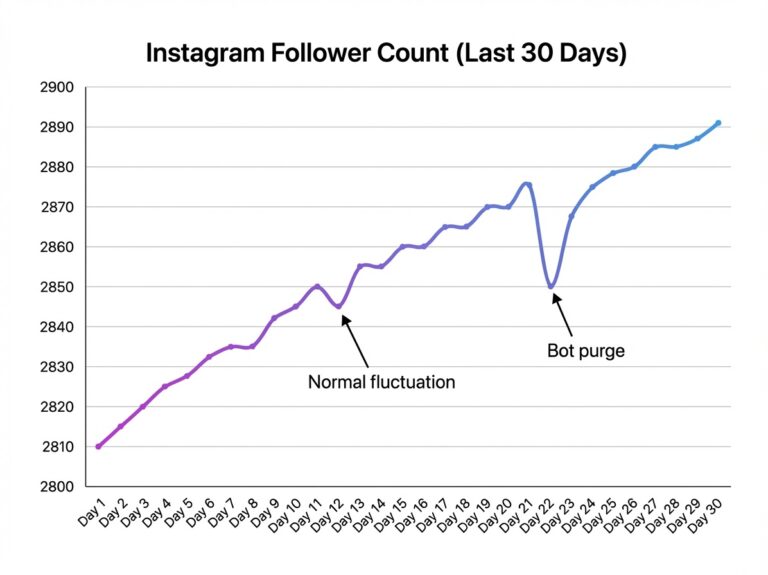
Drops usually come from:
- Posting something off-niche (new followers bounce fast)
- Posting frequency changes (sudden spam or sudden silence)
- Instagram cleanup (bots removed, fake accounts purged)
- A viral post that brought low-intent followers who churn later
That last one stings. You go viral, you celebrate, then you watch the unfollows trickle in for a week. It’s normal. Still annoying, though.
Follower segmentation: the underrated part of instagram follower analytics
Segmentation is where analytics becomes strategy. Otherwise you’re just counting.
Segments I actually use
- Location: city and country trends (helps with offers, collabs, even language choices)
- Language: mixed-language audiences behave differently, especially in comments
- Age bands: not for stereotypes, but for content framing
- Device type: this matters more than people think for link behavior and viewing habits
- “Engaged core”: the people who repeatedly like, comment, save, and reply to Stories
Native Insights is usually enough for location and age. For the engaged core, you’re mostly identifying patterns: recurring names in Story replies, repeat commenters, people who save your educational posts.
And yes, this is where smaller creators win. Nano-influencers often have higher engagement because their “core” is a larger percentage of the total audience.
Competitor and peer analytics (without turning it into an obsession)
Tracking other accounts is useful, but it can also melt your brain if you do it emotionally.
I keep it simple:
- Pick 5 peers in your niche (similar size)
- Pick 3 “aspirational” accounts (bigger, but still relevant)
- Once a month, review what formats they’re repeating and what topics get shared
Brands that do competitor analysis tend to improve ROI because they’re not guessing in a vacuum. If you want a list of tools people use for this kind of benchmarking, FinallySocial has a decent roundup here: best Instagram analytics tools for 2026.
Failure mode: competitor copying that nukes your positioning
Where this gets weird is when creators copy the “format” but not the “why.” They see a competitor’s carousel pop off and replicate it, but their audience followed them for something else. Result: reach drops, unfollows rise, and you blame the algorithm. I’ve watched this happen more times than I can count.
Follower analytics for business and creator accounts: what changes
Creators and businesses often look at the same dashboards and pull totally different conclusions.
Creator accounts usually care about growth loops (Reels reach, follows per post, shares). Business accounts care about conversion signals (profile visits, link clicks, DMs, purchases). Both matter. The weighting changes.
If you’re running a brand page, this breakdown goes deeper into the specific metrics I’d prioritize: follower analytics for business accounts and what to track.
Connect Instagram to real conversions (or you’re just entertaining people)
If you sell anything, connect your Instagram activity to website analytics. UTM links, landing pages, tracked link-in-bio tools, whatever you like. Otherwise you’ll overvalue “engagement” that never turns into revenue or leads.
I’ve had months where the “worst” performing posts by likes drove the most email signups because the topic matched buyer intent. That was a humbling lesson. Actually, it was annoying. But it was useful.
Cleaning and scoring follower quality (and why it’s not just vanity)
Bot followers and inactive followers don’t just sit there harmlessly. They dilute your performance signals.
If 30% of your followers never interact, your engagement rate looks worse, which can affect initial distribution tests. It’s not that Instagram “punishes” you for bots directly. It’s that your audience doesn’t respond, so the system doesn’t expand reach as aggressively.
How I think about follower quality score
I like using a simple internal scoring model: how likely is this follower to see and engage with content? It’s not one metric. It’s a blend.
This explainer is a good starting point if you want a structured framework: follower quality score explained (practical version).
Don’t go overboard with “cleaning”
Yes, remove obvious bots. Yes, prune spam followers if they’re rampant. But don’t become the person who spends three hours a week manually auditing followers instead of making content. I’ve been that person. It’s not productive.
Exporting follower data (when you’ve outgrown screenshots)
If you’re managing multiple accounts, working with a team, or doing brand reporting, exporting follower data is a lifesaver.
Also, if you’re trying to understand seasonality or long-term trends, you need your data outside Instagram because Insights windows can be limited.
This is the cleanest way I’ve found to do it without making a mess: how to export Instagram follower data for reporting.
Common mistakes I see with instagram follower analytics (and how to fix them)
- Obsessing over daily net change: daily tracking is for pattern detection, not self-worth. Weekly trends are more reliable.
- Mixing content types in one bucket: Reels metrics don’t “mean” the same thing as carousel metrics. Separate them.
- Ignoring bots and inactive followers: it quietly drags down performance signals and makes you think content is failing.
- Changing five things at once: you can’t diagnose what worked if you switch niche, format, posting time, and captions in the same week.
- Not tracking spikes with context: if you don’t note the shoutout, collab, or external traffic, you’ll misattribute growth later.
- Chasing competitor tactics blindly: strategy without positioning is just noise.
- Measuring engagement but not intent: saves, shares, DMs, and clicks often correlate better with outcomes than likes.
One vulnerable admission: I used to delete posts that “underperformed” within the first hour because I thought I was protecting my account. Bad move. Some posts just take longer to find their people, especially educational ones that get saved and shared slowly.
Limitations and caveats (the stuff analytics won’t tell you)
This is the part most guides skip, but it’s the part that saves you headaches.
- Follower analytics won’t tell you why someone unfollowed. You can infer patterns, but you can’t read minds.
- Password-free public tracking doesn’t work for private accounts. If an account is private, public snapshot tools can’t see follower lists.
- Some numbers have reporting delay. A Reel can pop off and the dashboards can lag behind for hours.
- Big accounts can get “chunky” updates. If a follower list is huge, tools may detect changes in batches, not in perfect real time.
And one more: if you’re trying to “track someone’s followers” (like a competitor), you can usually only do it reliably if they’re public. Private is a hard stop. That’s not a tool limitation as much as… reality.
Setting goals that don’t make you miserable
Follower goals are useful if they’re connected to inputs you control. Otherwise it’s just a number you fail at every day until you don’t.
I like goal stacks:
- Input goals: 3 Reels per week, 2 carousels per week, 10 Story frames on posting days
- Quality goals: average saves per carousel, shares per Reel, reply rate on Stories
- Outcome goals: net followers per month, profile visits, link clicks, leads
If you want a structured way to do this (especially if you’re tracking multiple accounts), this helps: setting up follower growth goals you can actually hit.
So what should you use day-to-day?
For day-to-day follower relationship tracking, I prefer tools that don’t ask for your password and don’t automate actions. That combo alone removes a lot of risk and weirdness.
When I’m monitoring unfollows and non-followers for public accounts, I’ll typically do a quick check daily and a deeper review weekly. Simple. If something looks off, I compare it against content performance and reach trends rather than assuming the follower tracker is “wrong.” Sometimes it is. Sometimes your content just hit a new audience that didn’t stick.
FAQ
How to see follower analytics on Instagram?
Switch to a professional account (creator or business), then open Insights to view follower growth, audience demographics, and active times. Insights is best for reach and audience breakdowns, but it’s limited for historical follower-by-follower changes.
Is there a free Instagram follower tracker?
Yes, there are free options that track public accounts using snapshot comparisons, but the tradeoff is they may be less real-time and won’t work for private accounts. Avoid anything that asks for your password or promises aggressive automation.
How to track someone’s Instagram followers?
You can only track follower changes reliably if the account is public. Private accounts don’t expose follower lists publicly, so tools can’t monitor their follower changes without access.
Why does my follower count change but my analytics look delayed?
Instagram’s reporting often lags, especially during spikes from Reels. Counts can update faster than Insights dashboards, so give it a few hours before you judge performance.
Do fake followers hurt engagement?
They usually do, because they inflate follower count without interacting, which lowers engagement rate and weakens early performance signals. Cleaning obvious bots can help your metrics reflect reality again.
Conclusion (keep it simple, keep it consistent)
Instagram follower analytics is really just pattern recognition: who’s joining, who’s leaving, what content pulls in the right people, and whether your audience is actually alive. Track fewer metrics, track them consistently, and always tie changes back to what you posted and when.
If you want an easy, password-free way to monitor follower changes on public accounts and keep an eye on unfollows, non-followers, and new followers without the sketchy login stuff, UnfollowGram is a solid option to fold into your routine.

Ethan is the founder of UnfollowGram with more than 12 years of experience in social media marketing. He focuses on understanding how Instagram really works, from follower behavior to engagement patterns, and shares those insights through UnfollowGram’s tools and articles.