Mutual Followers What They Mean
Last Updated on January 31, 2026 by Ethan
Mutual followers on Instagram are the people you follow who also follow you back. That’s it. In 2026, they matter more than ever because Instagram’s recommendations are leaning harder into “real connections” instead of raw follower counts.
If you’ve ever clicked someone’s profile and seen “Followed by X, Y, and 23 others,” you’ve already seen mutual followers in action. And if you’re trying to grow (or just figure out who’s actually in your corner), understanding mutual followers Instagram logic saves a ton of guessing.
I’ll break down what mutual followers mean, how Instagram decides which ones to show first, what’s changed lately (yep, the “Friends” shift), and how I’d use mutuals to clean up your following strategy without turning it into a weird numbers game.
What “mutual followers” on Instagram actually means
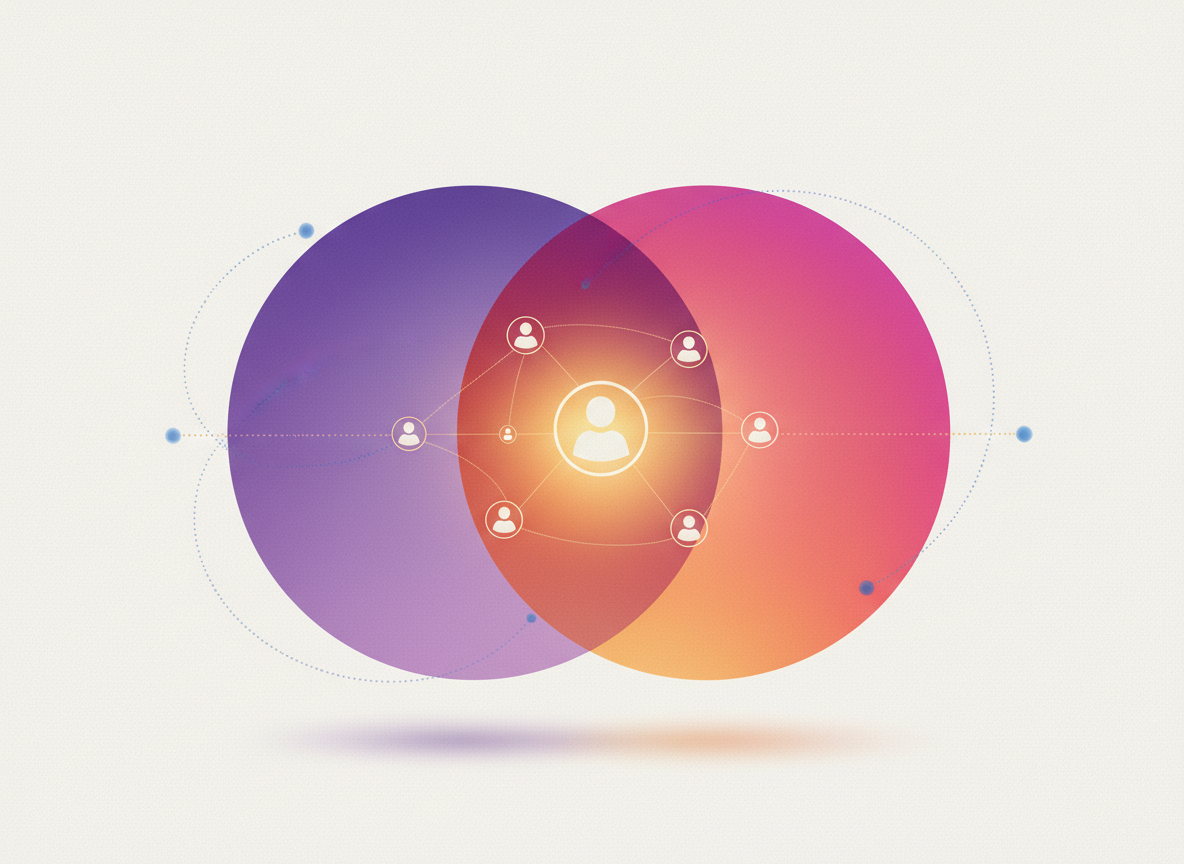
On Instagram, a mutual follower is any account where the follow relationship goes both ways: you follow them, they follow you. People mix up the term a lot, because Instagram also shows “mutuals” as social proof when you’re viewing someone else’s profile.
So there are two common situations:
- Your mutual followers: the overlap between your “Following” and your “Followers.”
- Mutual followers with someone else: accounts you both follow (and sometimes accounts that follow you both, depending on context).
And yes, it feels messy. Instagram uses “mutual followers” casually in the UI, but under the hood it’s basically “shared connections that help us predict relevance.”
Why mutual followers Instagram signals are a bigger deal in 2026
Here’s what nobody tells you: mutual followers aren’t just a feel-good badge, they’re an algorithm signal that you’re part of an engaged network. You’d think follower count is the flex, but I’ve watched accounts with a smaller, active mutual base get better reach than bigger accounts full of dead weight.
Instagram has been testing changes that push this idea even harder, like swapping the “Following” label for “Friends” (meaning mutuals) in some contexts. If you want the source, Social Media Today covered the “Friends” test, and it lines up with what a lot of creators are seeing on the ground.
My lived experience piece: on accounts around 500 to 2,000 followers, mutuals tend to convert into story replies and DMs way faster, and that seems to pull your content into more “friends-first” surfaces. On bigger accounts (10K+), mutuals still matter, but you’ll notice the algorithm separates “fans” from “friends” really aggressively, especially in Stories.
Also, I’ll say it: I used to chase follow-backs like it was a job. It felt productive. It wasn’t. Engagement got weird, my feed got irrelevant, and the mutuals I did have weren’t actually interacting.
How mutual followers work, the simple version.
Look, Instagram’s probably always piecing together a kind of relationship map between accounts. Mutual followers are the obvious part of that map because it’s a two way thing, not just you following someone and getting nothing back.
Here’s the thing: Instagram usually cares most about stuff you both do.
Two-way actions matter, not just one person liking every post like it’s their job.
- Frequency and recency: who you interacted with lately matters more than who you followed three years ago.
- Depth of interaction: DMs, replies, saves, shares, profile taps. Likes help, sure. But they’re only part of it.
- Shared network context: mutual followers with other people, mutual interests, and community clusters.
This is why mutual followers often correlate with “why am I seeing this post?” moments. Instagram is basically saying: you and this person are connected in ways that predict you’ll care.
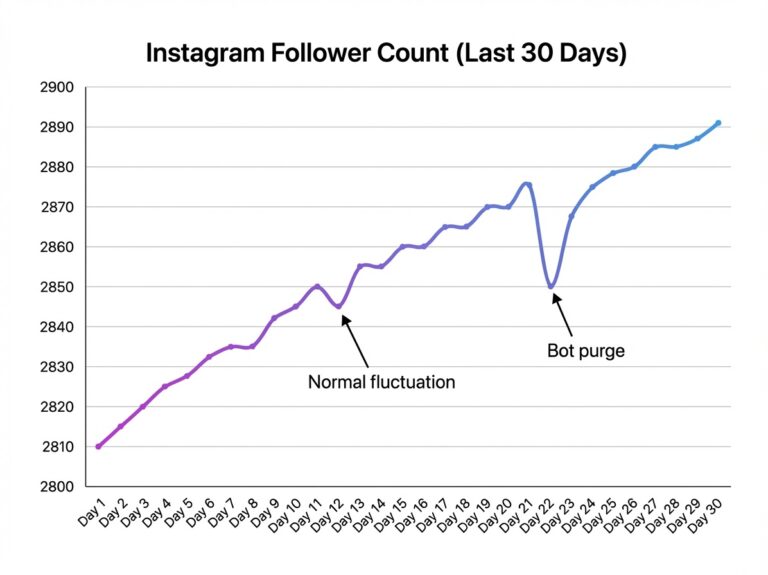
And if you’re trying to track your community over time, an unfollower tool helps you separate “mutuals who drifted” from random churn. I’ve used an Instagram follower tracker to monitor who unfollowed and who doesn’t follow back, mainly to keep my mutuals list honest, not to obsess over every single loss.
What determines the order of mutual followers on Instagram?
This is the question people ask when they see a name pop up and go, “Wait… why is THAT person first?” I’ve tested this across multiple accounts (creator, brand, and a couple of smaller private test accounts), and the ordering is rarely random.
Instagram doesn’t publish an exact formula, but the mutual follower order typically reflects relationship strength and relevance, not “who followed first.”
What I’ve consistently noticed affects order
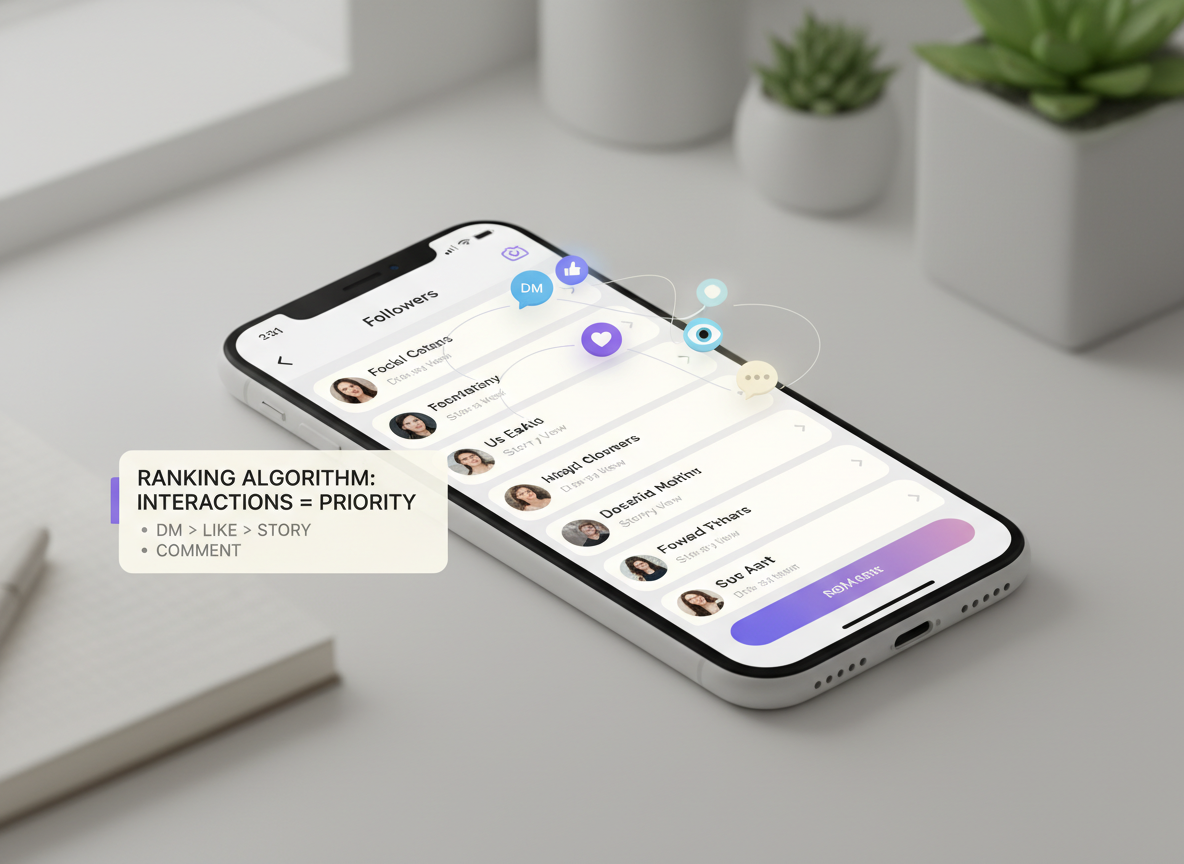
- Recent DMs and story replies push people up fast. Like, “within 24 hours” fast.
- Profile visits matter more than people think. You can sometimes spot this when an account you checked a few times suddenly appears higher.
- Comment threads and saves seem to carry more weight than casual likes.
- Shared contacts (mutual network overlap) can bring someone into view even if you haven’t talked lately.
Lived-detail thing that surprised me: on a 30K account I help manage, mutual follower ordering gets “sticky.” People stay near the top for weeks, even if you don’t interact daily. On smaller accounts, the list reshuffles constantly, and one DM can reshuffle half the order. Same app, same platform, totally different feel.
And yes, it can get weird. Sometimes Instagram will boost someone because you’re both interacting with the same third account a lot (like you’re both commenting on the same creator). It’s not always about your direct relationship.
Mutuals vs non-followers vs “one-sided follows” (don’t mix these up)
A lot of frustration comes from treating these as the same thing. They’re not.
- Mutual followers: you follow each other. Usually, your “warm network.”
- Non-followers: you follow them, they don’t follow you back. Sometimes intentional (brands, celebrities), sometimes just… lopsided.
- Followers you don’t follow back: they’re watching you, but you’re not connected both ways.
If you’re trying to keep your account feeling less chaotic, it helps to think in relationship buckets. That’s basically what descriptive social media relationship management is about anyway: knowing who’s mutual, who’s one-sided, and who’s truly engaging.
I’ve seen creators burn out because they treat every non-follower like a personal insult. It’s not. Sometimes it’s just a person who followed you for one Reel, then moved on.
The “Friends” shift and why mutuals may impact discoverability
Instagram is pushing features that reward reciprocal networks: co-posting, reposting friends’ content, friend-focused Reels feeds, maps, interest “picks,” and partnership-style content. A good roundup of recent feature movement is on EmbedSocial’s Instagram new features updates.
The diagnostic reason this matters is simple: Instagram’s trying to keep people on-platform by showing content they’re more likely to interact with. Mutual connections produce more replies, shares, and DMs than cold content. So the system nudges toward mutual networks because it boosts “time well spent,” not just reach.
Counterintuitive but true: a smaller mutual community can outperform a huge audience if those mutuals actually talk to you. I’ve watched accounts with about 2K engaged mutual followers drive more link clicks and story replies than accounts with 20K followers that never respond to anything. It’s not even close.
How I’d use mutual followers to grow (without becoming a follow-back gremlin)
Look, I get it. You wanna grow, and mutual followers, Instagram culture can feel like a scoreboard. Been there. I still catch myself checking lists when I’m bored. Not proud.
Here’s what actually works now, especially with Instagram leaning into connected networks.
- Audit your “soft mutuals” first. These are mutual followers who like occasionally but never reply or share. Nudge them with a question box, a poll, or a “this or that” story. If they’re going to become real mutuals, they’ll show up here.
- Collaborate with similar-sized accounts. Not “as big as possible.” Similar. When I match accounts with roughly comparable engagement, collabs perform cleaner and feel less forced (and you don’t get that awkward ghosting after).
- Use DMs like a human. One thoughtful message beats 50 copy-pastes. I’ve seen generic outreach get people blocked fast, and then your future DMs land in the “requests graveyard.” Brutal.
- Turn mutuals into distribution. Ask them to share a post that’s genuinely helpful, not a desperate “please share.” Give them a reason: a template, a list, a mini-tutorial, a local recommendation.
- Keep one-way follows intentionally. Following brands or big creators who don’t follow back is fine. Just don’t let it bloat your following list until your feed becomes unusable.
If you’re struggling with the emotional side of seeing people dip in and out, the best mindset reset I’ve seen is treating it like normal social churn. This write-up on handling being unfollowed gracefully is basically what I tell clients who spiral over it.
Common mistakes I see with mutual followers (and how they backfire)
- Chasing mutuals with huge accounts. If your niche and audience size are miles apart, it usually turns into a pitiful follow or a quick unfollow. Ugly cycle.
- Following everyone who follows you. That sounds friendly, but it can wreck your feed quality, and you start engaging less because your attention is split.
- Assuming mutual = loyal. Mutuals can still be inactive, muted, or only there for a giveaway you ran six months ago.
- Overreacting to order changes. The mutual followers list order shifts based on signals. It doesn’t automatically mean someone’s stalking you. Usually.
If you’re not sure what you “owe” people in terms of following back, this is one of those things everyone fights about. I’m pretty practical about it, and this modern follow-back etiquette breakdown lines up with how Instagram works now.
Failure modes: where mutual follower logic breaks (or feels broken)
This falls apart when you’re trying to treat mutual followers like a precise analytics tool. Instagram surfaces are personalized, and two people can see different “mutuals” emphasized depending on their own interactions.
- Small accounts with low activity: mutual ordering can look random because there aren’t enough signals to rank relationships confidently.
- High-volume creator accounts: once you get tons of DMs and replies, Instagram can prioritize “most recent” over “most meaningful,” so your “top mutuals” can be whoever pinged you last.
And managing one-way relationships can get messy fast if you’re doing networking, collabs, or brand outreach. If that’s your situation, this resource on managing one sided Instagram follows is worth skimming so you don’t accidentally build a following list that’s 90% non-followers.
Limitations (what mutual followers won’t tell you)
Mutual followers won’t tell you who muted you, who is “hate-watching,” or who’s seeing your posts but never engaging. Instagram doesn’t expose that cleanly, and any tool claiming it can is… yeah. Not great.
Also, mutual status doesn’t equal relationship strength. I’ve seen mutuals who never interact again after the follow-back, and I’ve seen non-mutuals who share every post and send referrals. Your mileage may vary depending on niche, posting frequency, and whether you’re Story-heavy or Reel-heavy.
FAQ
What are mutual followers on Instagram?
They’re accounts you follow that also follow you back, creating a two-way connection.
What determines the order of mutual followers on Instagram?
Usually, interaction signals like DMs, story replies, comments, profile visits, and shared network relevance, not the order you followed people.
Are mutual followers more valuable than regular followers?
Often, yes, because mutuals tend to interact more, and Instagram seems to reward engaged two-way networks.
Can I see who unfollowed me if they were a mutual?
Instagram itself doesn’t make this easy, so you’ll need a tracker that compares follower lists over time.
Wrapping it up (and a simple next step)
Mutual followers’ Instagram dynamics are basically Instagram’s way of highlighting who’s actually connected to you, not just watching from the sidelines. If you treat mutuals as your “core community” and build around real interaction, you’ll usually see better engagement than chasing raw numbers.
If you want to keep tabs on who’s leaving, who’s newly mutual, and who’s stuck as a non-follower, try UnfollowGram at https://unfollowgram.com and check your changes daily for a week. That rhythm alone clears up most of the confusion.