Why Instagram Has No Unfollow Notifications
Last Updated on January 25, 2026 by Ethan
Instagram doesn’t have an instagram unfollow notification because it’s designed that way: unfollows are treated as private relationship changes, not events worth alerting people about. In 2026, Instagram still doesn’t send unfollow alerts through any official feature or API, so there’s no “real-time unfollow notification” a legit app can magically pull.
And yeah, I get why you’re looking. I’ve managed creator accounts where a single day of weird content can cause a tiny unfollow wave, and your brain goes straight to: “WHO LEFT?” Been there. I’ve also wasted way too much time manually checking follower lists at 1 a.m. (Not my proudest era.)
So here’s what’s actually going on, why Instagram keeps it this way, what methods do work, and what will get you blocked or locked out if you chase the wrong “unfollow notification” tools.
Instagram’s real reason for no unfollow notifications
People assume it’s a technical limitation. It’s not. It’s a product decision that lines up with Instagram’s whole “reduce conflict” vibe.
If Instagram pushed an unfollow alert like “Alex unfollowed you,” it would:
- Start drama fast (and keep people anxious, honestly).
- Trigger harassment and dogpiling in some cases.
- Turn normal behavior into a scoreboard.
- Create a ton of support issues: “I got unfollowed by my ex, can you hide it?” You know the deal.
Instagram is already a high-emotion app. Adding an instagram unfollow notification would crank that up for basically zero upside.
Here’s the counterintuitive part nobody tells you: if Instagram ever added unfollow notifications, creators would probably be worse off, not better. You’d see people obsess over every single unfollow and overcorrect their content constantly, which usually tanks consistency and makes growth messier. I’ve watched it happen on teams that track too aggressively. It turns into “post scared” mode. Not great.
How unfollow tracking actually works (and why “real-time” is mostly fantasy)
Instagram doesn’t hand you a neat “this person unfollowed at 2:07 PM” log. So any tracking method is basically comparing two snapshots of your follower list and spotting who disappeared between snapshot A and snapshot B.
The simple mechanism
This is the core idea behind most safe trackers:
- You capture a follower list now.
- You capture it again later.
- Anything present before but missing now is an unfollow (or a privacy/account change, more on that soon).
If you want the deeper breakdown, this explains it cleanly: how Instagram unfollow tracking works behind the scenes.
One lived-detail thing I’ve noticed after testing this on multiple accounts: on larger accounts, the “who changed” calculation can feel slower simply because the list is bigger and Instagram’s data access can lag. On a 900-follower personal account you’ll see changes fast. On a 80k creator account, you’re sometimes waiting for lists to fully refresh even when the follower count already moved.
Why follower count changes before the list updates
This part drives people nuts. The number changes, but your follower list looks the same for a while. It’s not you going crazy.
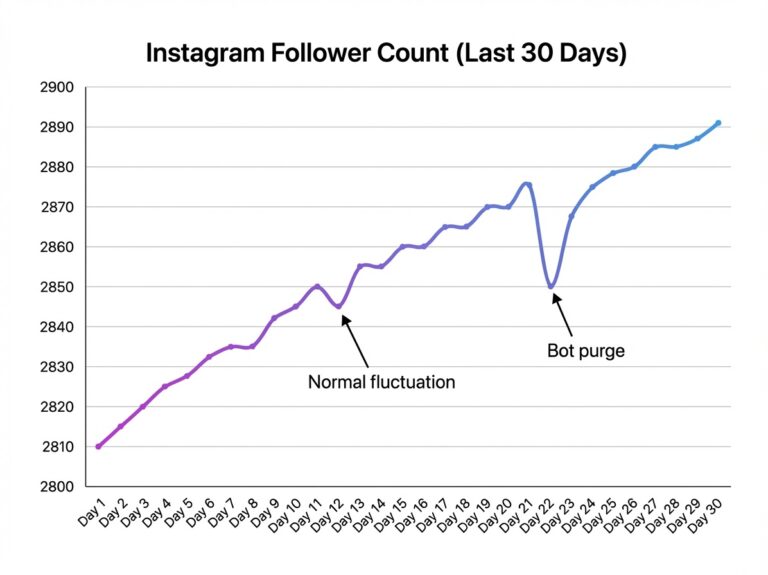
Instagram updates different pieces of data on different schedules. Counts can update quickly because it’s just a number. Lists can lag because they’re heavier and cached differently. If you’ve ever had that “my count dropped but I can’t find who left” moment… yep.
This is the rabbit hole: why follower counts change but lists lag.
Why most “unfollow notification” apps are sketchy (and sometimes dangerous)
Look, I’ve tested a lot of follower tools over the years. Some are fine. A lot are… yikes.
If an app promises “instant instagram unfollow notification alerts” and it also asks for your Instagram password, that’s your cue to back away. Fast.
Instagram’s policies in 2026 are stricter than they used to be, especially around password harvesting and automation. Tools that do mass actions (auto-unfollow, auto-follow, bulk anything) are the ones I see triggering login challenges, action blocks, and occasional account locks.
If you want a more general overview of safe unfollower tracking norms in 2026, this is a decent read: how to safely track Instagram unfollowers in 2026.
The “password required” trap
I’ve helped creators recover accounts after using a “free unfollow notifier” that was really just credential collection. Sometimes it’s obvious. Sometimes it’s wrapped in a cute UI and fake reviews.
Also, even if the tool isn’t malicious, typing your password into random services increases your risk for:
- Account compromise
- Session hijacks
- Security prompts that tank your posting for days
Honestly, this is where most people mess up because they’re emotional about the unfollow and they want names immediately. I’ve done it too. Once. I learned.
Automation will get you blocked quicker than you think
If you’re doing follow/unfollow tactics, Instagram notices patterns. And it’s not subtle. Big bursts of follows/unfollows can trigger temporary blocks (often 24 hours), and repeated behavior can lead to restrictions.
A common rule of thumb I’ve seen play out in real life: when people push past roughly a couple hundred follow/unfollow actions per day, things start breaking. You might not get banned instantly, but you’ll get rate-limited or action-blocked, then you’re stuck.
And for what? A short-term follower bump that usually churns.
If you want research on why follow/unfollow strategies are a bad long game, Agorapulse did a solid breakdown: why the follow-unfollow strategy backfires.
So how do you know if people unfollowed you on Instagram?
You’ve basically got three realistic options, depending on how serious you are and how much effort you wanna spend.
Option 1: Manual checks (fine for small accounts, annoying for everything else)
If you have a small account, you can search a person’s username in your followers list. If they don’t show up, they either unfollowed you, blocked you, or changed account status.
But this falls apart when:
- You’re tracking more than a handful of people
- Usernames change (you’ll think they vanished)
- Accounts go private/deactivate temporarily
I’ve watched social media managers burn 30 minutes a day doing this. It adds up. Quickly.
Option 2: Download your Instagram data (more “official,” not very convenient)
You can request your data from Instagram and review follower/following information. It’s safer than random apps, but it’s not a clean “instagram unfollow notification” feed. It’s more like getting a pile of files and doing detective work.
Also, your mileage may vary depending on how often you pull exports and how neatly you track changes between them. If you don’t compare snapshots, it’s just… data sitting there.
Option 3: Use a safe tracker that compares snapshots (the practical middle ground)
This is what most working creators end up using, especially if they want daily tracking without the password risk.
For public accounts, UnfollowGram Follower Tracker is the kind of tool I recommend because it doesn’t ask for your Instagram password. That matters. A lot. It’s basically the difference between “I’m tracking changes” and “I’m handing over my keys.”
One more lived-detail observation: if you check once a day, you’ll catch clean deltas and it feels accurate. If you check ten times a day (I’ve seen people do this during brand launches), you’ll start getting confused by list lag and temporary account states. Less checking can actually make the results feel more trustworthy. Weird, but true.
If you’re curious about the technical side of these comparisons, here’s the explanation: how unfollower tracker apps detect changes.
Public vs private: the part people forget
This is a big one, and a lot of “why doesn’t this work?” complaints come from this.
Tracking is much easier on public accounts because the follower/following lists are accessible in a way that doesn’t require logging in as the user. On private accounts, you’re dealing with limited visibility and permissions, so accurate tracking gets harder or impossible without access that you probably shouldn’t be giving to anyone.
If you want the breakdown (and the gotchas), it’s here: public vs private accounts for tracking.
And yeah, it’s frustrating. I’ve had clients insist “but it worked last year” and I had to explain that Instagram changes access rules constantly, and private accounts are always the first to get stricter. Not fun. Just reality.
What an “instagram unfollow notification” would break (from a platform perspective)
If Instagram notified unfollows, they’d have to deal with all sorts of second-order issues:
- Abuse loops: People retaliate, brigade, or harass after an unfollow alert.
- Support load: Users begging for “hide unfollow notifications,” “undo unfollow alerts,” etc.
- Teen safety: Notifications create pressure and conflict in younger groups especially.
- Engagement distortion: People stay followed out of fear of being “caught,” which makes follower counts less honest as feedback.
Instagram would rather keep unfollowing “quiet” so people do it naturally. That keeps the platform healthier, even if it makes creators curious.
Using unfollows as feedback (without spiraling)
This is the part I wish someone told me earlier: unfollows aren’t a morality score. They’re usually content alignment.
Unfollow spikes typically happen after:
- Promo-heavy weeks (too many “buy this” posts in a row)
- Off-topic content (you went from fitness tips to crypto memes overnight)
- Weird posting gaps followed by spammy catch-up posting
- Collabs that pull the wrong audience in, then they bounce
Here’s a practical way to read the signal without obsessing.
- Track daily, not hourly. Hourly checks make list lag feel like bugs. Daily snapshots are cleaner.
- Write down what you posted the day before. Just a quick note: Reel topic, carousel topic, promo, collab.
- Compare unfollows to new follows. Losing 20 but gaining 80 is a different story than losing 20 and gaining 5.
- Watch the 48-hour window. If new followers routinely leave within two days, your content hook is pulling the wrong people (or your bio doesn’t match your posts).
- Rotate formats. I usually see better retention when accounts mix Reels + carousels instead of doing five Reels in a row that all feel the same.
Quick vulnerable admission: I used to take unfollows personally and start rewriting my whole content plan after one bad day. That was a mistake. Now I only react if I see a pattern over multiple posts.
Limitations (what you can’t know, even with tracking)
Some caveats so you don’t chase ghosts:
- You won’t get an exact timestamp. No tool can reliably tell you “they unfollowed at 3:14 PM” because Instagram doesn’t provide that kind of event log publicly.
- You can’t always tell unfollow vs block vs deactivate. If someone blocks you, deactivates, or flips privacy settings, they may disappear in ways that look like an unfollow. This gets weird around temporary deactivations.
- Private accounts are limited. If your account is private, accurate tracking without logging in is often not possible, and logging in through third parties is where risk jumps.
If you want another perspective on the “unfollow mystery” and why it stays murky, this article touches similar points: ways people check who unfollowed them.
Common mistakes that waste time (or get you flagged)
I’ve seen the same handful of mistakes over and over.
- Chasing “instant unfollow notifications” that require your password. That’s the big one. Don’t.
- Checking too frequently. It makes normal data lag look like inaccuracies, and you’ll think the tracker is broken.
- Doing mass follow/unfollow as a growth tactic. Best-case: you get low-quality followers who leave. Worst-case: action blocks and account risk.
- Ignoring context. Unfollows without looking at reach, saves, shares, and comments is just doom-scrolling with extra steps.
One more self-interruption because it matters: if any tool claims it can send push notifications the second someone unfollows, ask yourself how it would know. It can’t… unless it’s doing something shady, or you gave it deep access you probably shouldn’t.
FAQ
How do you know if people unfollowed you on Instagram?
You can manually search your followers list, compare follower snapshots over time, or use a safe tracker that detects changes between check-ins since Instagram doesn’t provide an official unfollow alert.
Do people get a notification if you follow and unfollow?
They won’t get an unfollow notification, but they may see the follow notification (and if they check quickly, they can notice you disappeared later).
Does Instagram send an instagram unfollow notification at all?
No. Instagram doesn’t send unfollow notifications, and there’s no official API event that provides them in real time.
Can someone tell if I unfollowed them?
Not through a notification, but they can notice if they check their followers list, see their follower count change, or use snapshot-style tracking.
Why did my follower count drop but I can’t see who unfollowed?
Because counts can update faster than follower lists, and some changes (blocking, deactivation) can look like unfollows until lists fully refresh.
Conclusion: you’re not missing a setting
There’s no hidden toggle for an instagram unfollow notification. Instagram keeps unfollows quiet on purpose, and any tool promising instant unfollow alerts is usually overpromising, or asking for access you shouldn’t give.
If you want the clean, low-drama way to keep tabs, treat unfollow tracking like a daily snapshot and use it as feedback, not a panic button. And if you’re tracking a public account and want a password-free option that’s built specifically for this, UnfollowGram Follower Tracker is the one I’ve had the least headaches with over time.

Ethan is the founder of UnfollowGram with more than 12 years of experience in social media marketing. He focuses on understanding how Instagram really works, from follower behavior to engagement patterns, and shares those insights through UnfollowGram’s tools and articles.