Why You Obsess Over Who Your Crush Follows
Last Updated on February 5, 2026 by Ethan
You obsess over who your crush follows because your brain treats Instagram like a live-updating “relationship scanner”, even when you’re not actually in a relationship. The follows feel like evidence, the likes feel like clues, and your anxiety turns normal social behavior into a storyline you can’t stop refreshing.
And yeah, if you’re googling “obsess over who someone follows on instagram”, you’re not alone. I’ve watched smart, grounded people get sucked into this loop in under a week, especially when the crush is inconsistent (hot, then cold, then hot again). That inconsistency is rocket fuel for overthinking.
This isn’t a “just stop caring” pep talk. It’s a real explanation of what’s happening, how Instagram’s mechanics make it worse, where the whole method breaks down, and what to do instead when you can’t stop checking.
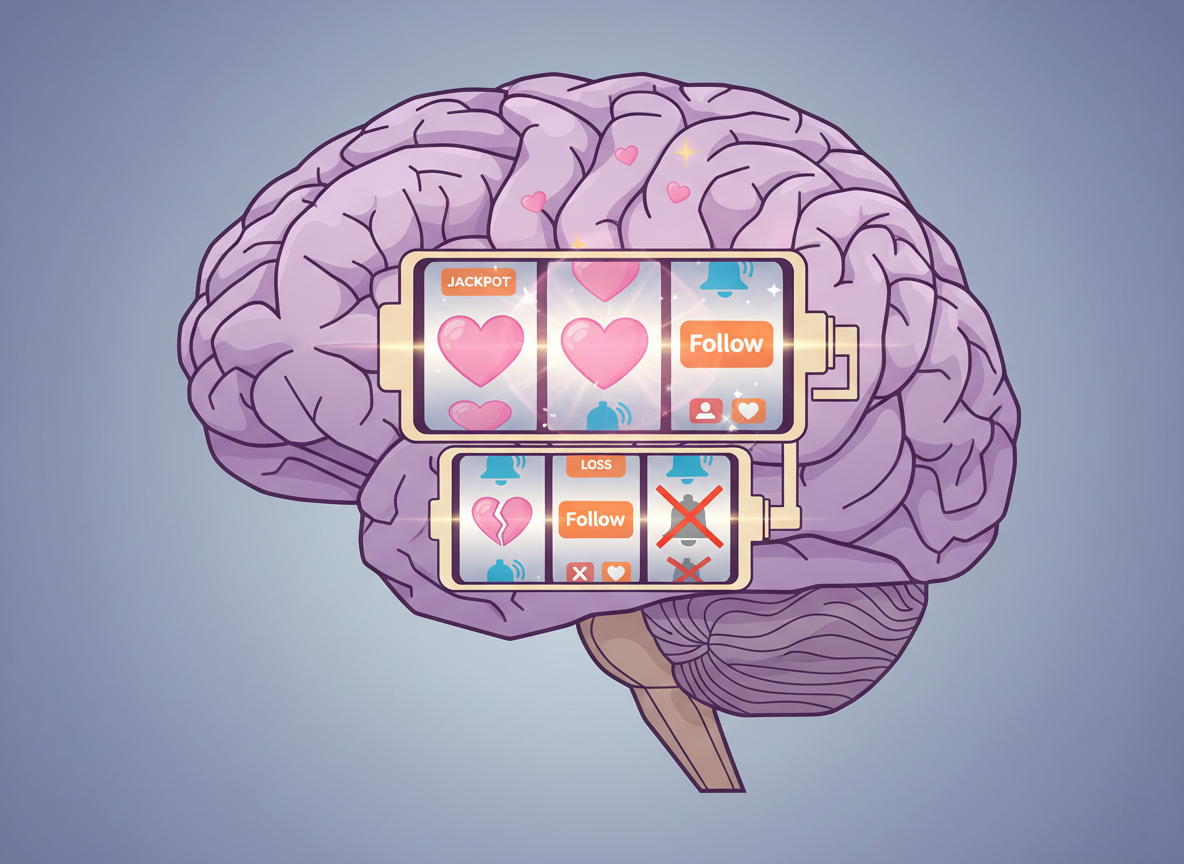
TL;DR: Obsessing over who your crush follows on Instagram happens because your brain seeks certainty amid the uncertainty of having a crush. This behavior is fueled by the platform’s design, which turns social cues into addictive checking habits, leaving you stuck in a loop of anxiety and overthinking. Remember, it’s not productive detective work; it’s just a slot machine of emotions.
Why your brain latches onto their “Following” list
Instagram turns social uncertainty into something that looks measurable. Numbers. Lists. Timestamps (kind of). Tiny signals you can interpret. So when you like someone, your brain naturally goes, “Cool, I can track this.”
Except you can’t. Not in the clean, logical way your anxious mind wants.
1) Your brain is trying to reduce ambiguity
Having a crush is uncertainty by default. Do they like you? Are they talking to someone else? Are you reading the vibe right?
So you look for certainty in the only place that feels “objective”: who they follow, who follows them back, whose selfies they like. It feels like detective work. Honestly, it can feel productive.
But it’s not closure. It’s a slot machine.
2) Intermittent reinforcement is doing the damage
Here’s the piece most people miss: you don’t get addicted to constant answers. You get addicted to unpredictable answers.
Sometimes you check and nothing changed. Boring. Then one day they follow a new person and your stomach drops. That emotional spike teaches your brain to keep checking because “something could happen.”
I’ve seen this get way worse when you’re already stressed or sleep-deprived. Like, it’s almost comical how fast it escalates after a bad week at work.
3) Instagram makes “following” feel like a public vote
Following used to feel casual. In 2026, it weirdly feels like a signal of taste, loyalty, desire, and status all at once. If your crush follows someone who looks like you, you feel relief. If they follow someone who doesn’t, you spiral.
And you start building a whole identity story out of… a button tap.
How It Works (the mechanics that keep you stuck)
Your obsession isn’t happening in a vacuum. Instagram’s design encourages repeated checking because it rewards attention, not accuracy.
Instagram gives you high-emotion data with low context
- You can see who they follow, but not why (friend from school? brand account? coworker? random meme page?).
- You can see what they liked, but not what else they scrolled past.
- You can see a list, but you can’t reliably see order or timing in a way that actually proves anything.
So your mind fills in the missing context with whatever you fear most. That’s the trap.
Algorithmic feeds confuse “interest” with “exposure”
You’d think if your crush is seeing someone’s posts a lot, it means they’re super into them. But actually, the algorithm might just be showing them that person because they paused for half a second on a Reel once, or because they tapped a Story too quickly, or because they’re in the same local network of content.
Instagram is optimized for engagement, not emotional clarity. A lot of what you’re “reading” is just the platform doing platform stuff.
Fake and low-quality accounts muddy the picture
Another thing people don’t love hearing: follower ecosystems are messy. A meaningful chunk of Instagram’s graph is spam, bots, or low-quality accounts, which makes the “who follows who” web feel more dramatic than it is. There’s been a lot of discussion around fake followers and how they skew perception of popularity and intent, even outside influencer circles.
If you’re curious about how tracking and analysis looks in 2026 (and why authenticity checks are so common now), these breakdowns are solid: how follower tracking and performance analysis works in 2026 and a detailed look at follower growth trackers and metrics.
The story you’re telling yourself (and why it feels so convincing)
When you obsess over who someone follows on instagram, you’re usually not obsessed with the list. You’re obsessed with what the list might mean about you.
The common internal scripts (I hear these constantly)
- “If they followed her, I’m not their type.”
- “They’re building a roster.”
- “They followed my friend to get closer to me.” (This one can be true. Rarely.)
- “They’re keeping options open, so I shouldn’t get attached.”
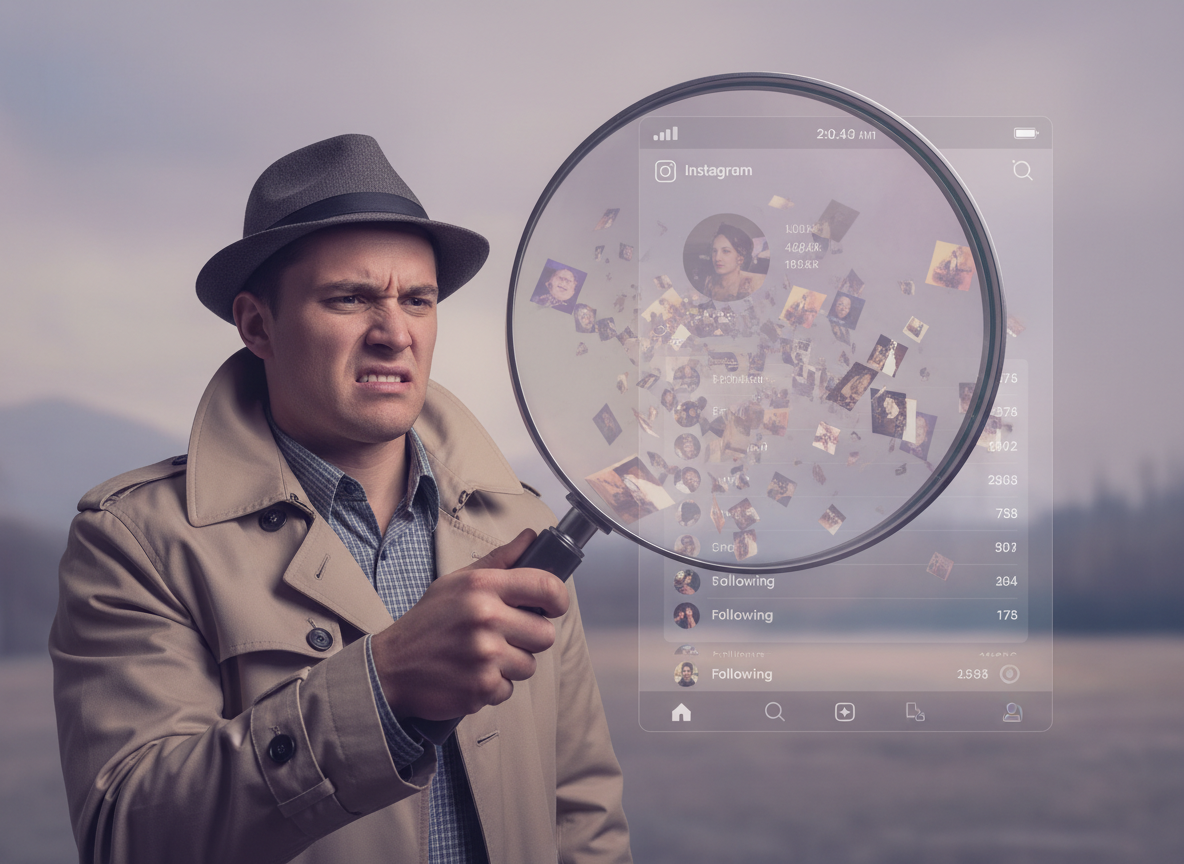
Sometimes these are right. A lot of the time, they’re just anxiety wearing a trench coat pretending to be intuition.
Counterintuitive insight: the more you check, the worse your “intuition” gets
People assume checking makes them more informed. But in practice, constant checking makes you less accurate, because you stop using real signals (effort, consistency, how you feel around them) and start using Instagram signals (follows, likes, micro-changes).
I’ve literally watched people ignore obvious green flags in real life because they saw their crush follow a fitness model at 2 a.m. and decided it “meant something.” Been there. Not proud of it.
Where this obsession usually starts (the “trigger moments”)
This stuff tends to kick off after one of a few moments:
- You notice your crush followed someone new who looks like “competition.”
- You posted a Story, they didn’t watch it, and suddenly you’re auditing their whole activity.
- They were flirty for a day, then went quiet, and you try to find the reason inside their following list.
- Your friend mentions “they follow a lot of girls/guys” and it plants the seed.
And then it becomes a routine. Morning check. Lunch check. Late-night check. One more check because your brain says you might miss something. Ugh.
One lived-detail I’ve noticed from testing different tracking workflows on multiple accounts: the obsession gets worse when you check at inconsistent times. If you check randomly, you train your brain to treat every notification and every free moment like an opportunity to “solve” the situation. Checking at the same time daily (or not at all) reduces the compulsive pull. It’s boring, but it works.
Failure modes: where “following-list detective work” completely falls apart
If you’re using follows as your main source of truth, here’s where it gets weird fast.
Failure mode #1: You assume recency you can’t confirm
Instagram doesn’t reliably show you “most recently followed” in a clean way for every account, and different views can surface different ordering signals. So you think you’re tracking timeline, but you’re often tracking a shuffled deck.
This won’t tell you when they followed someone, how often they interact, or whether it was a random accidental tap. You’re building a court case with foggy evidence.
Failure mode #2: You mistake “content taste” for “romantic intent”
Someone following a model, a creator, or a meme page doesn’t automatically translate to them pursuing that type in real life. I’ve managed influencer accounts where the following list was basically research and trend-monitoring. Not romance. Just work.
And regular people do it too. Curiosity, entertainment, boredom. Sometimes it’s that simple.
Okay, so what should you pay attention to instead?
You don’t need to become a monk and delete your phone. You just need better signals.
Use “effort signals” (harder to fake, harder to misread)
- Do they initiate plans, or is it always you?
- Do they follow through when they say they will?
- Do they ask questions that show they remember things about you?
- Do they show up consistently across time, not just when it’s convenient?
A follow can be mindless. Effort costs something.
Use “nervous-system signals” (your body usually knows)
This part is annoyingly real: if tracking their follows makes you feel panicky, small, and obsessive, that’s data. It doesn’t automatically mean they’re bad. It means your current strategy is harming you.
I’ve had to admit this to myself before. Like, “Okay, I’m not ‘being thorough.’ I’m just making myself miserable.” That realization stings. Then it frees you.
How to stop checking (without relying on willpower)
Willpower is fragile. Design beats discipline.
- Pick a rule you can actually follow. For a lot of people, “never check again” is too extreme. Try “I only check once every 7 days” or “only on Sundays.” If you want a realistic cadence, this post on how often you should check follower changes matches what I’ve seen work with real users.
- Remove the easy path. Move Instagram off your home screen. Log out on desktop. Turn off notifications that bait you back in. Simple. Effective.
- Replace the behavior, not just the app. If your hand reaches for IG when you feel anxious, you need a substitute. Two-minute notes app brain dump. Quick walk. Voice memo to a friend. Something that discharges the feeling.
- Ask one direct question instead of 40 indirect ones. This is the scary part. But it’s faster. “Are you seeing anyone?” “Do you wanna go out this week?” One clean question beats ten days of follow-stalking.
- Make your checking boring. If you absolutely can’t stop today, set a timer for 3 minutes, check once, then close the app. No looping. No “just one more refresh.”
And a vulnerable moment: I used to do the “check, feel sick, check again to feel better” cycle. It never made me feel better. It just made me need the next check. That’s how compulsions work, and it’s sneaky.
The Instagram reality check nobody wants (but you need)
Instagram is not a polygraph. It’s a highlight reel plus an engagement machine.
Even creators and brands have shifted away from obsessing over raw follower counts because the platform’s more complicated now. Engagement quality, authenticity, and follower intent matter way more than simple numbers. If you want a quick overview of current analytics tooling and why brands care about authenticity, this roundup of Instagram analytics tools explains the shift pretty well.
So if professionals can’t always infer truth from follower graphs, you definitely can’t infer romantic certainty from a “Following” list at midnight.
When it’s not “just a crush” anymore (and what to do)
Sometimes this obsession is a symptom, not the core problem.
It might be anxiety, attachment stuff, or plain old insecurity
If you’re already prone to rumination, Instagram gives you infinite material. If you’ve been cheated on before, follows can feel like threat detection. If you’ve been rejected recently, you might be scanning for signs before you get hurt again.
I’m not diagnosing you through a screen. But I will say: if you’re losing sleep, skipping work, or feeling nauseous over follower changes, it’s worth treating it like a mental health pattern, not “Instagram drama.”
A quick tangent from the tracking-tool world
I’ve tested a lot of follower tools over the years for creators and social media managers. The funniest (and saddest) pattern: people start with “I just wanna check once,” then they build a whole ritual around it. Especially on smaller accounts, changes feel louder because every new follow is a bigger percentage swing. On larger accounts, the data can lag or feel noisy, so people check more often trying to “confirm” it. Different account sizes, same spiral.
If this is you, you’re not broken. You’re reacting to a system designed to keep you looking.
How UnfollowGram Follower Tracker helps when you’re stuck in the loop
I’m obviously deep in this space, and I’ll be straight with you: most tools that claim they can reveal everything about someone’s Instagram behavior are either guessing, violating rules, or asking for your login (no thanks). That’s why I like the angle UnfollowGram takes: it focuses on what can be checked safely for public accounts, without asking for your password.

If you’re spiraling about social proof like “did they unfollow me?” or “who’s quietly disappearing?”, having a clean, simple snapshot can stop the mental guessing game. I’ve used a password-free Instagram unfollower tracker for peace of mind in those moments where you’re tempted to manually compare lists and go cross-eyed. It’s faster, and it reduces the urge to re-check 20 times because you feel unsure.
But here’s the honest limit: this isn’t going to tell you if your crush likes you, who they’re flirting with, or what a follow “means.” It won’t decode their intent. What it can do is give you clearer follower/unfollower and non-follower info so you stop inventing theories based on half-glimpses.
If the emotional side of all this feels familiar, these are worth a read too: why unfollow anxiety messes with your head, how to handle being unfollowed without spiraling, what activity tracking actually measures (followers, engagement, growth), and if you’re specifically fixated on follow timing, tracking who someone recently followed and why it’s tricky.
Limitations (what this approach won’t solve)
This won’t magically turn uncertainty into certainty. If your crush is inconsistent or avoidant, no tool, rule, or mindset hack will fully erase the discomfort of not knowing where you stand.
And even if you stop checking who they follow, you might redirect the obsession somewhere else (Stories, likes, location tags). If that happens, it’s not failure. It’s a sign you need to address the underlying anxiety pattern, not just the surface behavior.
FAQ
Is it a red flag if someone has more following than followers?
Not automatically. Some people follow lots of friends, creators, or niche pages; it’s only a red flag if it matches other patterns like attention-seeking, shady DMs, or disrespecting boundaries.
How to stop worrying about Instagram followers?
Set a checking schedule (not “whenever you feel anxious”), remove easy access (notifications/home screen), and shift to effort-based signals in real life like consistency and follow-through.
Why do I obsess over who someone follows on Instagram even if we aren’t dating?
Because following lists feel like “proof” when you don’t have direct clarity, so your brain uses them to manage uncertainty and fear of rejection.
Does following someone mean they’re interested?
Sometimes, but it’s a weak signal. People follow for entertainment, networking, boredom, or accidental taps, so you need consistent real-world effort to confirm interest.
Should I talk to my crush about what I’m seeing on Instagram?
If you do, keep it simple and non-accusatory, or skip the Instagram part and ask a direct question about their availability and interest instead.
Conclusion
If you’re obsessing over who your crush follows, you’re usually chasing certainty in a system that can’t provide it. Instagram gives you lots of signals, but not the context, and your brain fills in the gaps with fear.
Use effort and consistency as your main evidence, not a following list. And if you need a clean way to stop guessing about basic follower changes (especially the unfollow anxiety stuff), tools like UnfollowGram can reduce the messy manual checking and help you get your time back.

Ethan is the founder of UnfollowGram with more than 12 years of experience in social media marketing. He focuses on understanding how Instagram really works, from follower behavior to engagement patterns, and shares those insights through UnfollowGram’s tools and articles.