
The Complete Guide to Instagram Followers (2026)
Let me be honest with you from the start. Most content about Instagram followers online is either outdated, oversimplified, or written by people who’ve never actually managed an account through the chaos of algorithm changes, follower drops, and growth plateaus.
This guide is different.
Over twelve years, I’ve watched accounts go from zero to hundreds of thousands of followers. I’ve also watched accounts hemorrhage followers overnight for reasons that seemed completely random until you understood the mechanics underneath. I’ve tested every tracking tool worth mentioning. Gotten accounts restricted from using sketchy apps. Recovered them. Learned what actually matters versus what’s just noise.
What you’re reading is everything I wish someone had explained to me back in 2014 when I started taking Instagram seriously. No fluff. No generic advice recycled from other articles. Just the reality of how this all works, based on watching it play out thousands of times.
What this guide Covers
How Instagram Followers Actually Work
Types of Followers (And Why It Matters)
Why People Follow Accounts
Why People Unfollow (The Real Reasons)
Why Follower Counts Change Unexpectedly
How to Track Your Followers Safely
Using UnfollowGram for Follower Tracking
Understanding Non-Followers and Ghost Followers
The Relationship Between Followers and Engagement
Sustainable Growth Strategies
Mistakes That Kill Follower Growth
Maintaining Account Health
Future of Instagram Followers
Frequently Asked Questions
How Instagram Followers Actually Work
The mechanics seem simple on the surface. Someone taps Follow. Your count goes up. They see your content. Done, right?
Not even close.
Instagram’s follower system has layers most users never think about. Understanding these layers changes how you interpret everything happening with your account.
The Follow Action Itself
When someone follows you, Instagram records that relationship in its database. Your follower count increments. Their following count increments. You now appear in their Following list, and they appear in your Followers list.
But here’s the thing. That number you see on your profile? It’s cached. Instagram doesn’t update it in real time across all servers simultaneously. Refresh twice, and you might see different numbers. Neither is wrong. They’re snapshots from slightly different moments as servers sync.
This explains why follower counts sometimes seem to fluctuate by small amounts for no apparent reason. The system is constantly reconciling data across a massive infrastructure.
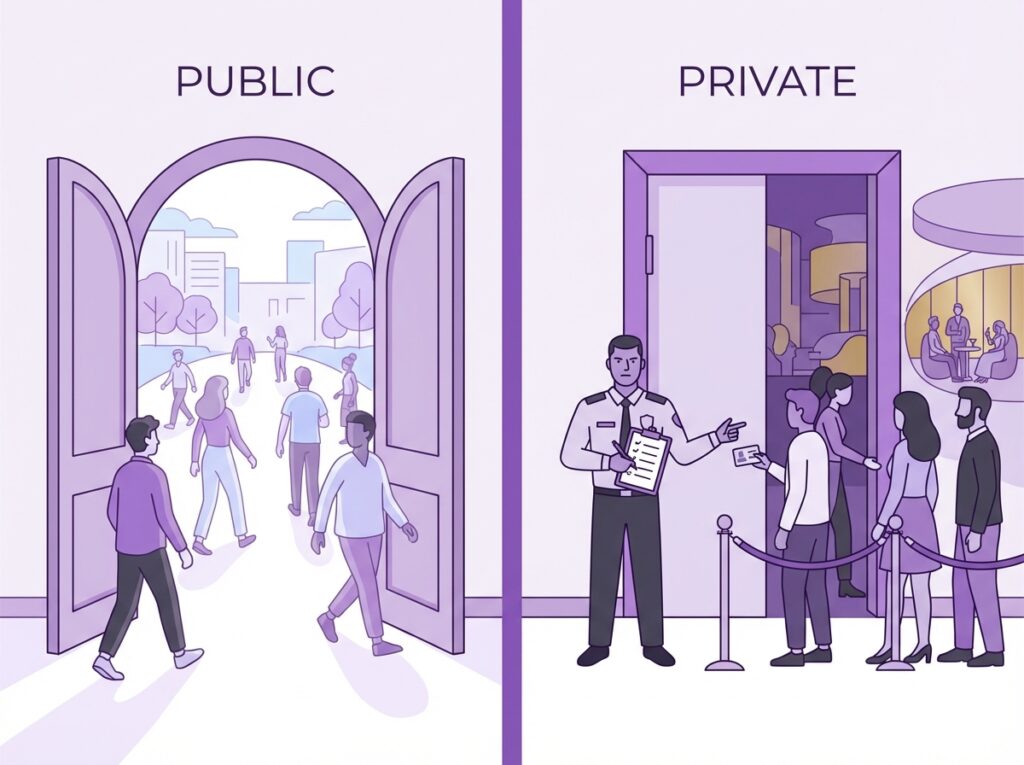
Public vs Private Account Dynamics
Account privacy fundamentally changes how following works.
Public accounts: Anyone can follow instantly. No approval needed. They immediately see your content in their feed and can view your profile, posts, stories, and highlights anytime.
Private accounts: Follow requests go to a pending queue. You approve or deny each one. Until approved, they can’t see your posts, stories, or even your followers list. This creates a gatekeeping layer that public accounts lack entirely.
Something most people don’t realize: if you switch from public to private, existing followers stay. They don’t need to re-follow or get re-approved. Only new followers go through the request process. Switching the other direction, from private to public, opens everything up immediately.
According to Instagram’s official documentation, these privacy settings also affect who can send you messages, tag you, and find you in search results.
The Following vs Followers Distinction
Sounds obvious, but people confuse these constantly.
Followers: People following you. They opted into seeing your content.
Following: People you follow. You opted into seeing their content.
These are separate lists with separate counts. Someone can be in one without being in the other. Mutual relationships exist when both follow each other. One-sided relationships are common and completely normal.
Your non-follower list shows accounts where you follow them, but they don’t follow back. Understanding this distinction helps you analyze your audience composition accurately.
Types of Followers (And Why It Matters)
Not all followers are created equal. After managing accounts for this long, I think about followers in distinct categories because each type behaves differently and contributes differently to your account’s health.
Active Followers
These people actually see and engage with your content. They like posts. Leave comments. Share stories. Watch your videos. They’re the foundation of your engagement metrics and the reason your account has any reach at all.
Active followers typically represent 10-30% of total followers, depending on your niche and content quality. Yes, that low. Instagram’s algorithm doesn’t show your content to everyone who follows you.
Passive Followers
They follow you but rarely interact. Maybe they scroll past your posts without engaging. Maybe the algorithm stopped showing them to you entirely. They’re technically followers but contribute almost nothing to engagement.
Passive followers aren’t bad necessarily. They might become active again if your content shifts or the algorithm changes. But understanding they exist explains why engagement rates seem disconnected from follower counts.
Ghost Followers
Accounts that follow but never engage at all. Some are real people who followed once and forgot. Others are bot accounts, spam profiles, or inactive users who haven’t logged in for months or years.
Ghost followers dilute your engagement rate. If you have 10,000 followers but 4,000 are ghosts, your engagement metrics are calculated against 10,000, but only 6,000 could possibly engage. This makes your rates look worse than they actually are.
Learning to identify and track these patterns helps you understand your real audience size.
Fake Followers and Bots
Accounts created purely for inflation purposes. Some have profile pictures and posts attempting to look legitimate. Others are obviously fake, with no content and generic usernames.
Where do they come from? Sometimes purchased directly through growth services. Sometimes acquired unintentionally when bots follow random accounts hoping for follow-backs. Instagram periodically purges these, which explains sudden follower drops.
Reality check: Research from Pew Research Center shows that bot activity on social platforms has increased significantly. Even accounts that never purchased followers often have 5-15% bot followers simply from random bot follows over time.
Why People Follow Accounts
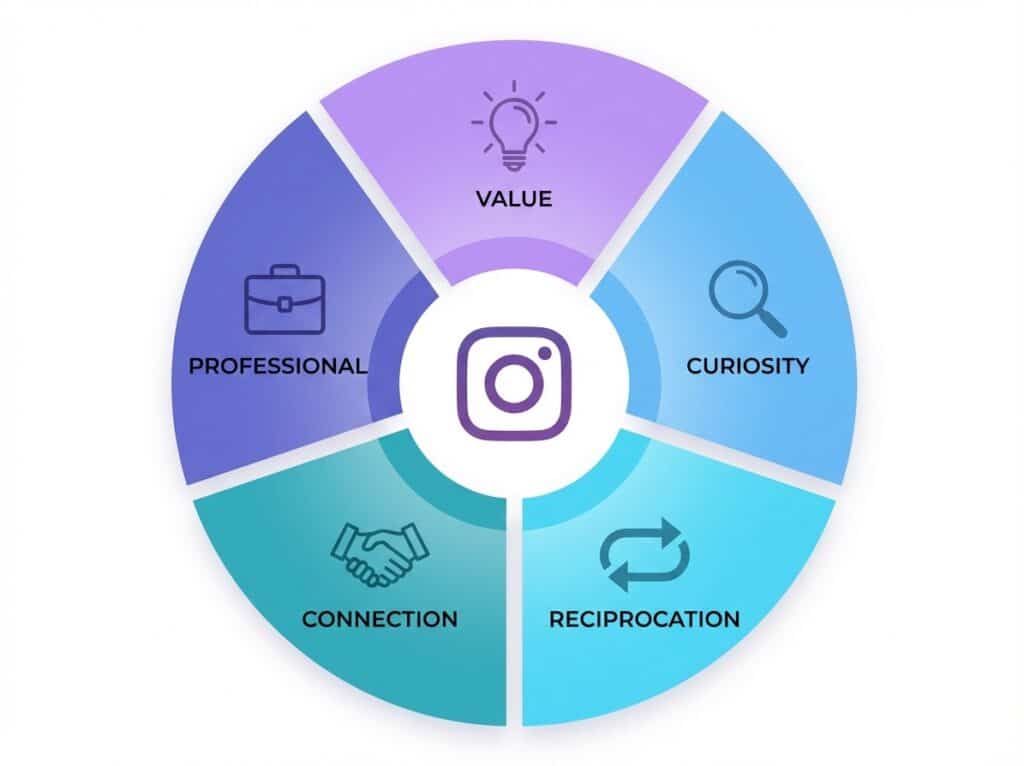
Understanding why someone hits that Follow button helps you create content that attracts more of the right people. After watching this pattern across hundreds of accounts, most follow fall into predictable categories.
Content Value
They want what you’re offering. Educational content, entertainment, inspiration, information, whatever your niche provides. This is the most sustainable reason for following because it’s based on genuine value exchange.
Social Proof and Curiosity
They saw that you mentioned somewhere. A friend followed you. You appeared in their Explore page. Your post went viral and they wanted to see more. Curiosity-driven follows can become loyal followers or quick unfollows depending on whether the rest of your content matches what attracted them.
Reciprocation Expectations
They followed, hoping you’d follow back. Common among people trying to grow their own accounts. If you don’t reciprocate, many of these followers become unfollowed within days or weeks.
Real-World Connections
They know you personally. Friends, family, colleagues, acquaintances, people you met at events. These followers might engage inconsistently depending on how close the relationship actually is.
Professional Reasons
Competitors monitoring your content. Journalists researching stories. Potential collaborators evaluating your brand. These followers observe more than engage, typically.
Why People Unfollow (The Real Reasons)
This is where it gets emotional for most account owners. Losing followers feels personal even when it isn’t. After watching unfollower patterns across thousands of accounts, the reasons cluster into predictable categories.
Content Shift
You changed what you post. They followed for travel content, but now you’re posting about parenting. They wanted recipes but you pivoted to restaurant reviews. The content that attracted them isn’t what you’re creating anymore.
This isn’t failure. It’s audience refinement. Some unfollows are necessary when you evolve.
Posting Frequency Changes
You used to post twice a week, and now you’re posting daily. Or the reverse. Frequency expectations get set early. Dramatic changes disrupt what followers signed up for.
Feed Cleanup Mode
Every few months, people get the urge to clean up their following list. They unfollow dozens of accounts in one sitting. Sometimes your account gets caught in that sweep regardless of quality. Nothing personal. Just maintenance.
Failed Reciprocation
They followed, hoping you’d follow back. You didn’t. They waited a few days, then unfollowed. Transaction mentality that has nothing to do with your actual content.
Life Changes
Someone goes through a breakup and unfollows all couple content. Someone gets sober and removes alcohol-related accounts. Someone loses a job and can’t handle aspirational career content. Life circumstances drive unfollows you’ll never understand from the outside.
Algorithm Already Ended It
Instagram stopped showing your content to them months ago. They forgot they followed you. When they eventually see your post randomly, they wonder who you are and unfollow the stranger in their feed.
For a deeper exploration of unfollowing psychology, I wrote about why people unfollow and how most reasons have nothing to do with you personally.
Why Follower Counts Change Unexpectedly
You wake up. Check your follower count. It dropped by 47 overnight. Panic sets in. What happened?
Usually, one of these explanations.
Instagram Purges
Instagram periodically removes bot accounts, spam profiles, and inactive users from the platform. When they do, those accounts disappear from everyone’s follower lists. Big purges can remove thousands of followers from large accounts overnight.
These purges happen without warning. One morning, you just have fewer followers. Nothing you did. Just platform maintenance, cleaning up fake accounts across the entire system.
Account Deactivations
When someone deactivates their account, temporarily or permanently, they vanish from your followers. If they reactivate later, they might reappear. Or might not, depending on how long the deactivation lasted.
Server Sync Issues
Sometimes follower counts just glitch. Instagram’s infrastructure is massive. Servers don’t always agree with each other. You might see 10,247 on one refresh and 10,243 on the next. Usually resolves within hours.
Actual Unfollows
Yes, sometimes people actually unfollow. But sporadic single unfollows are normal for any account. Concerning patterns are consistent losses over extended periods, not day-to-day fluctuations.
Understanding how follower changes work prevents unnecessary anxiety over normal fluctuations.
Pattern to watch: Single-day drops mean nothing. Weekly trends mean something. Monthly trends mean a lot. Focus on direction over time, not individual days.
How to Track Your Followers Safely
Wanting to know who follows and unfollows is completely natural. Instagram doesn’t make this easy, though. No notifications for unfollows. No built-in history of who left. The platform deliberately obscures this information.
Manual Tracking
You can manually check your followers list, note names, and compare over time. This works if you have under 200 followers and infinite patience. For anyone else, it’s completely impractical.
The manual method teaches you the fundamentals, but doesn’t scale.
Instagram’s Native Analytics
Business and Creator accounts get access to Instagram Insights. This shows follower counts over time, demographics, active hours, and content performance. Useful for general trends, but doesn’t show individual unfollowers or non-followers.
According to HubSpot’s Instagram marketing guide, native analytics provide solid baseline metrics, but third-party tools are often needed for detailed follower analysis.
Third-Party Tracking Tools
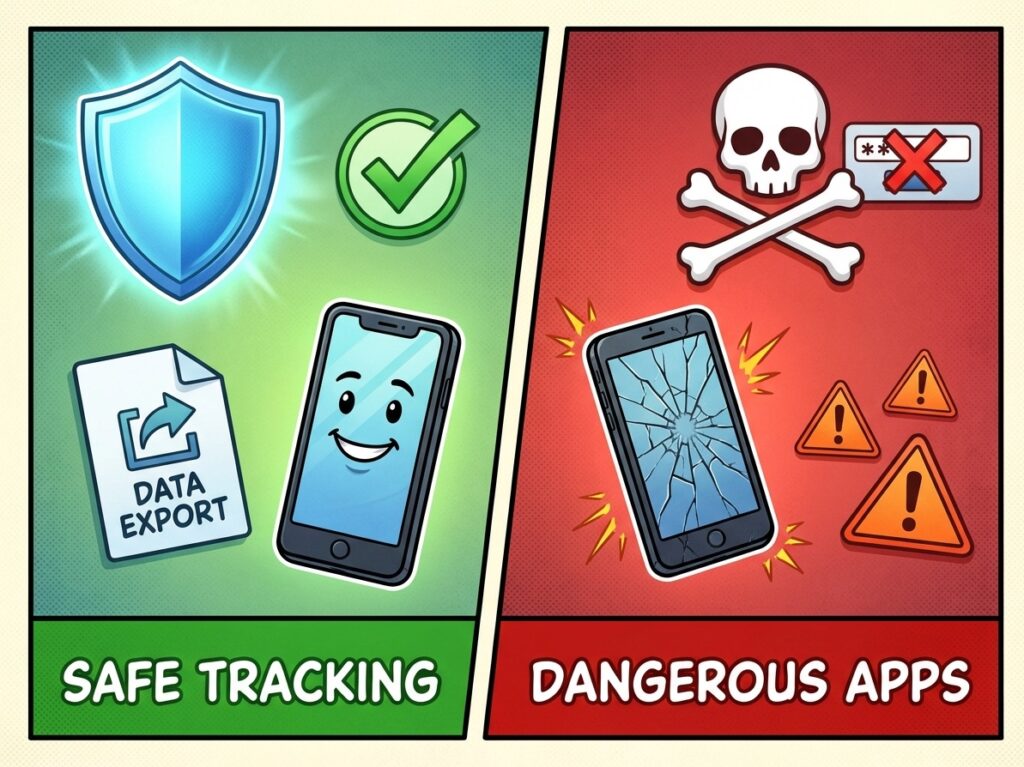
Apps and services that track follower changes beyond what Instagram shows natively. Quality varies enormously. Some are legitimate. Many are dangerous.
The dangerous ones ask for your Instagram password. Never provide this. Any app requesting your login credentials can access your entire account, post on your behalf, read your DMs, and potentially lock you out. Instagram’s terms of service prohibit sharing credentials with third parties, so you also risk account restrictions.
Safe tracking tools work with data you export from Instagram yourself, or use authorized authentication methods that never expose your password.
Critical warning: Password-based follower apps have caused countless account compromises and bans. The temporary convenience isn’t worth the permanent risk. I’ve seen clients lose years of work to a single bad app decision.
Using UnfollowGram for Follower Tracking
I’ve tested probably two dozen follower tracking tools over the years. Most were sketchy. A few got accounts temporarily restricted. Only a handful work the way tracking should work, safely and effectively.
UnfollowGram is the one I actually recommend to people now, and the tool I use myself for account management.
Why This Tool Works Differently
No password required. Ever. The app works by analyzing data you export from Instagram through official channels. Your credentials never leave Instagram’s systems. Zero risk of account compromise.
This matters more than any feature set. I’ve watched too many accounts get restricted or hijacked because someone wanted unfollower data and trusted the wrong app. The slight inconvenience of data export is worth the absolute security.
What You Can Track
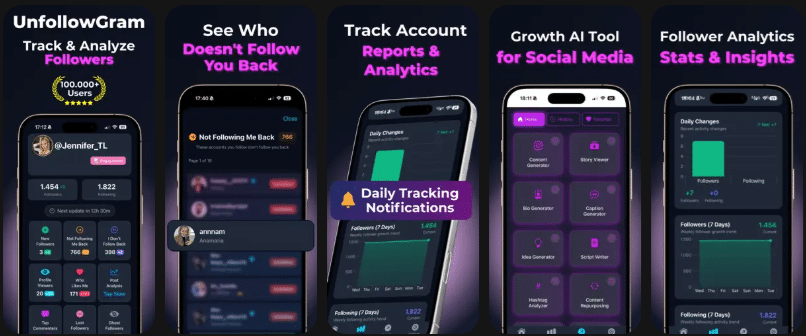
The UnfollowGram tracker shows:
- Who unfollowed you since your last check
- Who doesn’t follow back from your following list
- New followers you’ve gained
- Recent follow activity on accounts you’re monitoring
- Ghost follower identification to understand real audience size
The data gets categorized usefully. Not just raw numbers but actionable insights about what’s actually happening with your audience over time.
How I Actually Use It
Weekly checks. Not daily. Looking at patterns, not individual names. Did I lose more people than usual after a particular type of content? Are non-followers concentrated in any category? Is growth trending up or down over the month?
The goal is understanding your audience, not obsessing over every single unfollow. Used properly, tracking informs strategy. Used obsessively, it creates anxiety without benefit.
Understanding Non-Followers and Ghost Followers
Two concepts that confuse people constantly but mean very different things.
Non-Followers
Accounts you follow that don’t follow you back. One-sided relationship. You opted into their content, but they haven’t opted into yours.
Having non-followers is normal. You probably follow brands, celebrities, or content creators who don’t follow anyone back. That’s fine. Problems arise when most of your following list consists of non-followers, and you’re trying to build a community.
High non-follower ratios suggest you’re giving more attention than receiving. Some people periodically clean up their following list to address this imbalance.
Ghost Followers
Accounts that follow you but never engage. They’re in your Followers count but contribute nothing to engagement metrics. Could be real people who forgot about you, bot accounts, or inactive profiles.
Ghost followers hurt engagement rates without providing any benefit. Some accounts have 30-40% ghost followers, which massively skews their apparent performance.
Tools like UnfollowGram’s follower analytics help identify ghost followers so you understand your real audience size.
Non-Followers vs Unfollowers
Different things. Non-followers never followed you in the first place. Unfollowers used to follow you but stopped.
Non-followers only become visible when you check reciprocation status. Unfollowers only become visible when you compare follower lists over time. First check shows non-followers. Ongoing tracking reveals unfollowers.
| Term | Definition | How to Find |
|---|---|---|
| Non-Follower | Someone you follow who doesn’t follow back | Single comparison of following vs followers |
| Unfollower | Someone who used to follow but stopped | Comparing follower snapshots over time |
| Ghost Follower | Someone who follows but never engages | Engagement analysis against follower list |
The Relationship Between Followers and Engagement
More followers equals more engagement, right?
If only it were that simple.
The Engagement Rate Reality
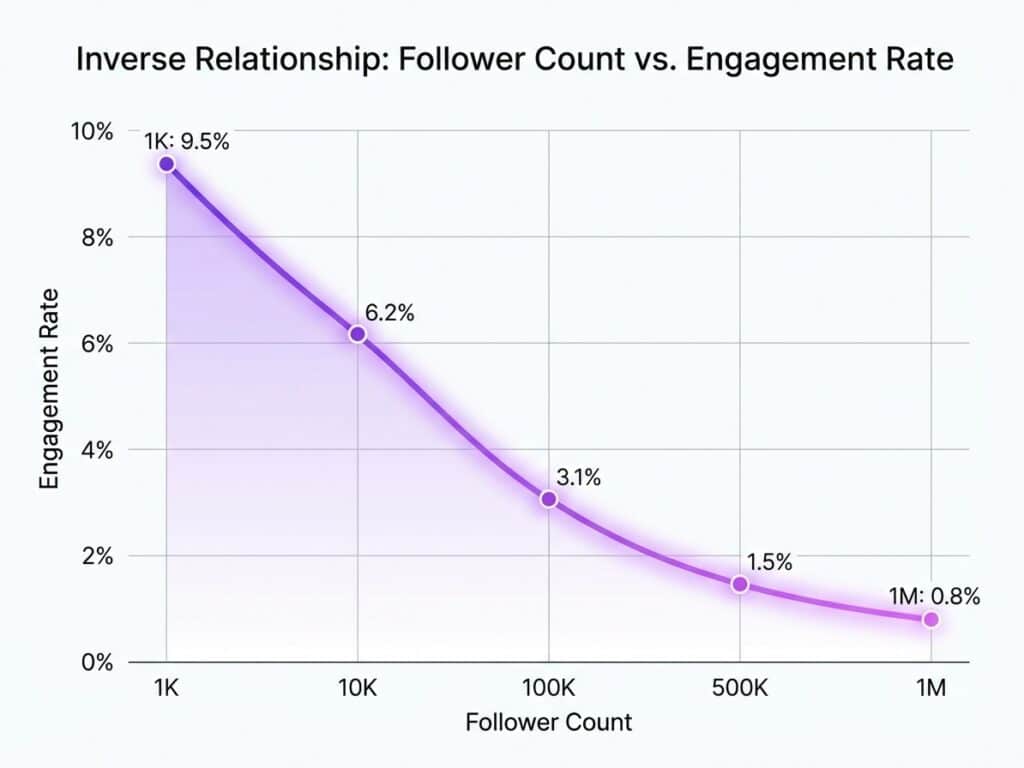
Engagement rate typically decreases as follower count increases. Small accounts often have 5-10% engagement rates. Large accounts might have 1-3%. Massive accounts sometimes dip below 1%.
Why? Algorithm limitations. Instagram doesn’t show your content to all followers. As your audience grows, the percentage who actually see each post shrinks. Engagement happens from those who see content, not total followers.
According to Hootsuite’s engagement research, engagement benchmarks vary significantly by industry and account size. Comparing yourself to accounts with dramatically different follower counts produces misleading conclusions.
Quality vs Quantity
An account with 5,000 highly engaged followers often outperforms an account with 50,000 passive ones. Engagement drives reach. Reach drives growth. The follower count is just a vanity number unless those followers actually engage.
This is why chasing follower count without an engagement strategy backfires. You end up with numbers that don’t translate to actual influence, sales, or impact.
What Actually Drives Engagement
Content that resonates with your specific audience. Posting when your audience is active. Responding to comments. Creating conversation-starter captions. Using interactive features like polls and questions in stories.
Engagement is earned with every post, not guaranteed by follower count. I’ve seen accounts with 100k followers get fewer likes than accounts with 10k because the smaller account understood their audience better.
Your activity tracking should include engagement patterns, not just follower numbers.
Sustainable Growth Strategies
After watching growth tactics evolve for over a decade, here’s what actually works long-term versus what seems to work but collapses eventually.
Consistent Quality Content
Boring advice, but true. Regular posting of content your target audience actually wants to see. This takes longer than shortcuts but builds stable growth that doesn’t evaporate.
What’s “quality” varies by niche. For some audiences, it means polished visuals. For others, it means raw authenticity. Know your specific audience preferences.
Community Engagement
Responding to comments on your posts. Engaging with content from accounts in your niche. Participating in conversations rather than just broadcasting. Community engagement signals to the algorithm that your account drives interaction, which improves reach.
According to Social Media Examiner, accounts that actively engage with their community see significantly higher organic reach than broadcast-only accounts.
Strategic Collaborations
Partnering with complementary accounts exposes you to new audiences. Takeovers, joint lives, shared content, mutual shoutouts. The key is finding accounts with audiences that overlap with but aren’t identical to yours.
Hashtag Strategy
Using relevant hashtags helps discoverable content reach beyond existing followers. Mix of popular tags (high competition) and niche tags (lower competition but targeted). The right hashtag approach varies by content type and audience.
What Doesn’t Work Anymore
Follow-unfollow tactics. Mass automated engagement. Purchased followers. Engagement pods. These either stopped working or actively hurt accounts through restrictions.
Instagram’s systems detect inauthentic behavior increasingly well. Short-term gains from these tactics usually result in long-term penalties.
Mistakes That Kill Follower Growth
Watching accounts struggle taught me as much as watching successful ones. These mistakes appear constantly.
Obsessing Over Numbers Instead of Engagement
Checking follower count multiple times daily. Celebrating follow spikes without examining engagement. Panicking over normal fluctuations. The obsession creates anxiety without improving anything.
Track weekly or monthly trends. Ignore daily noise. Focus energy on content instead of constant number monitoring.
Inconsistent Posting Then Burnout Posting
Posting nothing for weeks, then posting five times trying to catch up. Both extremes hurt. Silence makes the algorithm forget you. Sudden floods overwhelm followers. Sustainable rhythm beats sporadic bursts.
Copying Viral Content Without Understanding Why It Worked
A post goes viral for someone else. You recreate it exactly. It flops. Viral content usually succeeds because of factors beyond the content itself, timing, existing audience, algorithmic luck. Copying format without understanding context wastes effort.
Ignoring Your Existing Audience
So focused on gaining new followers that you stop engaging with existing ones. Current followers are your foundation. Neglecting them degrades engagement, which reduces reach, which kills growth anyway.
Using Risky Apps for Short-Term Data
Giving a password to some random follower app because you desperately want to know who unfollowed. Account gets compromised or restricted. Months or years of work were jeopardized for information that wasn’t even that useful.
The safety question around tracker apps matters more than feature comparisons. Protect your account first.
Maintaining Account Health
Account health extends beyond follower count. These factors determine your account’s standing with Instagram and long-term viability.
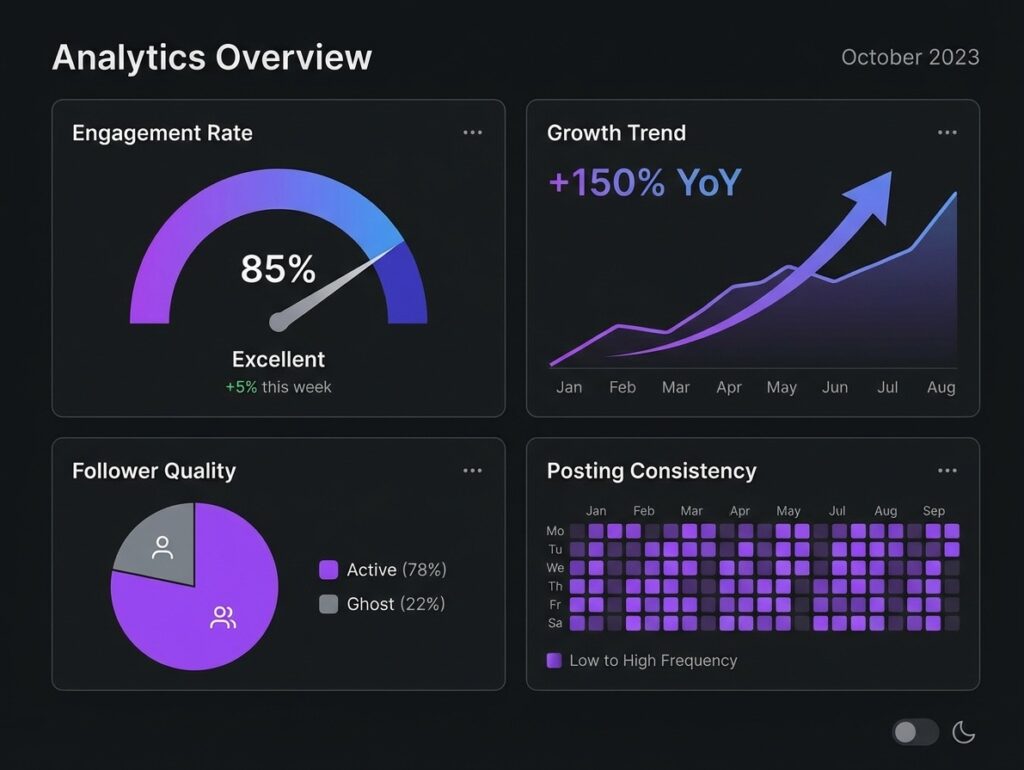
Engagement Rate Benchmarks
Healthy engagement varies by follower count:
- Under 10k followers: 5-10% is good
- 10k-100k followers: 3-5% is good
- 100k-1M followers: 1-3% is good
- Over 1M followers: 0.5-1% is typical
Significantly below these ranges suggests audience quality issues. Significantly above suggests exceptional content or a very engaged niche.
Follower-to-Following Ratio
No magic number here despite what some claim. But extreme ratios signal issues:
- Following way more than followers suggests unsuccessful follow-for-follow tactics
- Following almost nobody suggests a broadcast-only approach or celebrity status
- Reasonable balance suggests normal account behavior
Focus on whether your following list actually contains accounts you want to see, not arbitrary ratio targets.
Growth Rate Patterns
Steady, gradual growth is healthier than spikes and crashes. Sudden follower surges often come from viral moments or suspicious activity. Both attract scrutiny. Organic slow growth looks most natural to Instagram’s systems.
Data from DataReportal’s global digital report shows that sustainable Instagram growth typically follows gradual curves rather than exponential jumps.
Content Consistency
Regular posting signals an active account. Long silences hurt algorithmic standing. You don’t need to post daily, but complete disappearances damage momentum that takes weeks to rebuild.
The Future of Instagram Followers
Predictions based on current trajectories and platform behavior patterns.
Follower Count Mattering Less
Instagram has already de-emphasized follower counts in some regions, testing hidden likes and reduced prominence of follower numbers. The trend moves toward engagement quality over follower quantity. Accounts will be evaluated more on interaction patterns than raw numbers.
Increased Bot Detection
Instagram’s bot detection improves continuously. Fake follower purchases become riskier as detection improves. Accounts inflated by bots will face more frequent purges and potential restrictions.
Algorithm Sophistication
The algorithm gets better at identifying genuine engagement versus manipulated engagement. Organic, authentic accounts benefit. Accounts relying on tricks suffer more.
Cross-Platform Identity
Meta’s integration of Instagram with other platforms creates opportunities and complexities. Follower relationships might eventually span platforms in ways currently impossible.
Privacy Changes
User privacy expectations keep increasing. How much follower data remains accessible to third-party tools may change. Safe tracking methods that don’t rely on scraping become more important.
Staying updated on follower tracking developments helps adapt to platform changes as they happen.
Frequently Asked Questions
Does Instagram notify you when someone unfollows?
No. Instagram never sends unfollow notifications. You won’t receive any alert when someone unfollows you. The only way to know is by checking your followers list manually or using tracking tools.
Why did my follower count drop overnight?
Usually Instagram purging bot and spam accounts. Less commonly, a post triggered multiple unfollows. Check timing against any content you posted and reported platform-wide cleanups.
How often should I check my unfollowers?
Weekly maximum. Daily checking creates unnecessary anxiety without providing actionable insights. Trends matter more than individual days.
Are follower tracking apps safe?
Some are. Many aren’t. Apps requiring your Instagram password are never safe. Look for tools using data export or authorized authentication methods that don’t expose credentials.
What’s a good follower-to-following ratio?
No universal answer. It depends on account type and goals. Focus on the following accounts you genuinely want to see rather than hitting arbitrary ratios.
Why do new followers unfollow immediately?
Usually follow-unfollow tactics. They followed, hoping you’d follow back, then unfollowed when you didn’t. Some are also bots that get removed quickly by Instagram.
Can you see who viewed your Instagram profile?
No. Instagram doesn’t provide profile viewer information and never has. Any app claiming to show profile viewers is lying.
How do I find ghost followers?
Compare your follower list against engagement data. Accounts that follow but never like, comment, or view stories are likely ghosts. Some tracking tools help identify these patterns.
Is it bad to have many non-followers?
Depends on context. Following celebrities and brands who won’t follow back is normal. Following thousands of random accounts hoping for follow-backs suggests problematic tactics.
Should I unfollow people who unfollowed me?
Only if you don’t want their content anymore. Don’t unfollow out of spite. Base decisions on whether you actually value seeing their posts.
Why does my follower count show different numbers?
Server sync issues. Instagram’s infrastructure doesn’t update uniformly across all systems instantly. Small fluctuations during syncs are normal.
How accurate are follower tracking tools?
Good ones are very accurate since they compare real data from real snapshots. Quality depends on the method. Data export-based tools are most accurate since they work with Instagram’s actual records.
Can private accounts track followers the same way?
Yes, you can track your own private account’s followers. You can’t track other private accounts unless they’ve approved you as a follower.
Do influencers buy followers?
Some do. Many who did face consequences, including account restrictions and reputation damage. Purchased followers are increasingly detectable and provide no actual engagement value.
What happens to followers if I deactivate my account?
You disappear from everyone’s followers and following lists while deactivated. Reactivating usually restores relationships, though some discrepancies can occur after long deactivations.
Is losing followers bad for the algorithm?
Not directly. The algorithm cares more about engagement rates than raw follower count. Losing disengaged followers can actually improve your rate, which helps reach.
How many followers do you need to monetize?
Depends on monetization method. Brand deals typically want 10k+ with strong engagement. Affiliate marketing can work with smaller audiences. Product sales depend on conversion rates, not follower counts.
Why do celebrities have millions of followers but low engagement?
Scale changes everything. Algorithm can’t show posts to all followers. Celebrity audiences also include many passive followers who followed once and forgot. Engagement percentages naturally decrease as the audience grows.
Everything Summarized
Instagram followers are more complex than simple numbers suggest. Understanding how following actually works, why people follow and unfollow, what causes count changes, and how to track everything safely gives you realistic expectations and actionable insights.
Focus on engagement quality over follower quantity. Use tracking for patterns and strategy, not anxiety and obsession. Protect your account by avoiding password-based apps. Build sustainable growth through consistent content and genuine community engagement.
The accounts that succeed long-term understand these dynamics and work with them rather than chasing shortcuts that eventually backfire.