Instagram Tracker Safety Checklist
Last Updated on January 26, 2026 by Ethan
An Instagram tracker safety checklist is basically your “don’t get hacked, don’t get banned, don’t get scammed” filter before you connect anything to your Instagram account or even type your username into a tracker.
I’ve messed around with UnfollowGram-style tools on tiny personal accounts and a few mid-size creator pages, and honestly, it usually plays out the same way. The trackers that seem “too powerful”, like they want your login, do auto-actions, or send DM blasts, tend to create the most headaches later.
So yeah, here’s a real-world checklist you can knock out in like 5 to 10 minutes. Not theory. The stuff that actually stops most security notices, weird logins, and those “why is my reach dead?” weeks.
How Instagram tracker safety actually works, quick mental model.
Instagram usually isn’t “scanning” your phone for tracker apps the way some people assume. What it reacts to are signals: suspicious logins, unusual activity patterns, spammy automation, and risky permission requests.
Here’s the plain-English version. If a tool asks for your Instagram password, signs in from somewhere random, scrapes info at a strange pace, or starts doing stuff like follow, unfollow, DMs, or likes faster than a real person would, Instagram will probably flag it. Sometimes you get a safety notice. Sometimes you get a silent penalty like reduced recommendations.
If you care about reach, it’s worth understanding how sensitive “eligibility” has become. The algorithm and recommendation systems are increasingly tied to account health and behavior patterns, not just content quality. Hootsuite has a solid breakdown of how Instagram recommendations and ranking signals have evolved here: how the Instagram algorithm works.
The Instagram Tracker Safety Checklist (do this before you use any tool)
This is the checklist I use myself. And yeah, it can feel a bit paranoid. But that’s kind of the whole point.
1) First question: Does it ask for your password?
If a tracker asks you to log in with your Instagram password, I treat that as a “no” by default. Not “maybe.” Not “it has good reviews.” Just no.
- Green flag: You enter a username, and it shows public-account follower/following changes without needing credentials.
- Yellow flag: It offers “optional login for more features.” That usually turns into a slippery slope.
- Red flag: It asks for your password up front, or it asks you to “verify” by logging in through a sketchy page that isn’t Instagram.
One tool I’m comfortable pointing people to for basic tracking (public accounts only) is a “no password” approach, like a follower tracker that lets you see who unfollowed you without logging in. That design choice alone removes a huge chunk of risk.
And yes, I’ve been the person who ignored this years ago because I wanted the extra features. It was a pain to clean up after. I’m not proud of it, but it taught me the rule.
2) Check what data the tracker can realistically access
Here’s what nobody tells you: if a tracker claims it can show private-account follower changes without you authenticating, it’s either lying or doing something you probably don’t want attached to your name.
A safe tracker should be honest about limits. If it’s based on public data, it should say “public accounts only” and stick to that.
- Reasonable claims: “Who unfollowed me on IG” (based on snapshots), “non-followers,” “new followers,” basic counts.
- Sus claims: “See who viewed your profile,” “see who screenshotted your story,” “track private profiles,” “read deleted DMs.” Nope.
3) Avoid anything that automates actions (especially DM automation)
Follower tracking is one thing. Automation is where accounts get cooked.
If a tool mixes tracking with auto follow/unfollow, bulk likes, comment spinning, or DM blasting, you’re in the high-risk zone. Even “warm” automation setups can trip systems if your timing, volume, or login footprint looks unnatural.
If you’re curious how heavy the automation ecosystem is getting in 2026, this overview is a good window into what’s out there (and why it’s risky): Instagram DM automation tools in 2026.
My personal rule: if you’re going to automate anything, do it after you’ve already built trust manually (real conversations first), and keep follow-ups low volume. Slower. Annoying. Safer.
4) Do a “permission smell test” (apps + browser)
Most people skip this part. Then they wonder why weird stuff keeps happening.
If you installed an app, check what it can access on your device. If you used a website, check what you allowed in your browser (notifications are the big one).
- If a tracker app wants access to your contacts, call logs, SMS, microphone, or “accessibility features,” that’s not tracking. That’s snooping.
- If a website suddenly has permission to spam you with push notifications, remove it. Those “Your account is at risk! Click here!” pop-ups are a classic funnel into phishing pages.
Quick reality check: a basic unfollowers tracker does not need your contacts. It does not need your microphone. It does not need anything like that. Period.
5) Verify your Instagram “Account Status” before blaming trackers
A lot of people assume “a tracker ruined my reach.” Sometimes that’s true. But sometimes your account is already restricted, and you just didn’t notice until you started paying attention.
So check your Account Status and eligibility screens inside Instagram. If your content isn’t eligible for recommendations, follower changes will feel harsher because you’re not replenishing discovery with Explore, Reels, or suggested posts.
This ties directly into money, too. Instagram’s 2026 approach has gotten stricter about compliance, affecting monetization and feature access. If you’re a creator, skim this checklist and treat it like a quarterly audit: Instagram creator monetization checklist (2026).
I’ve seen accounts lose bonuses, subscriptions, or brand deal momentum not because the content got worse, but because a guideline or eligibility flag flipped behind the scenes. Super frustrating.
6) Lock down your login security (the boring part that saves you later)
If you do nothing else, do this.
- Turn on 2FA (auth app is better than SMS if you can manage it).
- Change your password if you’ve ever reused it anywhere else.
- Review login activity and log out of sessions you don’t recognize.
- Update your email to one you actually control (not an old school email you never check).
I know, I know. Everyone says this. But I’ve watched creators ignore it until the day they get locked out, and then it’s suddenly a five-alarm fire.
7) Test trackers in a low-risk way (yes, there’s a “safe” way to try)
If you’re experimenting with a new tracker, don’t go all-in on day one.
- Start with a public account you don’t monetize (or a lower-stakes brand page).
- Use it once, then wait 24 hours. Watch for safety notices, password reset prompts, or login alerts.
- If the tool is snapshot-based, run it at the same time daily for a few days. That makes the “who unfollowed” results cleaner and less jumpy.
Lived-detail thing I’ve noticed: on larger accounts (50k+), tools that compile lists can take longer, and the first run often looks “off” because the baseline snapshot is being built. On tiny accounts, it’s usually instant. That difference matters when people panic and think something is broken.
Common safety notices and what they usually mean
Instagram’s warnings can feel vague on purpose. The platform doesn’t want to hand out a perfect playbook for bad actors. But in day-to-day use, the causes are usually predictable.
Safety Notice pattern #1: “We noticed unusual activity”
This often comes from:
- Logging in from a new device or location (VPNs can trigger this a lot).
- Rapid actions: following/unfollowing too fast, too many DMs, too many comments.
- Third-party tools that simulate logins from data centers.
Where people mess up: they keep doing the same thing that triggered it, just “a little slower.” Instagram doesn’t always reward “a little slower.” Sometimes it wants you to stop entirely for a bit.
Safety Notice pattern #2: “Suspicious login attempt” emails
This is the one that makes your stomach drop.
Sometimes it’s truly an attacker. Sometimes it’s a third-party app logging in on your behalf. Either way, treat it the same: change password, enable 2FA, revoke access, and log out of all sessions.
Safety Notice pattern #3: “Complete a security checkup”
Security checkups usually show up when Instagram wants you to confirm you’re you. It can happen after password changes, suspicious sessions, or a sudden spike in activity.
If you’re using any tool that requires a login, this is one of the “costs.” The more you bounce between services, the more often you’ll see verification loops.
Failure modes: where tracker safety falls apart (even if you’re careful)
This is the part most posts won’t say out loud.
Failure mode #1: You’re mixing “safe tracking” with “unsafe growth”
You can use a perfectly safe tracker and still get flagged if you’re also doing aggressive follow/unfollow cycles, comment pods, giveaway spam, or DM blasting somewhere else.
Instagram doesn’t grade you on one tool. It grades the whole behavior pattern of the account.
Failure mode #2: Your account is public, but your audience behavior is weird
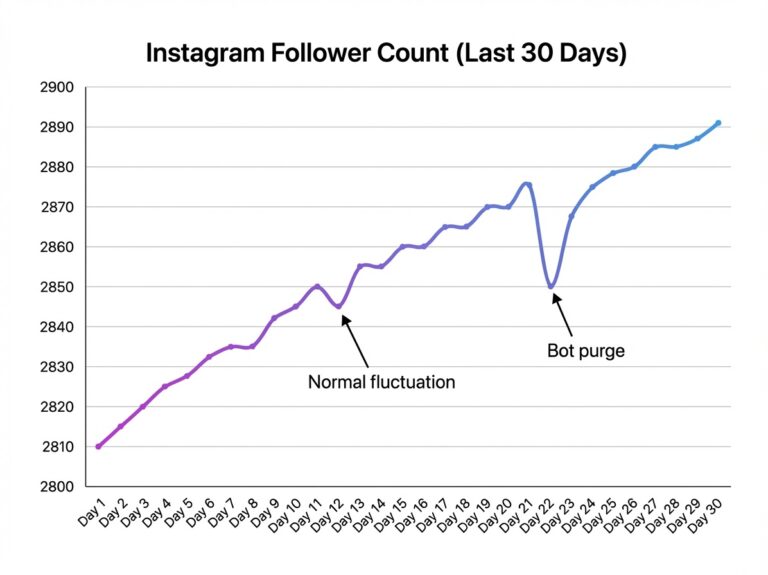
This sounds odd, but I’ve seen it: accounts that get botted (sudden waves of fake followers) can trigger weird security friction later because the follower graph changes too fast. You didn’t do anything. Still happens.
And if you’re tracking daily, you’ll notice the unfollow spikes more clearly, which can send you into a spiral. Been there. It’s not fun.
Counterintuitive insight: the “safest” tracker isn’t always the one with the most features
You’d think the best tracker is the one that shows everything: deep analytics, private insights, exact timestamps, profile visitors, the whole fantasy dashboard.
But in practice, the safest trackers are usually the “boring” ones because they don’t need access that can get you into trouble. When a tool isn’t asking for your password and it’s only working with public data, it has less power and fewer ways to break things.
It’s like choosing between a simple calculator and an app that wants your bank login to “help with math.” Same vibe.
Step-by-step: do an Instagram security cleanup in 10 minutes
If you’ve used trackers before and you’re not sure if you’re clean, do this once and sleep better.
- Check email inbox for Instagram security alertsIf you see login attempts you don’t recognize, assume compromise until proven otherwise. Yep.
- Change your passwordMake it unique. Not “Summer2026!” unique. Actually unique.
- Enable 2FAUse an authenticator app if you can. SMS is better than nothing, but SIM swaps are real.
- Log out of unknown sessionsIf you see devices you don’t recognize, kick them out.
- Revoke access to third-party apps you don’t trustIf you don’t remember authorizing it, revoke it. If you remember authorizing it but it feels sketchy now, revoke it too.
- Stop automation for 48 to 72 hoursThis is the hardest step for growth hackers. I get it. But if you’re in a warning loop, a short “quiet period” helps reset the pattern.
- Only then, reintroduce tracking (not actions)Tracking follower changes is typically lower-risk than tools that perform actions. Keep your setup simple.
One more lived-detail thing: if you do a password change and then immediately log in from 3 different devices plus a third-party tool, Instagram can get extra jumpy for a few days. I’ve seen that spiral into repeated verification prompts. So go slow for a week.
Spotting scam trackers fast (the stuff that tricks smart people)
Phishing has gotten way better. The “obvious scam” era is over.
- They create urgency: “Your account will be suspended today.” Instagram rarely talks like that.
- They mimic real UI: Fake login pages look almost identical now (especially on mobile).
- They promise forbidden insights: profile viewers, story stalkers, private account data. That’s bait.
- They push you off-platform: “Verify your account” links that don’t open Instagram’s real domain.
If you’re ever unsure, don’t click the link. Open Instagram directly and check notifications there. It’s annoying, but it works.
Limitations (what this checklist won’t do)
This Instagram tracker safety checklist won’t guarantee you never get a security prompt. If you travel, use a VPN, change phones, or your account gets targeted, you can still see safety notices even while doing everything right.
It also won’t tell you exactly why a specific tracker was flagged, because Instagram doesn’t publish clear, official guidance specifically about follower tracking tools or third-party monitoring apps. That policy gap is real, and it’s why I tell people to stay cautious and keep their stack simple.
FAQ
What does it mean when you get a safety notice on Instagram?
It usually means Instagram detected suspicious behavior like unusual logins, rapid activity (follows/DMs), or signs that a third-party tool is accessing your account in a risky way.
How do you check an Instagram account’s safety?
Check login activity, enable 2FA, review third-party access, and look at Account Status/eligibility inside Instagram to confirm you’re not restricted from recommendations.
Does the toxic followers tracker work?
Most “toxic follower” labels are guesses based on shallow signals (no profile pic, low posts, weird ratios), so treat them as a rough filter, not truth.
Why is Instagram asking me to complete a security checkup?
Instagram wants to verify you after something changed, like a new login location/device, a password update, or activity patterns that look automated.
Conclusion (keep it simple, keep it safe)
If you take one thing from this: trackers are safest when they don’t need your password, and they don’t perform actions for you. That’s it.
And if you’re trying to monitor unfollowers daily, keep the workflow boring: consistent check times, no automation, and quick security hygiene when anything feels off. If you want a low-friction option, use a no-login tracker style tool like UnfollowGram Follower Tracker and stick to the basics: who unfollowed you, who doesn’t follow back, and who’s new.

Ethan is the founder of UnfollowGram with more than 12 years of experience in social media marketing. He focuses on understanding how Instagram really works, from follower behavior to engagement patterns, and shares those insights through UnfollowGram’s tools and articles.