How Instagram Unfollow Tracking Works
Last Updated on January 25, 2026 by Ethan
If you’re trying to figure out how to track Instagram unfollowers, here’s the honest answer: Instagram doesn’t give you an “unfollow” alert, so every tracker is basically doing some form of comparison between an old follower list and a new one.
That comparison can happen in a few different ways (manual checks, Instagram’s own data download, or a tool that snapshots public follower lists). Some ways are genuinely safe. Some are… sketchy. And some “work” until they randomly stop working on a Tuesday and you think you’re going crazy.
I’ve tested UnfollowGram and a pile of other trackers across creator accounts, small business profiles, and bigger influencer pages, and the pattern is always the same: if you understand what Instagram is actually showing (and when), you’ll get way better results and way less drama.
First, why Instagram unfollow tracking is even a thing
Instagram is built to keep you scrolling, not to keep you emotionally stable about your follower count. If it pinged you every time someone left, the app would be a constant fight.
So instead, they give you the basics: follower count, follower list, following list. That’s it. No “who unfollowed me” screen. No notification. No timeline of changes.
If you want the deeper “who left” view, you’re forced into one of two worlds:
- Comparison tracking: Take two snapshots (before and after) and find what changed.
- Manual spot-checking: Search your Followers list for specific usernames and confirm if they’re still there.
If you’ve ever wondered why Instagram doesn’t just show it, there’s a full breakdown here: why Instagram doesn’t send unfollow notifications.
How Instagram unfollow tracking works (the mechanism)
All unfollow tracking is based on one simple idea: if someone was in your follower list before, and they’re not there now, they unfollowed you (or they disappeared for another reason).
The three “data sources” trackers rely on
- Instagram’s visible follower list (what you see in-app): Works for manual checks and for tools that read public lists.
- Instagram’s downloadable data files (followers/following JSON): The cleanest “official” record you can get without giving a third party your login.
- Login-based API-style access: Old-school follower apps loved this approach. In 2026, it’s where most bans, locks, and “suspicious login attempt” loops come from. Not fun.
What a “snapshot” actually means
A snapshot is just a stored copy of your follower list at a specific moment. Then later, you take another snapshot and compare:
- Unfollowers = people present in Snapshot A but missing in Snapshot B
- New followers = people missing in A but present in B
- Non-followers (not following back) = accounts you follow that aren’t in your followers list
Here’s the part most people miss: the snapshot is only as good as the list you’re able to see at that moment. And Instagram lists can lag, reorder, or temporarily hide accounts.
If you’ve ever seen your follower count drop but your list looks unchanged, yep, you’re not imagining it. That behavior is explained here: why follower counts change but lists lag behind.
The safest approach in 2026: Instagram’s own data download (zero ban risk)
If you want the cleanest method with the lowest risk, Instagram’s data download is the move. It’s the only option where you’re not handing credentials to anyone, and you’re not relying on a scraper that can break when Instagram tweaks something server-side.
It’s not “instant,” though. You request the export, wait, then compare files. Annoying. But safe.
How to request your Instagram data
- Open Instagram (mobile).
- Go to your profile → menu.
- Find Your app and media (wording shifts sometimes).
- Tap Download your information.
- Request a Complete copy so you get followers and following data.
On desktop, it’s usually under Settings and privacy → something like privacy/security → data download. Instagram loves moving it around just enough to make you doubt yourself.
What you’re looking for in the ZIP
You’ll typically get files like followers.json and following.json (sometimes nested in folders). Those files are basically lists of accounts.
Then you compare the lists:
- Followers at Time A vs Followers at Time B = who unfollowed
- Following vs Followers = who doesn’t follow you back
For comparison, you can dump usernames into a spreadsheet, or use a simple list diff tool. I’ve used a spreadsheet for years. It’s not glamorous, but it works.
Where this method gets weird (failure mode)
This approach falls apart if you’re trying to do it daily for fast-moving accounts. I’ve done weekly exports on a creator account around 80k followers and it was fine, but doing it every day became a time sink fast. And Instagram sometimes delays the export, so your “daily” check turns into “whenever they feel like emailing the ZIP.”
Also, it won’t tell you when someone unfollowed. Just that the list changed between exports. That’s a big limitation if you’re trying to map unfollows to a specific Story or post.
The manual method: boring, safe, and way more useful than people admit
If you only care about a handful of accounts (ex: brand partners, real-life friends, competitors you’re keeping an eye on), manual tracking is underrated.
You go to your profile → Followers → search their username. If they don’t show up, they’re not following you anymore. Simple.
Two manual checks I still use constantly
- Spot-check specific usernames: Great for “Did they unfollow me?” moments when you don’t want to download anything.
- Non-followers audit: Look at your Following list, tap profiles that matter, and see if “Follows you” is present.
There’s also nuance around the difference between someone unfollowing you and someone removing you as a follower (yes, those aren’t the same). If that distinction matters for your situation, this breakdown helps: unfollow vs remove follower and what actually changes.
Lived detail: manual checks behave differently on big accounts
On smaller accounts, search inside your Followers list feels instant. On bigger accounts, Instagram’s follower list search can get laggy or “sticky,” where it shows old results until you back out and re-open. I’ve watched social managers misread that as an unfollow more than once.
And if you’re checking right after you posted something viral, follower lists can reorder in a way that makes you think accounts vanished. They usually didn’t. It’s just Instagram being Instagram.
Public vs private accounts: what tracking can and can’t see
This is a big one, because people expect trackers to work on every account. They don’t.
If your account is private, your follower list isn’t publicly accessible. That means any tracker that claims “no login required” won’t be able to grab your full list. It’s not a bug. It’s the privacy setting doing its job.
If you want the full breakdown of what’s possible in each scenario, read: public vs private accounts for tracking.
Counterintuitive truth nobody tells you
You’d think private accounts would be “safer” to track because fewer tools can touch them. True. But it also means you’re basically stuck with manual checks or Instagram data downloads, which makes people do something risky: they hand their password to a random follower app just to get convenience. That’s usually how the lockouts start.
So… are there apps to track unfollowers on Instagram?
Yes. Lots. But they’re not all doing the same thing, and pretending they are is where people get burned.
At a high level, you’ll see three categories:
1) Password-based follower apps (highest risk)
These ask you to sign in with Instagram inside their app. Sometimes it’s an in-app browser. Sometimes it’s a weird login form that looks like Instagram but isn’t. Either way, you’re trusting them with your credentials or session.
I’m not saying every one is a scam. I am saying I’ve seen enough “my account got temporarily locked” cases to avoid this category whenever possible.
2) Client-side browser tools (medium risk, still annoying)
Tools like browser extensions can sometimes pull list data while you’re logged in on your own browser session. It can be safer than handing over a password to a random app, but you’re still adding a third party into the mix.
If you’re curious how one of these approaches works, INSSIST has a write-up on tracking unfollowers that reflects the general idea of client-side collection: how to track Instagram unfollowers.
3) Public-snapshot tools (lowest friction for public accounts)
This is where tools like UnfollowGram Follower Tracker fit: no password, no login, and it works on public accounts by pulling what’s publicly visible and comparing changes over time.
Real talk: when I’m helping a creator who refuses to download data ZIPs (which is most of them), public-snapshot tools are the only option that doesn’t make me nervous from a security standpoint.
How unfollower trackers detect changes (what they actually do in the background)
Most people assume these tools have some secret access to Instagram’s backend. They don’t. They’re comparing lists across time, just like you would, but automated.
If you want the technical-ish version without the fluff, here’s the dedicated explanation: how unfollower tracker apps detect changes.
Why timing matters more than you think
I learned this the hard way. I used to check unfollowers multiple times a day (don’t judge me), and I’d get inconsistent results because Instagram’s follower list would update in chunks.
On accounts with heavy activity, I’ve seen a person appear “missing” right after an unfollow spike, then show up again after a refresh window. It’s not that they re-followed. It’s that the list view caught up.
Why trackers sometimes miss an unfollow (and it’s not always the tool’s fault)
This is where people get mad and leave 1-star reviews. Sometimes it’s deserved. Sometimes it’s just the reality of how Instagram serves data.
There are a few common reasons misses happen:
- List lag: Counts update faster than lists (we talked about this earlier).
- Temporary account states: Deactivations, deletions, and reactivations can look like unfollows.
- Rate limits: Instagram restricts how much list data can be fetched or scrolled in a time window.
- Private switches: If an account flips private, the visibility of their relationships can change depending on context.
There’s a deeper troubleshooting explanation here if you’re dealing with missing names: why unfollower trackers sometimes miss an unfollow.
Lived detail: “missing” unfollows happen more on mid-size accounts
Weirdly, the messiest results I see aren’t on tiny accounts or huge ones. It’s mid-size, like 5k to 30k, where people have enough churn that lists change daily, but not enough stability that the same names stick around long. That’s where you notice every little mismatch and it drives you nuts.
Unfollow vs soft block vs restrict: the stuff that looks like an unfollow
Sometimes you didn’t get unfollowed. Sometimes you got “handled.”
Instagram relationships have a few moves that can mess with what you think you’re seeing:
- Soft block: Someone blocks you and unblocks you, which can remove follower relationships and make you disappear from each other in certain contexts.
- Restrict: Doesn’t change follower status, but changes interaction visibility. People confuse the “quietness” for an unfollow.
- Remove follower: They kick you out of their followers if they’re private, which changes what you can see.
If you’ve ever had that “wait, can I even see them?” moment, this breaks it down clearly: how soft block and restrict affect followers.
Deactivated and deleted accounts: the silent chaos in your follower list
Here’s a nasty little edge case: accounts disappear for reasons that have nothing to do with you.
Someone deactivates. Someone gets banned. Someone deletes their profile at 2 a.m. after a breakup. Your follower count shifts and you assume it’s personal.
Sometimes it is. Sometimes it’s just random churn.
If you want to separate “they left Instagram” from “they left me,” read: deactivated accounts and deleted users explained.
Is there a free Instagram tracker? Yes, but watch what “free” costs you
There are free options, but “free” usually means one of these trade-offs:
- They spam you with ads and upsells.
- They limit checks (like “first 10 unfollowers only”).
- They ask for your login anyway (which is the real cost).
- They’re inconsistent because they can’t reliably pull data at scale.
If you’re just casually curious, free can be fine. If you’re managing a brand account, honestly, free tools are where I see the most mess. I’ve had to help clients recover from “free tracker” experiments more times than I wanna admit.
Building a tracking system that doesn’t make you spiral
If you track unfollowers the wrong way, it becomes emotional junk food. Quick hit. Bad aftertaste.
But if you track it like a system, it becomes feedback you can use. That’s the difference.
My simple routine (what I actually do)
- Check weekly for most accounts.
- Log only the totals (new followers, unfollows, net change) unless there’s a reason to dig into names.
- Write what you posted: promo post, reel batch, controversial opinion, collab, giveaway, whatever.
- Look for patterns after 4 to 8 weeks, not after one post.
Here’s the weird part: daily checks feel “more accurate,” but they often lead you to bad conclusions because of list lag and temporary account changes. Weekly checks smooth out the noise.
If you want a more specific cadence, this is a good reference: how often you should check Instagram unfollowers.
Vulnerable moment: I used to take it personally
I’m not proud of this, but early on I’d see one unfollow from someone I recognized and I’d overthink everything. Was it the caption? Too many Stories? Did I post too much coffee content?
Now I mostly ignore individual unfollows unless it’s a partner account or someone strategic. The pattern matters. The single name usually doesn’t.
Using unfollows strategically (without turning into a robot)
Unfollows are a signal, but they’re not always a “you messed up” signal.
What I look for is spikes:
- Promo clusters: A week of hard selling often triggers quiet churn.
- Topic pivots: Change your niche fast and you’ll shake off old followers. Sometimes that’s good.
- Frequency shifts: Going from 2 posts a week to 3 posts a day can push people out.
- Viral reach: Viral content brings low-intent followers who leave quickly. That churn is normal.
One of the better high-level summaries I’ve seen on the general “ways to see who unfollowed” topic is this overview from Zeely: seeing who unfollowed you on Instagram. I don’t agree with every recommendation on third-party apps, but it’s useful context for how mainstream this has gotten.
Common mistakes I see (and yes, I’ve made some of them)
Obsessing over individual unfollowers
It feels productive. It’s not. Unless you’re tracking specific relationships, focus on trends.
Checking too often
If you’re checking multiple times a day, you’re going to catch Instagram mid-update and assume the tool is wrong or someone unfollowed when they didn’t. I’ve done it. It’s maddening.
Confusing “not following back” with “unfollowed”
Those are different. A non-follower might have never followed you in the first place.
Trusting any tool that wants your password
Look, I get the temptation. But login-based tools are where you see the most account security headaches. If you’re running a business profile, you really don’t want to explain to your boss that you got locked out because you wanted to see who unfollowed.
Assuming every drop is real people leaving
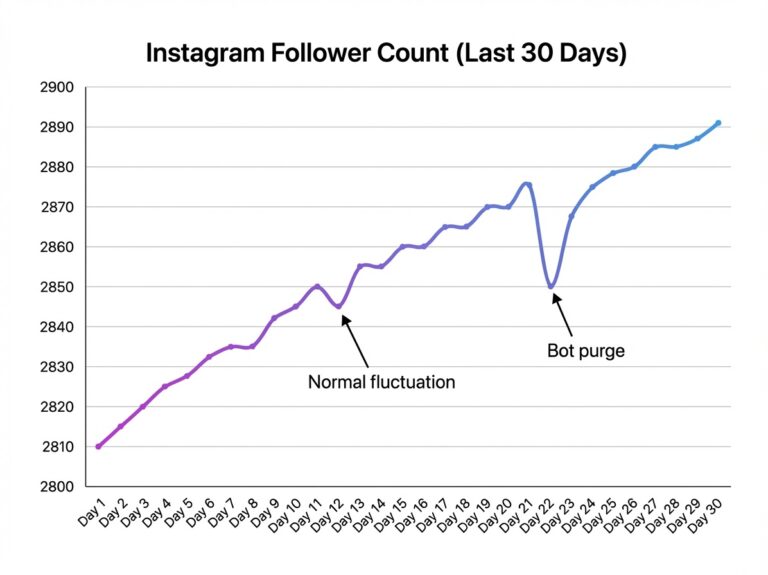
Sometimes it’s bots being removed. Sometimes it’s deactivations. Sometimes it’s Instagram purging spam. Your follower count is not a perfect “people ledger.”
Limitations (what unfollow tracking won’t tell you)
This part matters, because a lot of apps oversell what they can know.
- It won’t tell you why someone unfollowed. You can guess based on timing, but you won’t get a reason.
- It usually won’t give an exact timestamp unless you’re checking very consistently and even then list lag can blur timing.
- It can’t reliably track private accounts without login access, and login access is where risk goes up.
- It can mislabel “disappeared accounts” (deleted, deactivated, banned) as unfollows unless the system accounts for it.
So yeah, tracking is useful. But it’s not mind-reading. And it’s definitely not court evidence.
A practical “how to track Instagram unfollowers” setup (pick your lane)
You’ve got three realistic lanes. Pick the one that matches your tolerance for effort and your need for speed.
Lane A: Maximum safety (Instagram data download)
- Request data monthly or weekly.
- Compare followers.json across exports.
- Best for private accounts, sensitive accounts, or anyone who’s risk-averse.
Lane B: Low effort (public tracking tools)
- Use a password-free tracker for public accounts.
- Check weekly for cleaner trend lines.
- Best for creators who want fast answers without handing over logins.
Lane C: Targeted manual checks (small list of people)
- Search specific usernames in your Followers list.
- Use it when a relationship matters more than metrics.
- Best for brands, partnerships, and “is this person still here?” moments.
FAQ
Are there apps to track unfollowers on Instagram?
Yes, but they work by comparing follower lists over time. Avoid anything that requires your Instagram password if you care about account safety.
Is there a free Instagram tracker?
Yep, but free tools usually come with limits, ads, or riskier login requirements. If “free” means sharing credentials, I’d pass.
Why can’t Instagram just show me who unfollowed?
Instagram doesn’t provide unfollow notifications or an unfollower list, so you have to infer it through list comparisons. That’s why all trackers are basically “before vs after” systems.
Why does my follower count change but I don’t see anyone missing?
Because Instagram updates counts faster than it updates or reorders the follower list. The list can lag, which makes it look like nothing changed.
Can I track unfollowers on a private Instagram account?
Not reliably without using Instagram’s own data download or logging in through a tool. Password-free trackers generally only work on public accounts.
Wrap-up: what I’d do if I were you
If you want the safest, most “official” way to track unfollows, use Instagram’s data download and compare follower lists over time. If you want quick visibility on a public account without handing over your login, a password-free tracker is the practical middle ground.
And if you’re trying to keep it simple, track trends weekly and stop doom-checking after every post. I’ve been there. It’s a trap.
If you want a fast, no-password option for public accounts that’s built specifically for daily unfollower tracking, UnfollowGram is the one I keep coming back to. Just use it like a tool, not like a mood ring.

Ethan is the founder of UnfollowGram with more than 12 years of experience in social media marketing. He focuses on understanding how Instagram really works, from follower behavior to engagement patterns, and shares those insights through UnfollowGram’s tools and articles.