How to Verify Instagram Follower Data
Last Updated on February 14, 2026 by Ethan
Look, in 2026, you’re usually not “confirming a number” on Instagram; you’re checking if the whole pattern makes sense. Real people, the right kind of audience for the niche, and engagement that feels human instead of automated. Honestly, the follower count is the part people fake the easiest, so it’s the last thing I believe.
I’ve looked through a lot of Instagram accounts for creators, agencies, and brands, and the same thing keeps popping up. The most legit follower data is pretty boring. It usually grows in little bursts that actually line up with real events, like a collab or a post taking off. The location mix stays fairly steady, and engagement looks similar across a bunch of posts, not just one random spike.
Here’s the way I check follower data when there’s real money or a partnership on the line. And I’ll point out what tends to break, what the tools can’t really prove, and the mistakes that still catch really smart people.
TL;DR: To verify Instagram follower data, focus on patterns rather than just numbers: check for real followers, audience quality, and organic engagement. Real growth usually looks steady over time. Inflated follower counts, on the other hand, can fool you fast. If you can, start with Instagram Insights since it’s probably the cleanest data you’ll get. Third-party tools can help you spot weird patterns, but they’re not hard proof.
What “verified follower data” actually means (and what it doesn’t)
When people say “verify Instagram follower data,” they usually mean one of three different things:
- Accuracy of the count: Are those followers truly there, and not inflated by removed accounts, bots, or temporary scrape errors?
- Quality of the audience: Are these followers real humans who match the account’s target market (country, age, language, interests)?
- Integrity of growth and engagement: Does the growth timeline and engagement behavior look organic or manipulated?
Here’s the annoying part. Instagram itself can show a follower count that’s technically “true” while the audience quality is trash. And some third-party tools can spot suspicious patterns, but still can’t prove intent. That’s why I treat verification as a checklist, not a single metric.
How it works: where follower data comes from (and why it disagrees)
Follower data you see online comes from a few sources, and they don’t always line up.
1) Instagram app surfaces “display data” fast, but it’s not always the final truth
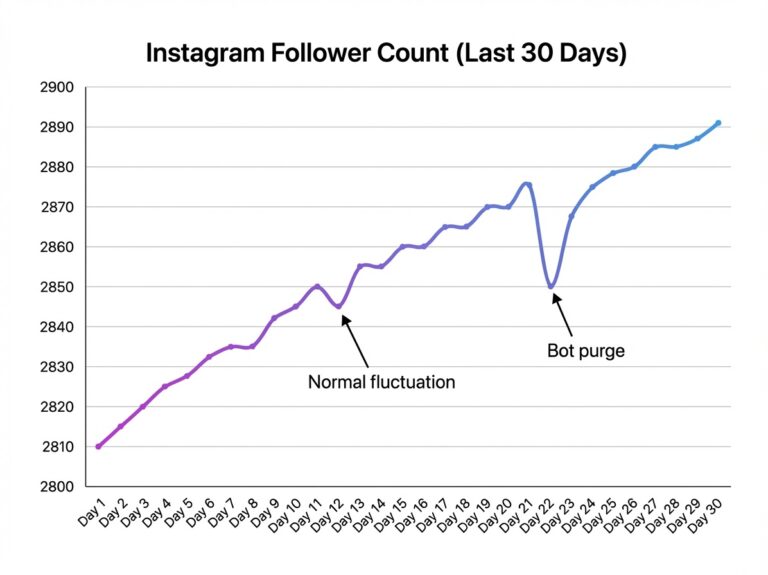
Follower counts and lists inside Instagram update quickly, but they’re also subject to delays, rounding, and cleanup events (like when Instagram removes spam accounts in batches). So you can watch someone “lose” 700 followers overnight and nothing about their content changed. That’s usually not a scandal. It’s housekeeping.
2) Instagram Insights is the closest thing to “first-party analytics”
If you own the account (and it’s a professional/creator), Insights is your most trustworthy source for reach, interactions, audience, and content performance. It’s also the best way to verify whether follower growth is actually translating into real consumption.
And yes, the algorithm is leaning harder into relationship and interest signals this year. If you want the best breakdown of how Instagram weighs signals like watch time, saves, shares, and early engagement, I keep this bookmarked: Hootsuite’s Instagram algorithm overview. It matches what I’ve been seeing in real audits.
3) Third-party tools are pattern detectors (good), but they’re not omniscient (also good to remember)
Most tools are either:
- Public-data analyzers that read what’s visible on public profiles, then compute trends.
- Connected analytics that require login permissions and pull deeper metrics (which is where people get burned, because “login required” often comes with security risk).
I’m picky here. I’ve seen too many “follower checker” apps ask for credentials, then the user gets weird login alerts for weeks. Not fun.
The 2026 reality check: follower count matters less than relationship signals
You’d think verifying follower data is mostly about catching fake followers. Sometimes it is.
But here’s what nobody tells you: a clean follower list can still be a bad audience. The algorithm is prioritizing interaction history and user behavior, not the size of the crowd. If the “crowd” never watches, never saves, never comments, your posts still die.
I cross-reference this with what Instagram’s been publicly signaling about ranking. Buffer has a solid breakdown too: how Instagram algorithms work across surfaces. The short version is: attention and meaningful actions beat vanity numbers.
My practical checklist to verify Instagram follower data (the way I actually do it)
This is the workflow I use when someone sends me an account and asks, “Is this legit?” Same steps whether it’s a micro-creator or a 2M account.

Step 1: Start with the follower count, but treat it like a headline
Open the profile and note:
- Follower count and following count
- Post frequency (last 30 days)
- Reels vs posts vs Stories emphasis (you can infer a lot from this)
One lived detail: on accounts under ~10k, a swing of 50 to 200 followers in a day can be totally normal after a Reel pops. On bigger accounts, you’ll see stranger-looking swings after cleanups, and people panic. I’ve watched 100k+ accounts “lose” thousands in a weekend and the engagement rate didn’t change at all. That’s usually your clue that it was spam removal, not mass unfollows.
Step 2: Check the audience fit (this catches more fraud than people expect)
If you have access to Insights, go straight to audience demographics:
- Top countries and cities
- Age ranges
- Gender split
- Most active times
Then sanity-check it against the content and the niche. Example: if a U.S.-based fitness coach is posting in English, selling local coaching, and their “top locations” are mostly countries where they don’t speak the language and never mention them, I slow down and start digging.
And yeah, there are legitimate reasons for global audiences. But mismatches are the easiest red flag to spot quickly, especially for brand partnerships.
Step 3: Verify engagement quality, not just engagement rate
Engagement rate is useful, but it’s easy to game. What I care about more is the mix and consistency of actions:
- Saves: usually harder to fake at scale
- Shares: strong “real value” signal, especially in Reels
- Comments: quality matters; spammy “nice” comments don’t count in my head
- Story replies: If you can see them, these are gold for authenticity
Here’s a thing I noticed after testing a bunch of accounts last month: bot-inflated profiles often have “flat” engagement across multiple posts, like every Reel gets the same number of likes within a narrow band. Real audiences are messier. One post hits, one flops, one performs late, one performs early. Humans are chaotic.
Step 4: Look at viewing duration and retention (the quiet truth-teller)
If you can access Reels insights, check average watch time and retention. I’m not looking for perfection. I’m looking for “Does this look like people actually watched?”
For a lot of niches, if followers spend 5 to 10+ seconds on a Reel consistently (not once, consistently), it’s usually a real audience. If watch time is tiny and the account claims a highly loyal follower base, that’s where the story doesn’t match the data.
Quick confession: I used to ignore watch time because it felt too “inside baseball.” Big mistake. Once I started using it to verify follower quality, I caught problems way faster.
Step 5: Track follower changes over time, not as a one-time screenshot
A single audit can miss the trick. Real verification happens across multiple check-ins.
This is where tools that track “who changed” become useful, because you can compare yesterday vs today and stop guessing. If you want a baseline understanding of why Instagram numbers sometimes look off even when nothing shady is happening, this breakdown is worth reading: how accurate Instagram follower data really is.
One lived-detail thing: when you check too frequently, you’ll drive yourself nuts. Hour-to-hour checks are noisy, especially during viral spikes. Daily is good. Every 2 to 3 days is even more sane.
Step 6: Run the “growth story” test (this is where most people mess up)
Ask: Does the account’s growth make sense based on what they posted?
- Did a Reel go viral right before a spike?
- Did they collaborate with someone bigger?
- Did they get featured somewhere?
- Or did they jump 20,000 followers on a random Tuesday with no content change?
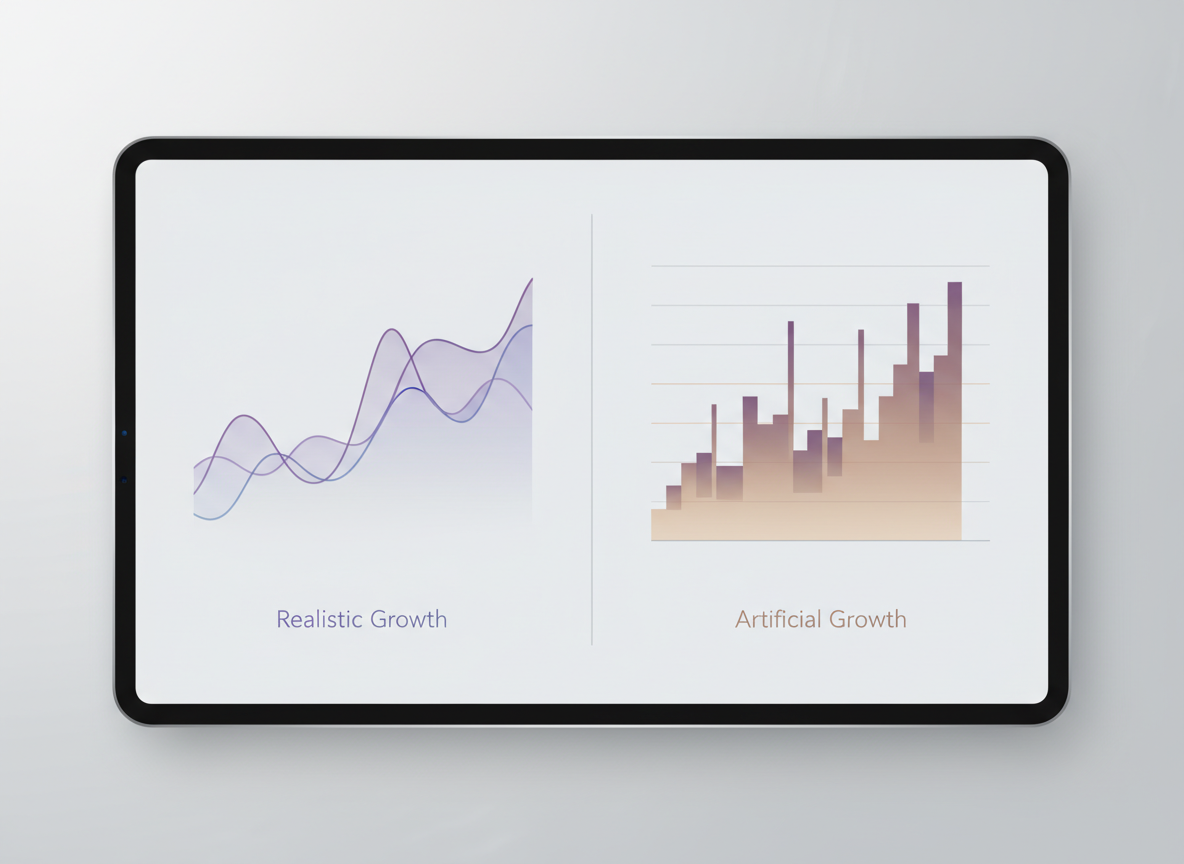
Suspicious growth often looks like stairs: sudden jump, then dead flat, then another jump. Organic growth looks like waves. Up, down, slow up, faster up, small dip, repeat.
Failure modes: where follower verification breaks (even if you do everything “right”)
This falls apart in a few scenarios, and I want to be straight about it.
Failure mode #1: Private accounts (or partial visibility) block meaningful verification
If the account is private, you lose a lot of signal. You can’t reliably verify audience fit, follower quality, or even content consistency without the creator sharing Insights screenshots (which can be cherry-picked). So your verification becomes more about “risk tolerance” than certainty.
Failure mode #2: Clean-looking accounts with paid reach can mimic authenticity
Some accounts run ads or boosted posts, and their growth looks “legit” because it is legit, but it’s not organic. That’s not inherently bad. But if you’re verifying influencer value, paid acquisition can inflate followers who don’t actually care.
And if you’re a creator reading this, don’t take that personally. I’ve helped creators who boosted a few posts and then wondered why engagement got weird. It happens. The followers came, but the relationship didn’t.
The “don’t get fooled” section: common mistakes I see constantly
These are the mistakes that’ll burn you, whether you’re checking your own account or vetting someone else.
- Trusting the follower count more than the audience match. A perfectly “high” follower number with the wrong geography is still wrong.
- Ignoring inactivity after growth. Instagram watches consistency. Accounts that spike, then go quiet, tend to look sketchier over time.
- Falling for comment bait. “DM me” comment pods can inflate comment counts without real interest.
- Believing screenshots with no context. One screenshot can be a great day, not a normal month.
- Buying followers. I’ve seen people do it “just to look legit” before a verification attempt, and then the account gets flagged for weird growth patterns. Oof.
If you’re thinking about Instagram verification specifically, follower authenticity matters a lot more than people admit. Instagram scrutinizes growth patterns, and fake followers are the kind of thing that can come back to bite you later. MediaMister has a decent overview of the verification process and what tends to get reviewed: how to get verified on Instagram.
How I verify follower data for brand deals (the fast audit version)
If you’re a brand or manager and you’ve got 10 minutes to decide if an influencer is worth deeper review, do this:
- Check audience geography vs campaign targeting. If the campaign is U.S.-only and the audience is mostly elsewhere, stop.
- Scan 12 recent posts for “messy realism.” Real accounts have uneven performance, not copy-paste numbers.
- Look for save and shares signals. Likes are cheap. Shares are not.
- Check recency. A creator who was hot 6 months ago but is quiet now might be a pass, even with big numbers.
- Ask for the Insights screen recording if the budget is meaningful. Not a screenshot. A quick scroll recording. It’s harder to fake and shows more context.
And I’ll say it: the raw follower count is usually the least important number on the page. I know that sounds backwards. It’s still true.
A counterintuitive signal I trust: “boring” comment sections
Here’s the weird one. Sometimes the healthiest accounts have comment sections that look almost… normal. A few thoughtful comments, some inside jokes, a couple of friends, not a wall of identical praise.
When I see 200 comments that all look like they were written by the same person with different keyboards, I don’t get impressed. I get suspicious. (And yes, I’ve been fooled by this before. I learned the hard way.)
Where tools fit in: what to automate vs what to eyeball
If you’re doing this once a year, you can eyeball most of it.
If you’re tracking follower changes daily, managing multiple clients, or trying to understand churn, you need automation for the “who changed” part so you can spend your brainpower on the “why.”
That’s the split:
- Automate: follower/unfollower tracking, non-followers, new followers, trend snapshots
- Eyeball: audience fit, comment quality, content consistency, “Does this story make sense?”
How UnfollowGram Follower Tracker helps with verifying follower changes
When people ask me how to verify Instagram follower data without getting lost in analytics overload, I usually start with churn. Who followed, who unfollowed, and who isn’t mutual. That’s the simplest truth you can measure.

This is exactly where a no-password Instagram unfollower tracker like UnfollowGram is useful. You type a username (public accounts), and you get fast visibility into follower list changes and non-followers without handing over your IG login. That “no password” part is not just marketing. It matters. I’ve watched too many people get account security headaches from sketchy apps that require credentials.
Honest limitation: UnfollowGram won’t magically tell you “these followers are bots” with courtroom-proof certainty. No tool truly can from the outside. What it does do well is give you clean, repeatable snapshots so you can verify trends over time and stop relying on vibes.
Limitations: what verifying Instagram follower data won’t tell you
Even a perfect verification workflow has limits.
- This won’t prove intent. You can spot suspicious patterns, but you can’t prove someone “bought followers” without inside access.
- This doesn’t work well for private accounts. If you can’t see posts or Insights, you’re verifying in the dark.
- Short-term spikes can be misleading. Viral moments create messy data. If you audit during a spike, your conclusions might be wrong next week.
Your mileage may vary depending on niche, region, and how seasonal the content is. I’ve seen travel accounts look “fake” in winter and totally normal in summer. Same creator. Same audience. Different behavior.
FAQ
How do I verify Instagram follower data in 2026?
Use Instagram Insights to validate audience demographics and engagement quality, then verify growth consistency over time with trend tracking rather than a single follower count snapshot.
What’s the biggest red flag when checking follower authenticity?
Audience mismatch is the loudest red flag, like a local U.S. creator whose followers are heavily concentrated in unrelated countries with no clear content reason.
Why does the Instagram follower count change suddenly overnight?
Instagram periodically removes spam or deactivated accounts in batches, so the count can drop even if nobody actively unfollowed you.
What engagement metrics matter more than follower count now?
Saves, shares, and watch time usually signal real interest better than likes, especially as Instagram prioritizes relationship and attention signals.
Can third-party tools accurately detect fake followers?
They can flag suspicious patterns, but they can’t prove with certainty that followers are fake because much of the underlying account behavior is not publicly accessible.
How should brands verify influencer follower data before a partnership?
Confirm audience geography and age fit, review multiple recent posts for consistent human engagement, and request Insights context (ideally a quick screen recording) for higher-budget deals.
Conclusion
To verify Instagram follower data, focus on patterns: audience fit, engagement that looks human, and growth that has a believable story behind it. Counts are easy to display. Consistent behavior is hard to fake.
If you want a simple way to track follower changes day-to-day without handing over your Instagram password, UnfollowGram is a solid piece of the puzzle, especially for spotting churn and non-followers while you focus on the deeper quality checks.
And if you’re feeling a little paranoid about your numbers, yeah, I get it. I’ve been there. Just don’t audit your account hourly. That path leads to madness.