Why Women Deactivate Instagram in Relationships
Last Updated on February 7, 2026 by Ethan
Women deactivate Instagram in relationships for a bunch of reasons, but the biggest one I see is simple: Instagram starts feeling like extra noise when they’re trying to protect peace, trust, or focus. It’s usually not one dramatic blowup. It’s a slow “this isn’t helping me right now” decision.
And here’s the annoying part: we don’t have great 2026 research that cleanly proves “relationship problems” are the main driver, specifically for women. Most of what’s out there is about general social media overload, especially among Gen Z, with a lot of people deleting and then reinstalling later.
Still, after years of watching how people behave around follower counts, unfollows, and “who’s watching who,” the relationship angle is very real. Not always toxic. Not always controlling. Sometimes it’s self-control. Sometimes it’s self-respect. Sometimes it’s just… exhaustion.
TL;DR: Women often deactivate Instagram in relationships to reduce noise and focus on peace and trust. This decision usually stems from a gradual realization rather than a dramatic event, reflecting self-control or exhaustion rather than jealousy. While specific research is limited, the trend aligns with broader social media management among Gen Z users.
First, the data reality (and why it’s mostly anecdotal)
If you’re looking for a clean stat like “X% of women delete Instagram because of boyfriend jealousy,” you’re gonna be disappointed. I’ve looked for it too, because it would make this whole conversation easier. It doesn’t really exist in a solid, modern way.
What we do have is broader trend data saying a big chunk of adult Gen Z users delete apps like Instagram to manage usage. One write-up that captures the vibe well is this piece on Gen Z deleting and redownloading Instagram in 2026. That tracks with what I’ve seen: people “quit,” then pop back in later when boredom hits, or something social is going on.
So when people search “why women delete Instagram in relationships,” they’re usually asking for the emotional reasons, the social reasons, and the “what does this mean for my relationship” part. Not a spreadsheet.
What “deactivating Instagram” actually does (and what it doesn’t)
A lot of fights start because someone doesn’t even know what happened.
Deactivate vs delete: same vibe, different reality
- Deactivating is more like hiding. The profile disappears, but the account can come back later.
- Deleting is meant to be permanent (with some delay windows). It’s a bigger “I’m done” signal.
If you’ve ever tried to search for someone and it’s like they fell off the planet, it helps to know there are multiple possibilities. If you want the quick breakdown of what you might be seeing from the outside, this guide on how deactivated vs deleted Instagram users look explains the different scenarios without the usual confusing fluff.
Mechanism: why it feels so intense
Instagram isn’t just photos anymore. It’s a constant feed of social proof: who got liked, who got followed, who got attention, who got left on read. When someone steps away, they’re not just avoiding “content.” They’re stepping out of a little scoreboard that can mess with your head.
And yes, I’ve seen people interpret a simple deactivation like it’s a breakup announcement. Sometimes it is. Sometimes it’s literally just “I have finals” or “I can’t stop doom-scrolling reels at 1 a.m.”
So why do women deactivate Instagram in relationships?
There isn’t one reason. It’s usually a stack of reasons that finally gets heavy.
1) They’re tired of the relationship being “performative.”
Some women don’t want to feel like they have to post to prove the relationship is real. The pressure can come from friends, family, followers, or even the partner. And if she’s been burned before, posting can feel like inviting commentary.
I’ve had creators tell me they loved their partner, but hated the feeling that every date night was potential “content.” That’s not a relationship problem exactly. That’s a lifestyle problem.
2) They want fewer triggers (comparison is brutal)
Instagram is basically an anxiety machine when you’re even slightly insecure. Engagement photos. Soft-launches. “My man did this” posts. Perfect vacations. You know the type.
Here’s the counterintuitive part: sometimes the healthiest couples I’ve worked with are the ones who quit watching other couples online. You’d think more “relationship content” would help, but it often makes people nitpick what they already have.
3) Jealousy and surveillance spirals (from either side)
This is the one everyone assumes, and yes, it happens.
Instagram makes it ridiculously easy to monitor people without calling it “monitoring.” Checking who liked a photo. Watching stories in a certain order. Noticing a new follower. Seeing an ex pop up. It’s low-level stalking with good lighting.
If you’ve ever felt your stomach drop because someone unfollowed you (or your partner), you’re not crazy. It’s a real pattern. This piece on unfollow anxiety nails that weird mix of curiosity and dread.
4) They’re protecting privacy (especially early in a relationship)
Some women deactivate because they don’t want strangers, old flings, or random followers commenting on their dating life. That goes double if their account is public.
And quick detail from what I’ve seen: people with public accounts get more “relationship interference” in the DMs. It’s not even always malicious. It’s just… a lot of unsolicited opinions.
If the public/private decision is part of the tension, the breakdown in public vs private Instagram accounts is genuinely useful for understanding what changes when you flip that switch.
5) They’re trying to stop overthinking (and they know Instagram is the fuel)
Sometimes the reason is internal. Not “my partner is doing something wrong.” More like “I keep making myself miserable.”
I’ll be honest: I’ve done versions of this myself. Not proud of it, but I’ve absolutely spiraled over tiny social signals that meant nothing. A follow request. A like. A comment that could be interpreted six ways. Deactivating is a blunt tool, but it works fast.
6) They’re setting a boundary they can actually enforce
“I’m not going to check your ex’s profile” is a nice intention. It’s also easy to break at midnight when you’re alone with your thoughts.
Deactivating removes the temptation. Not perfectly, but enough that your brain calms down. And yes, some people do this temporarily. A week. A month. A “until we stop fighting” break.
7) They’re reacting to a specific incident (DMs, likes, exes, or embarrassment)
This is the classic trigger: a flirtatious DM, a sketchy comment, a partner liking thirst traps, someone from the past showing up. It doesn’t even have to be cheating. It just has to feel disrespectful.
One more lived detail: I see this spike around weekends and holidays. Friday night deactivations are a thing. So are post-vacation deactivations, when people get home, reality hits, and they start reviewing what happened (or what they think happened).
If you’re trying to decode unfollowing behavior in the “is it over?” stage, this guide to why an ex unfollows covers patterns I’ve seen repeat again and again.
How it works psychologically (the relationship mechanics)
Instagram isn’t a relationship problem by itself. It’s a magnifier.
When trust is already shaky, Instagram gives you infinite raw material to build stories in your head. Your brain hates uncertainty, so it fills gaps with assumptions. “Why did he follow her?” “Why did she remove that post?” “Why is he online but not replying?” You know the loop.
When someone deactivates, they’re often trying to reduce uncertainty by removing inputs. Less data. Fewer “clues.” Less detective work. Honestly, that can be mature. It can also be avoidance. Depends on the person.
What deactivation usually means (and what it doesn’t)
This is where people get it wrong.
It can mean: “I’m choosing peace”
Some women deactivate because they want to be present. Not monitored. Not performing. Not comparing. Just living.
It can mean: “I don’t trust what’s happening here”
If the relationship has repeated boundary issues, deactivation can be a protest move. A reset. A way to regain control of attention and access.
It doesn’t automatically mean: “She’s hiding something”
People jump to this one fast. Sometimes deactivation is the opposite of hiding. It’s opting out. It’s “I don’t want to play this game.”
If you’re the partner: how to handle it without making it worse
Okay, so you noticed she deactivated. Now what?
- Don’t interrogate. Ask one calm question, once. Not ten “just curious” questions that are clearly not just curious.
- Ask what she needs. Not what she did. Needs are the point.
- Offer a boundary swap. If she’s overwhelmed by social media, suggest a mutual “no IG after 9 p.m.” or “no checking ex profiles” agreement.
- Don’t make it about your ego. “So you’re embarrassed of me?” is a guaranteed way to turn a small issue into a huge one.
- Watch for repeat patterns. If it’s a cycle after every fight, it might be a coping strategy that needs a better replacement.
And if you’re the one feeling rejected by it, you might relate to this: how to handle being unfollowed. Different scenario, same emotional sting. It’s that “I’m being removed” feeling.
Common mistakes I see couples make around Instagram breaks
These are the ones that turn a simple deactivation into a week-long argument.
- Assuming intent without asking. You’re guessing. And your guess is usually pessimistic.
- Using Instagram as punishment. Removing, blocking, deactivating, reactivating, repeat. That’s a control loop, not a boundary.
- Demanding access as “proof.” If your solution is “give me your password,” the trust issue is already the real issue.
- Talking about it in public. Friends don’t need to vote on your relationship.
Vulnerable moment: I used to think, “If you’ve got nothing to hide, you’ll show me everything.” That’s… not great. Privacy and secrecy aren’t the same thing, and learning that took me longer than I’d like to admit.
Failure modes: where this whole “just deactivate” approach falls apart
Deactivation can help. It can also backfire.
Failure mode #1: The curiosity rebound
Some women deactivate, feel calm for a day, then start checking through friends’ accounts, web previews, or old screenshots. So the anxiety doesn’t go away. It just gets sneakier.
Failure mode #2: The “silent treatment” interpretation
If there’s already conflict, deactivation can read like a cold shoulder. Even if that wasn’t the goal. Then the partner retaliates, and now you’ve got an Instagram war. Over nothing. Brutal.
A practical diagnostic: which bucket is this deactivation in?
If you’re trying to make sense of it, I’d sort it like this:
- Well-being break: she’s overwhelmed, scrolling too much, wants focus, sleep, or mental quiet.
- Boundary break: she’s tired of DMs, attention, ex-stuff, or public commentary.
- Relationship signal: she’s unhappy, distrustful, or trying to force a conversation she’s not getting otherwise.
It’s not perfect. This won’t tell you “which one” with certainty, especially if you’re only seeing it from the outside. But it stops you from jumping straight to the worst-case story.
Where UnfollowGram Follower Tracker fits into all of this (without making you weird)
If Instagram is triggering relationship tension, it’s usually because people are guessing. “Did he unfollow me?” “Did she remove followers?” “Is my ex still lurking?” Guessing turns into spiraling fast.

This is why I like tools that give clean answers without asking for your Instagram password. I’ve tested a lot of follower trackers over the years, and the ones that demand logins always felt like borrowed trouble. With UnfollowGram Who Unfollowed App, you’re getting clarity without handing over your account.
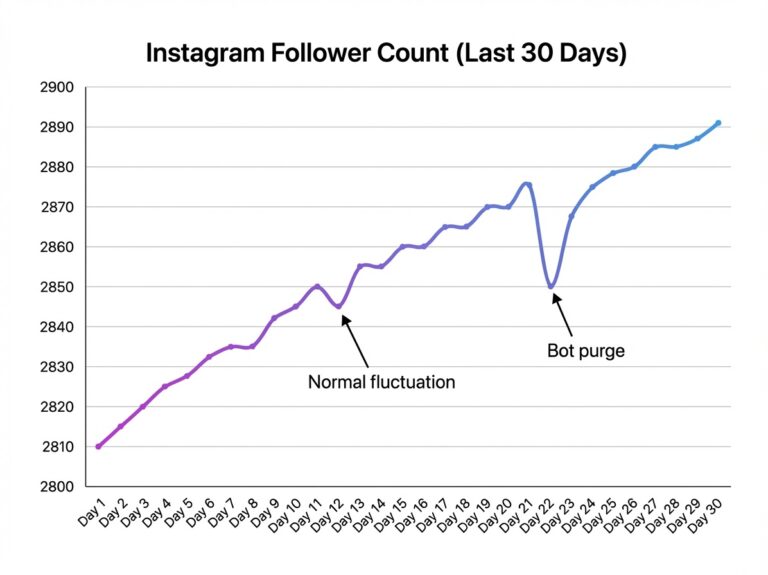
One lived detail from using these kinds of trackers: timing matters. If you check right after a big post, you’ll often see a mini wave of unfollows that has nothing to do with your relationship. It’s just people cleaning their feed. On larger public accounts, the changes can look “dramatic” day to day, even when nothing dramatic is happening.
Also, honest limitation: UnfollowGram Follower Tracker can’t tell you why someone unfollowed, and it won’t show you private-account follower data if it’s not publicly accessible. It’s a visibility tool, not a mind reader. That’s probably a good thing, because half the relationship stress comes from turning normal behavior into a mystery novel.
Limitations (what we can’t say for sure)
A few reality checks, because the internet loves overconfident answers.
- We don’t have strong 2026 research proving relationship-specific causes for women deactivating. Most reporting is about social media fatigue and general well-being trends, like the pattern described in this 2026 “delete and redownload” overview.
- Deactivation doesn’t equal cheating, hiding, or a breakup. Sometimes it’s literally a mental health break or a focus move.
- This topic is highly personal. Culture, age, public vs private profile, and past relationship trauma can change the “why” completely.
FAQ
Why would a girl deactivate her Instagram?
Common reasons are wanting peace, reducing comparison and jealousy triggers, protecting privacy, or taking a break from constant scrolling and attention.
Does Instagram cause relationship problems?
Instagram usually amplifies existing issues by adding visibility, temptation, and misunderstanding, especially around DMs, likes, follows, and “who’s watching who.”
What does it mean when someone deletes their Instagram?
It can mean they want a longer-term break, they’re overwhelmed, or they’re changing how they present themselves online, but it doesn’t automatically mean something bad happened.
Is deactivating Instagram a red flag in a relationship?
Not by itself; it’s only a red flag if it’s paired with secrecy, repeated manipulation, or used as punishment instead of a clear boundary.
Do women come back after deleting Instagram?
Very often, yes, because many people delete for overload and later redownload when their habits shift, or social pressure pulls them back.
How should I bring it up without starting a fight?
Ask once, calmly, what prompted the break and what would help, and avoid accusations or trying to “solve” it by demanding access.
Conclusion
If you’re trying to understand why women delete Instagram in relationships, the most realistic answer is that it’s usually about reducing stress, not creating drama. Sometimes it’s a boundary. Sometimes it’s a reset button. And sometimes it’s a signal that something in the relationship feels off.
Don’t treat deactivation like a confession. Treat it like information. Ask what changed, and listen for the real need underneath it.
If the uncertainty around follower changes and unfollows is what’s feeding the anxiety, tools like UnfollowGram Follower Tracker can help you replace guessing with clarity, then get back to the part that actually matters: the relationship offline.

Ethan is the founder of UnfollowGram with more than 12 years of experience in social media marketing. He focuses on understanding how Instagram really works, from follower behavior to engagement patterns, and shares those insights through UnfollowGram’s tools and articles.